

Singapore Airlines flight details
Airline : Singapore Airlines
Flight No : SQ850
Departure City : Singapore – Changi (SIN)
Arrival City : Guangzhou – Baiyun (CAN)
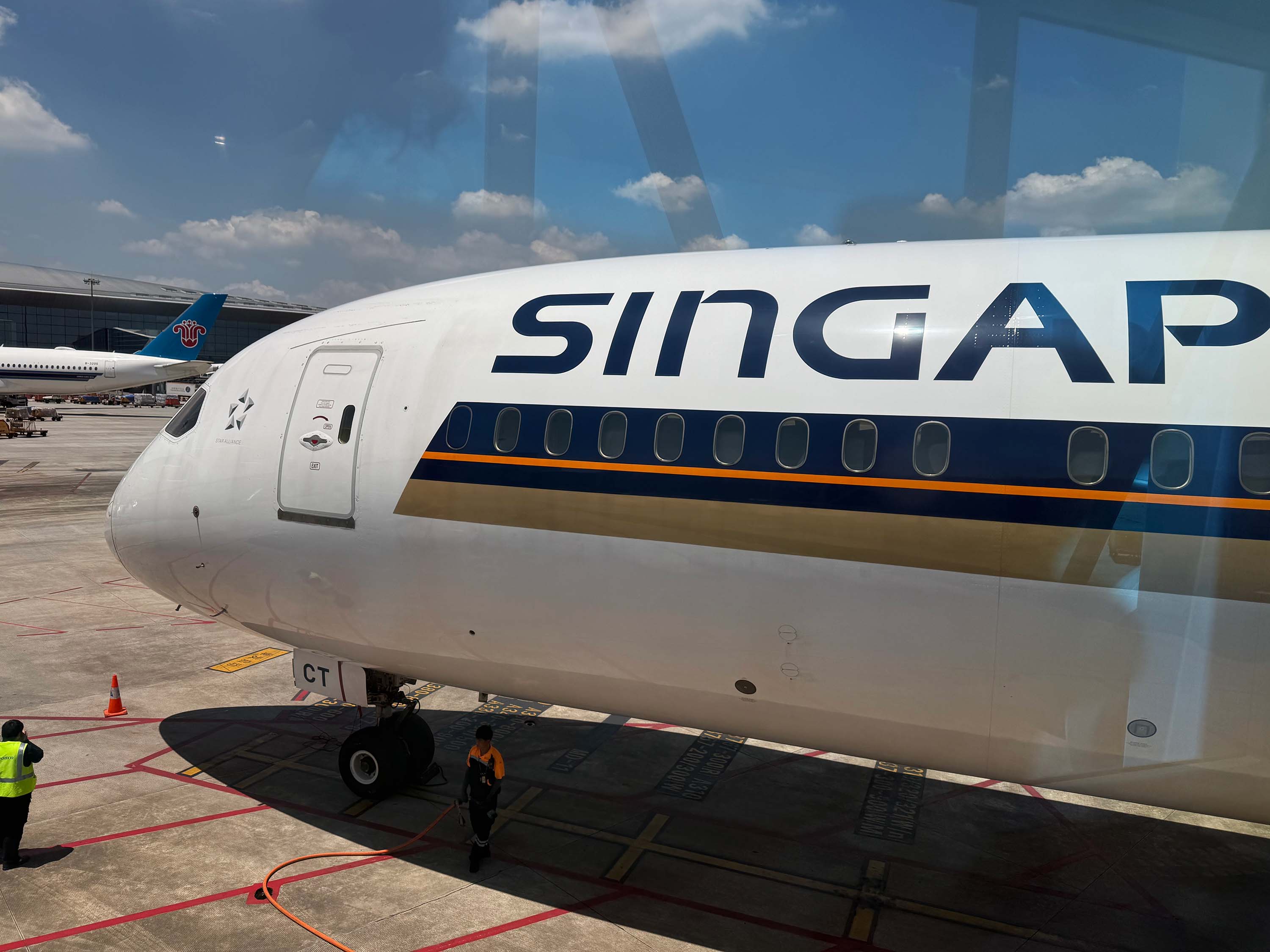
Equipment : Boeing 787-10 (9V-SCT)
Blocked Time : 4h10m
Seat No: 12K
Following an overnight layover at the fabulous Singapore Changi Airport, I was excited to finally get onto the next portion of my trip. This time, I will be flying Boeing 787-10 on the carrier’s morning departure to Guangzhou. Replacing Singapore Airlines’ uniquely derated Boeing 777-200ERs, this sub-fleet of 787s have since become the backbone of the airline’s regional fleet.
Lounge
At its home base at Changi Airport, Singapore Airlines passengers are spoiled for lounge access. Between Terminal 2 and 3, Singapore Airlines Business Class passengers have the option to access up to four lounges, including the excellent SilverKris Business Class Lounges as well as the Krisflyer Gold Lounges. Between the two, the former is obviously preferable, with the Terminal 3 lounge being the largest of the bunch. As I’ve reviewed these lounges in the recent past, I won’t be doing that again this time.

Boarding
After having a light breakfast at the SilverKris Lounge, I headed to the gate a little early. This is definitely something I’d recommend since departure security checks are done at the gate at most Changi Airport terminals. As you’d expect, these checks can snake into long lines before a full widebody flight, and there’s no guarantee of a priority line for Business Class passengers. Boarding passes are then scanned as you’re led into a waiting area, after which you have technically been ‘boarded’.
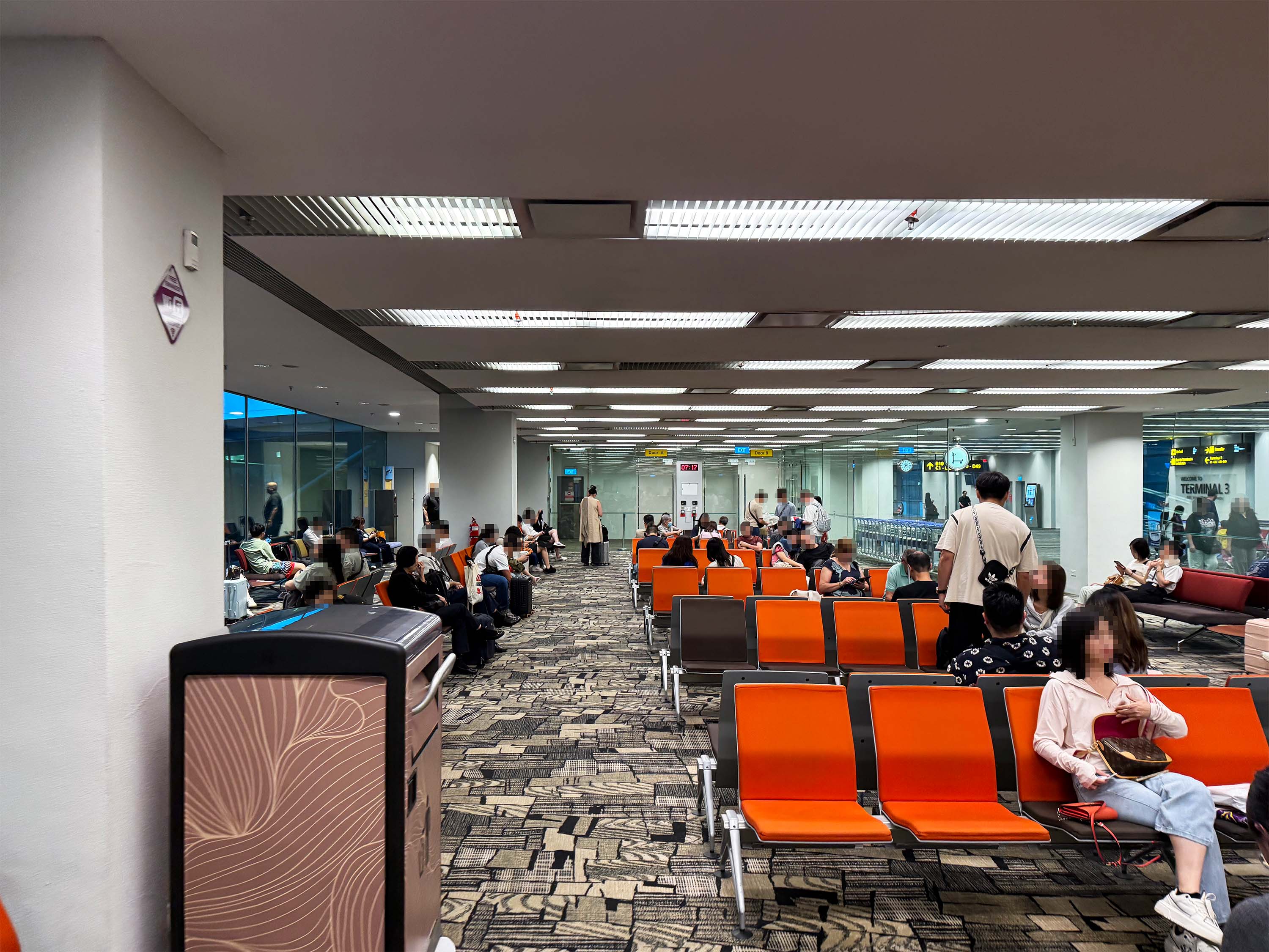
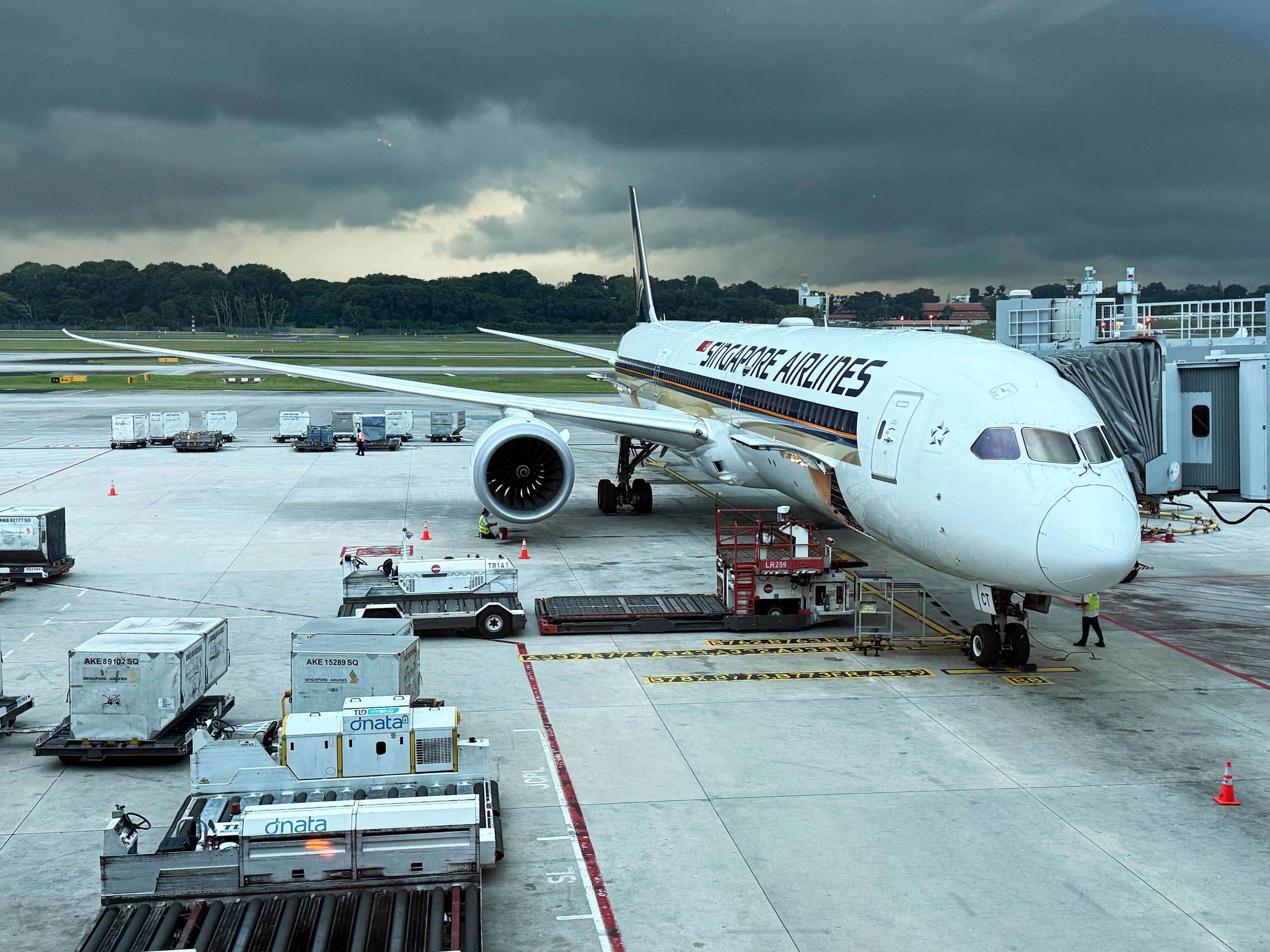
Anyway, flying us was 9V-SCT, a Boeing 787-10 delivered new to Singapore Airlines in June 2023. At 07.21 and 10 minutes after I arrived at the gate, an announcement was made inviting passengers requiring special assistance to board. Surprisingly, general boarding commenced a minute afterwards, despite the printed boarding time of 07.30. As always, Business Class passengers and PPS Club members were invited to board first.
Cabin
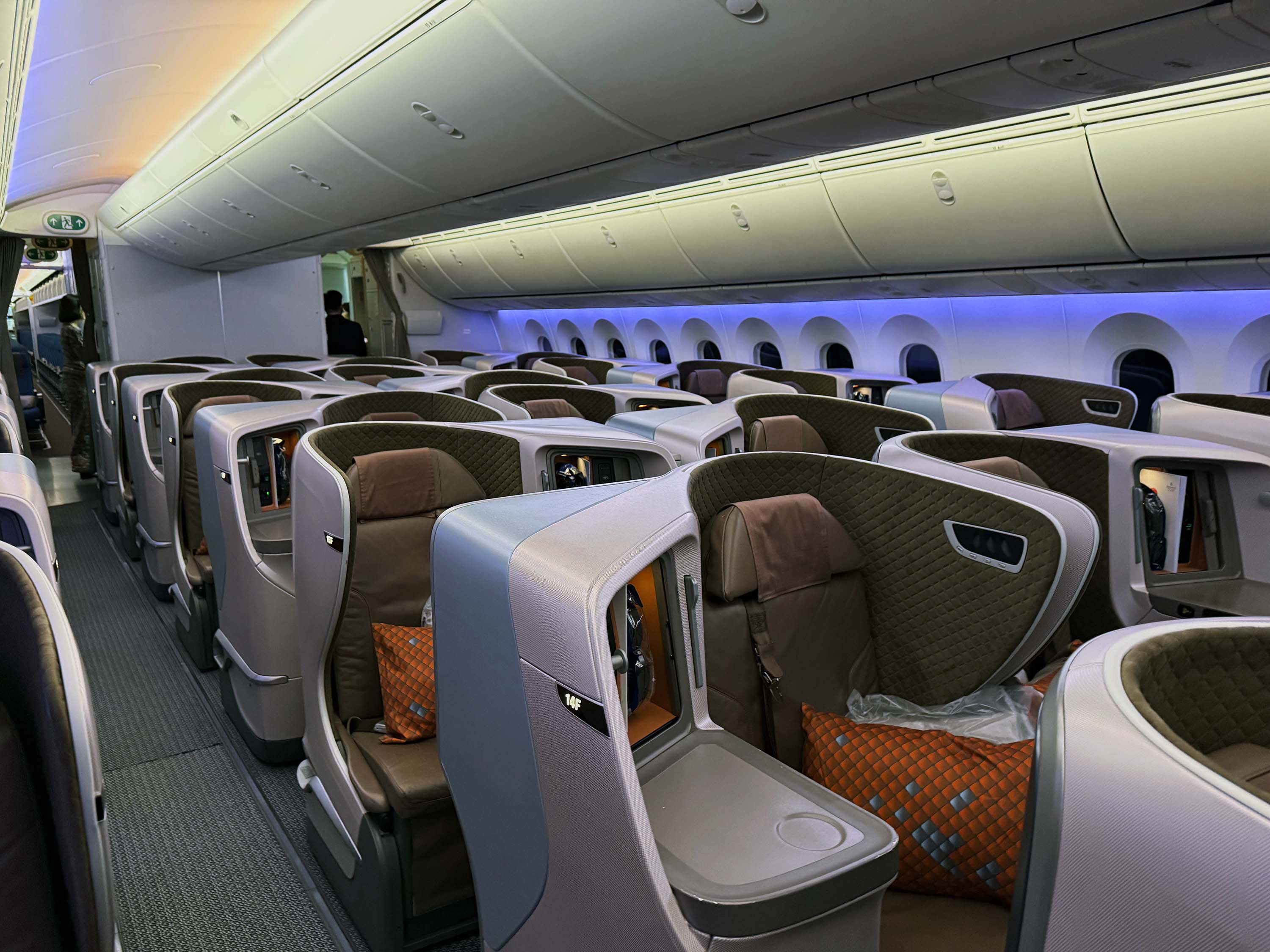
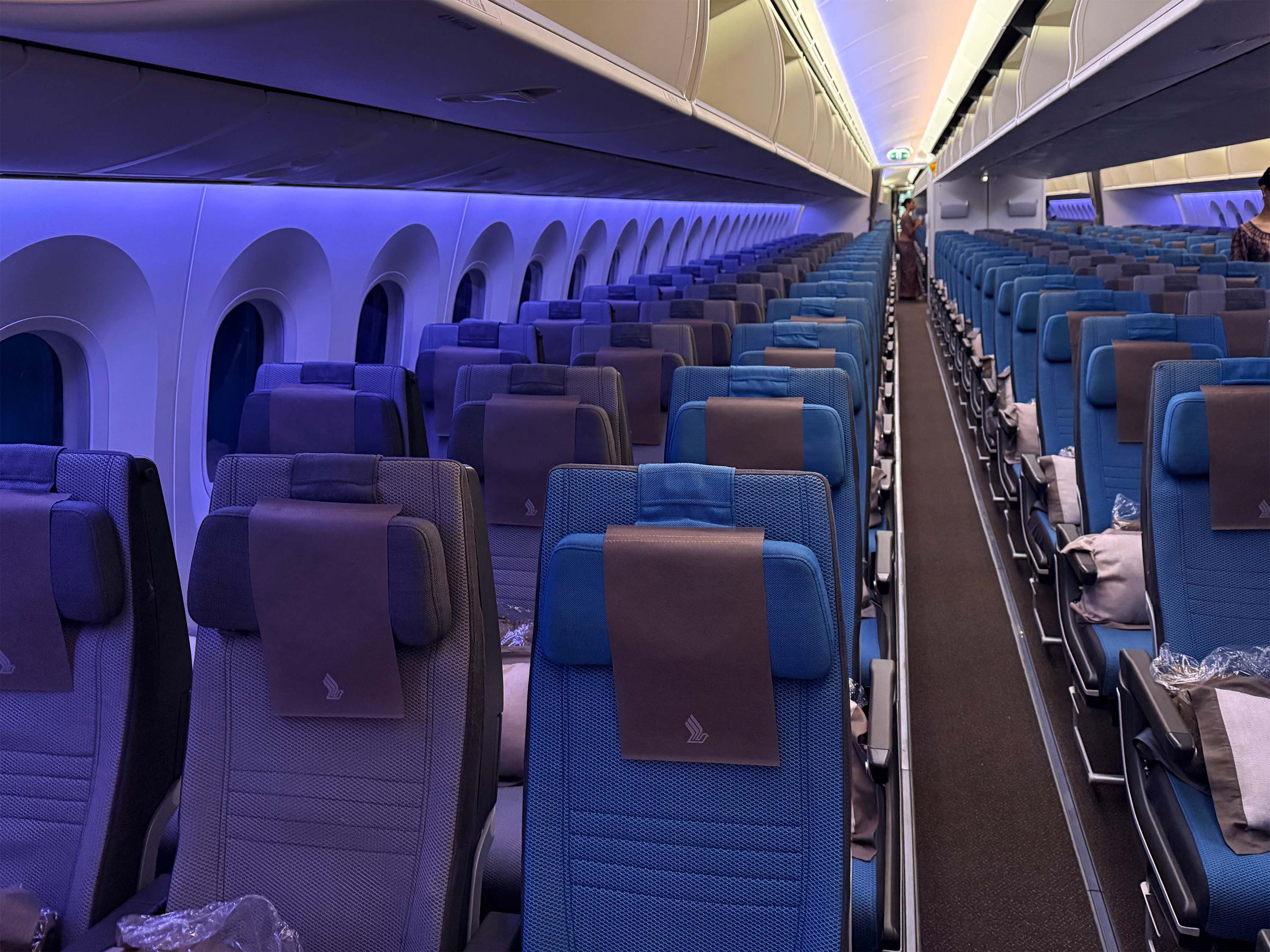
Since its introduction in 2018, Singapore Airlines’ Boeing 787-10 fleet has maintained a consistent configuration, optimised for the regional high-density routes it covers. These aircraft are configured with 36 seats in Business Class and 301 in Economy Class, for a total of 337 seats. Notably, this is Singapore Airlines’ densest packed jet, second in passenger count only to the double decker Airbus A380 with 417 seats.
Business Class
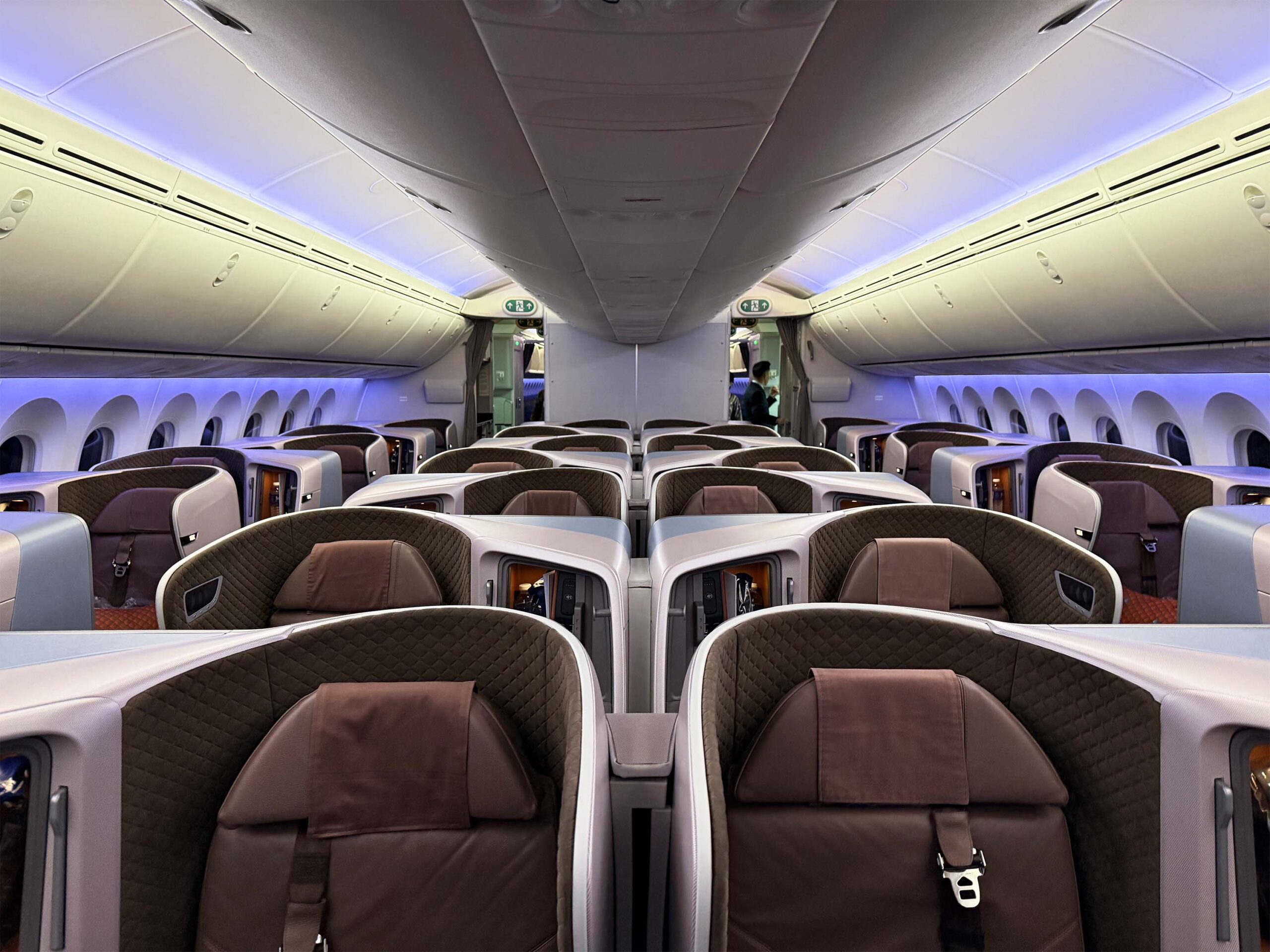
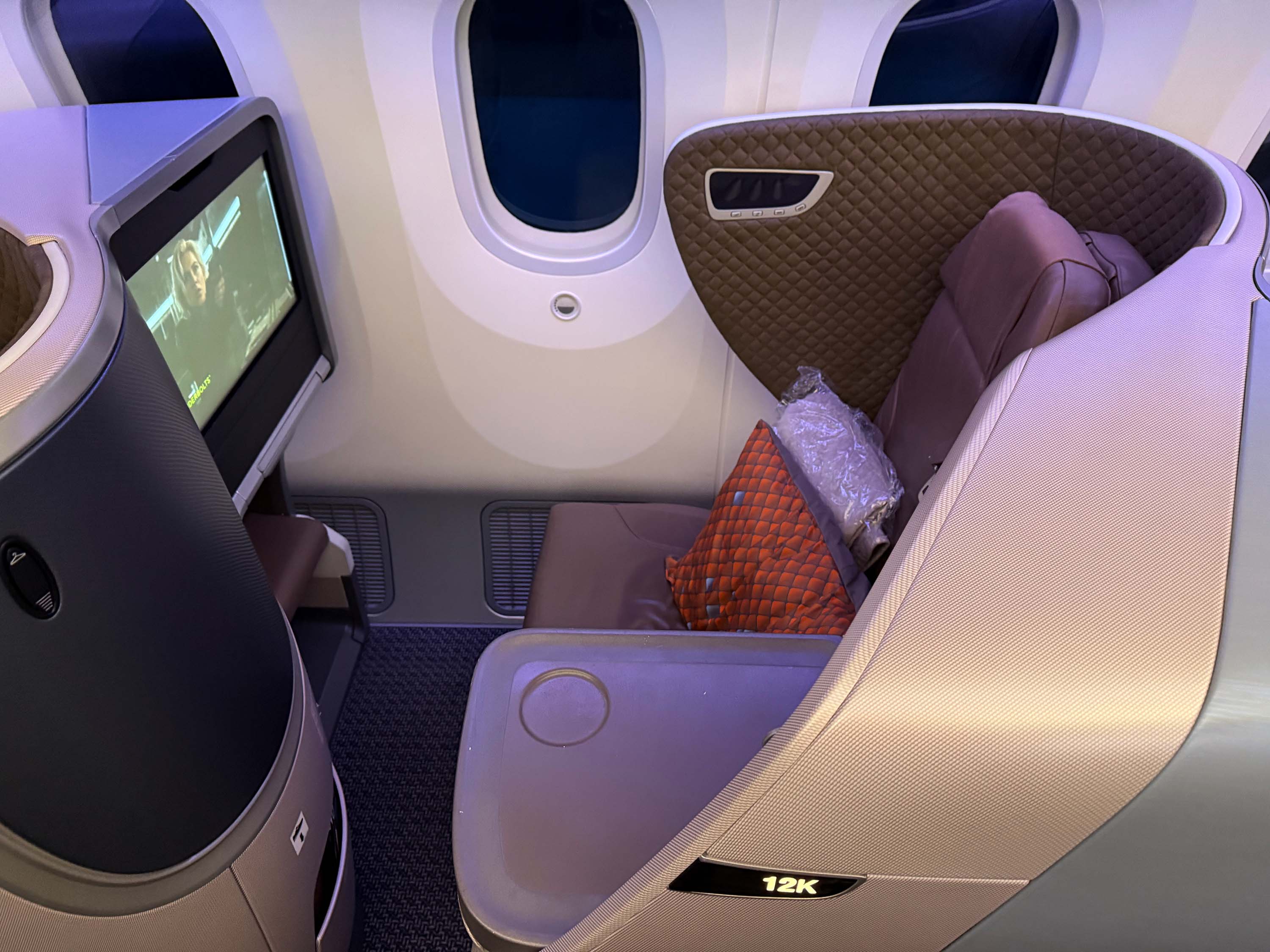
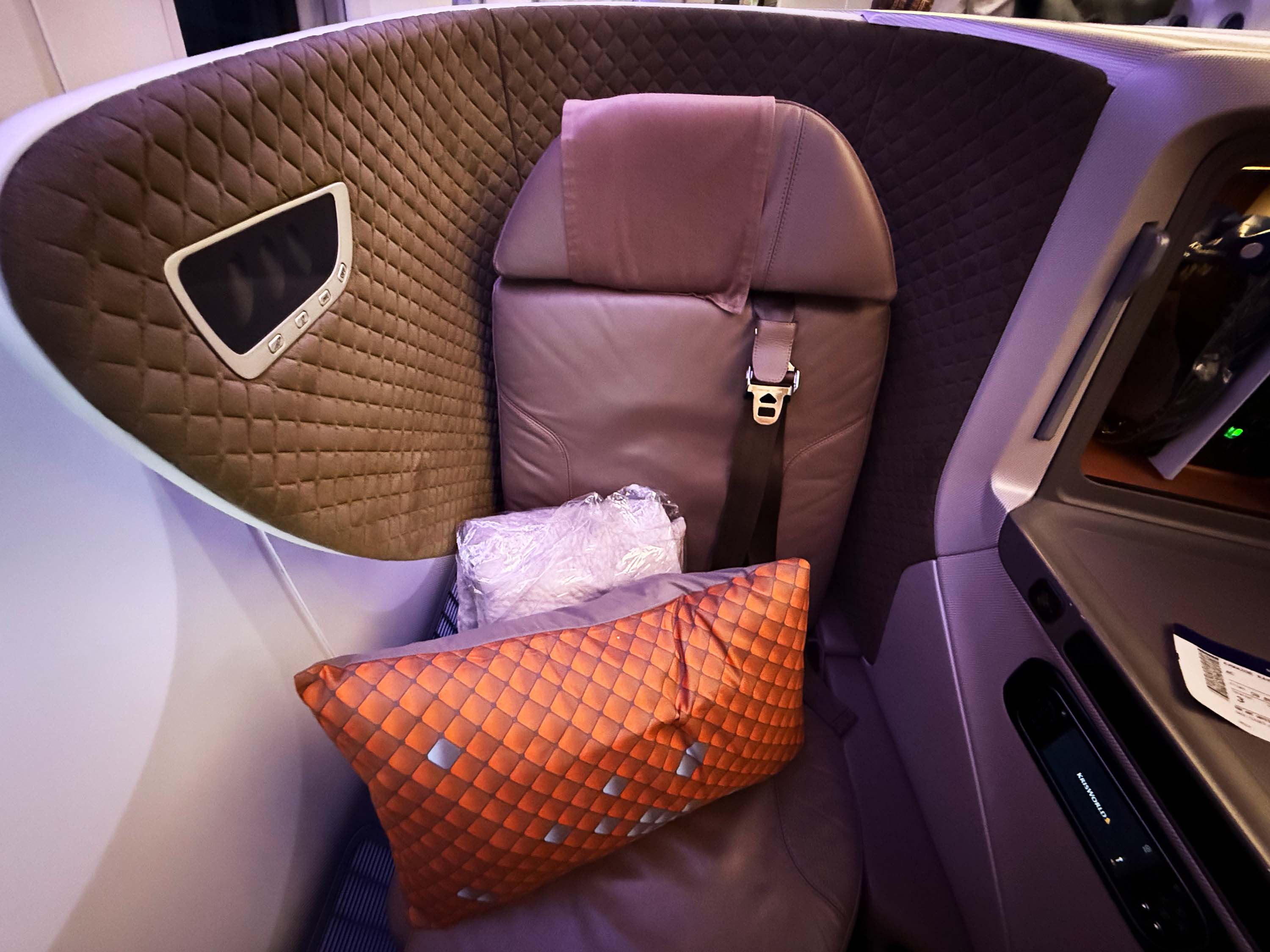
The 36-seat Business Class cabin occupies the space between Doors 1 and 2 in a 1-2-1 configuration across nine rows. These seats are based on the Stelia Symphony platform, which can also be found on airlines such as Turkish Airlines and Air India. As expected, Singapore Airlines has tailored the product to its own style, with trademark dark clay leather upholstery, subtle orange accents, and soft mood lighting welcoming us on board.
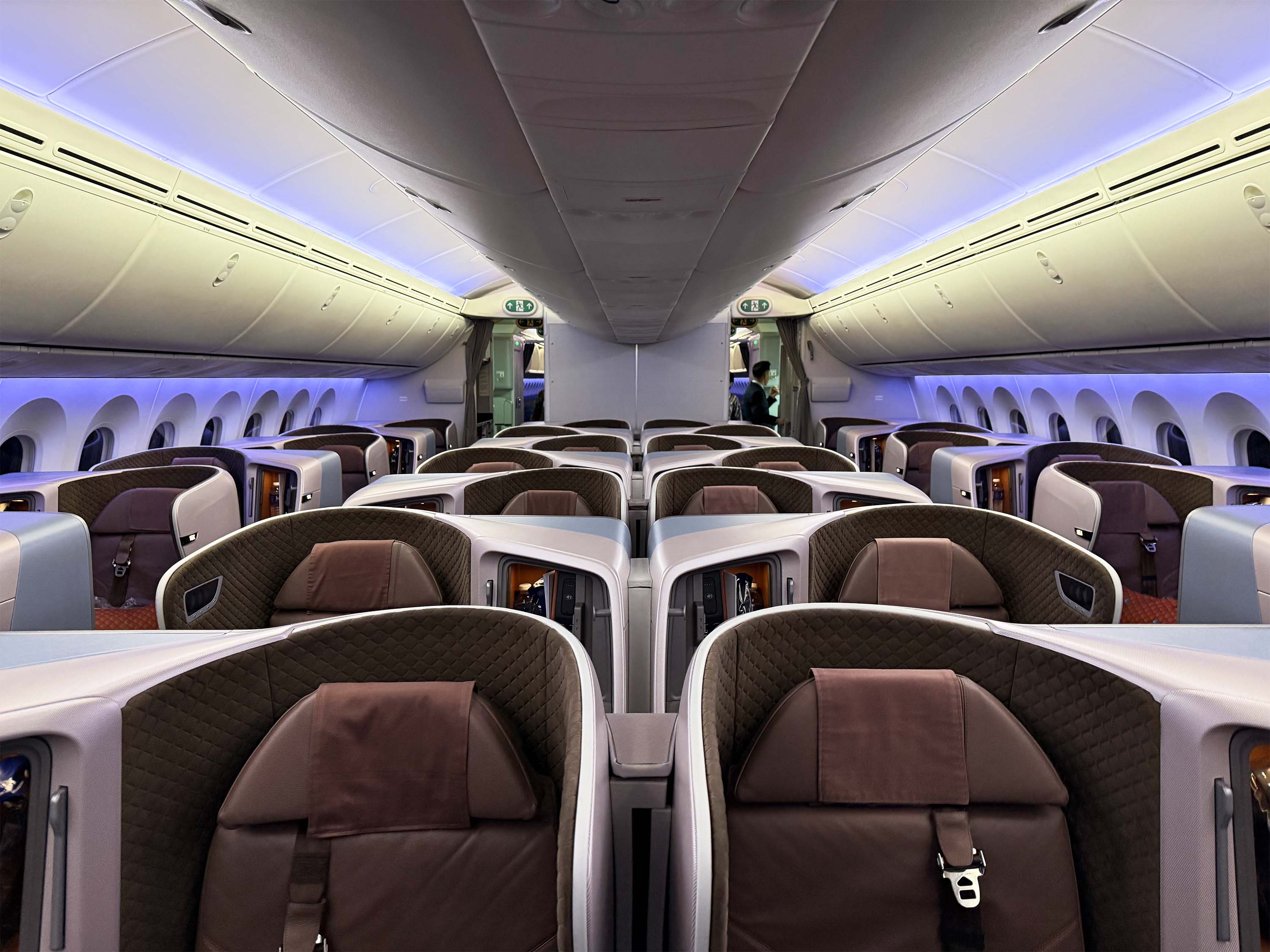
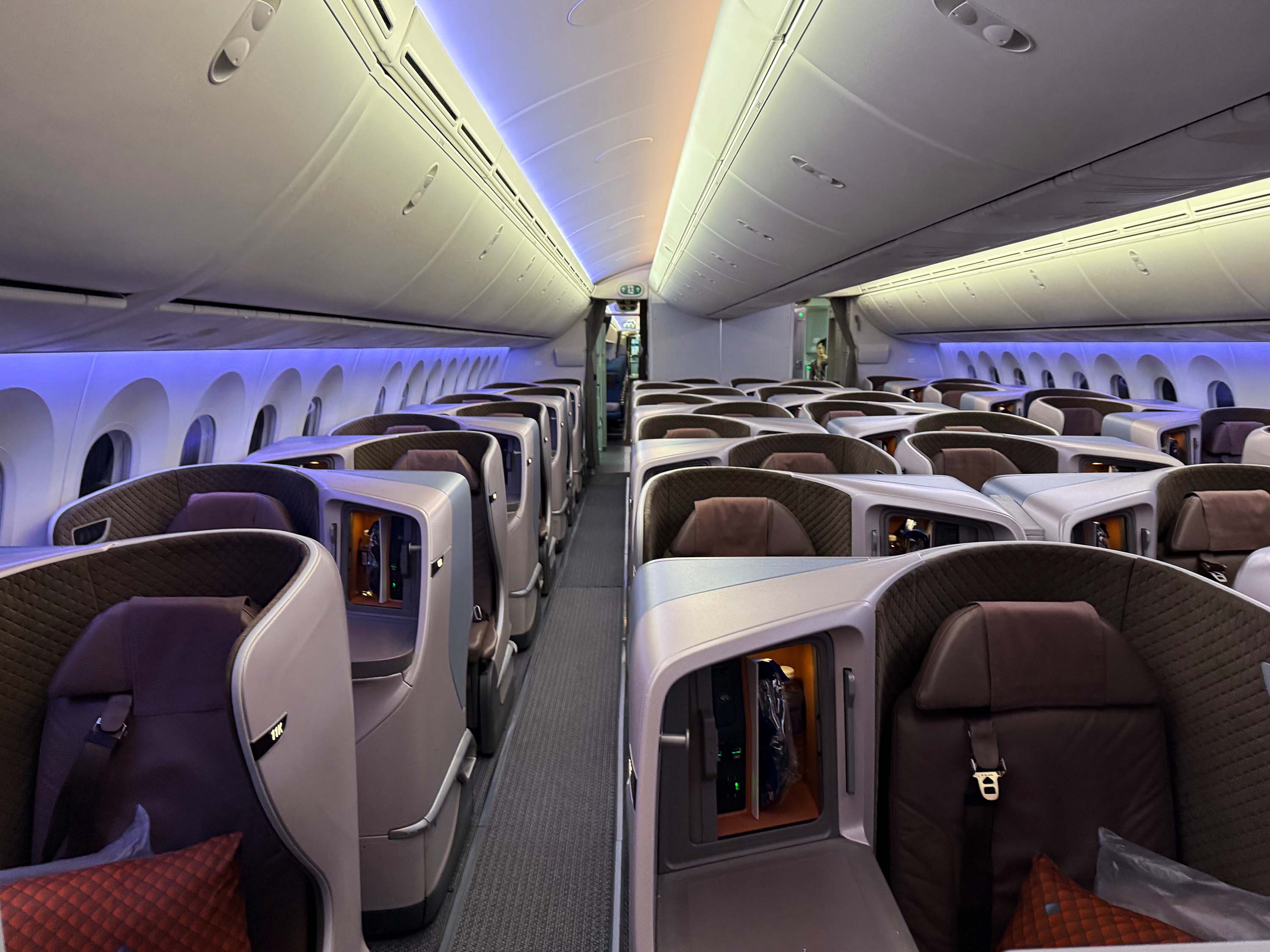
Owing to the staggered layout, the seats alternate between those positioned directly beside the aisle and those tucked closer to the windows behind a side table. Since the aisle-side seats do not come with any additional perks, such as extra storage space, I would personally opt for one of the ‘true window’ seats for greater privacy and less disturbance from passing foot traffic.
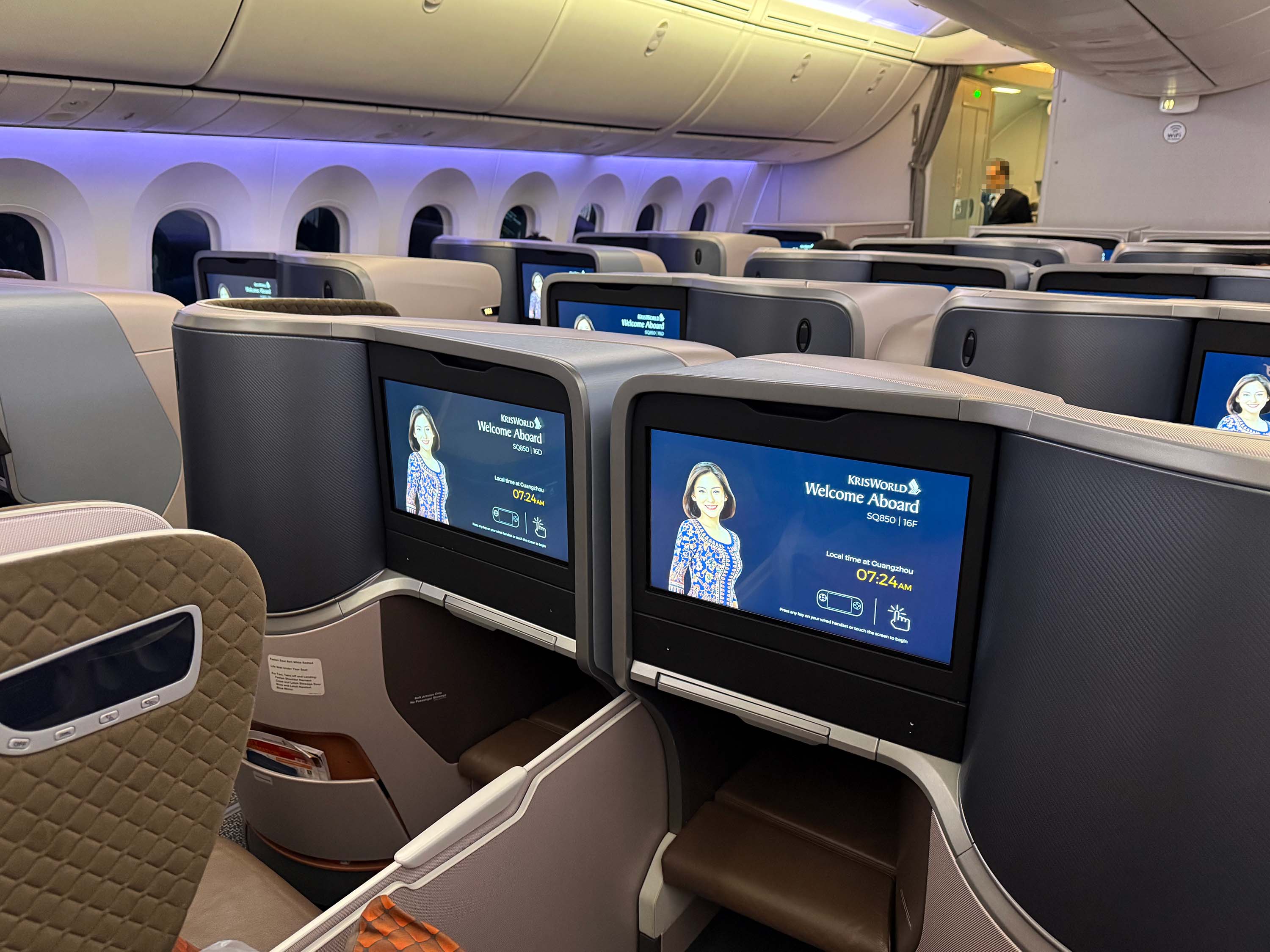
Beyond Singapore Airlines’ own modifications, the seats also feature a sizeable privacy wing along one side. While this does a commendable job of shielding passengers from the aisle, it does unfortunately block one of the windows for the ‘true’ window seats. Do also beware that the window seats in row 16 lacks a window.
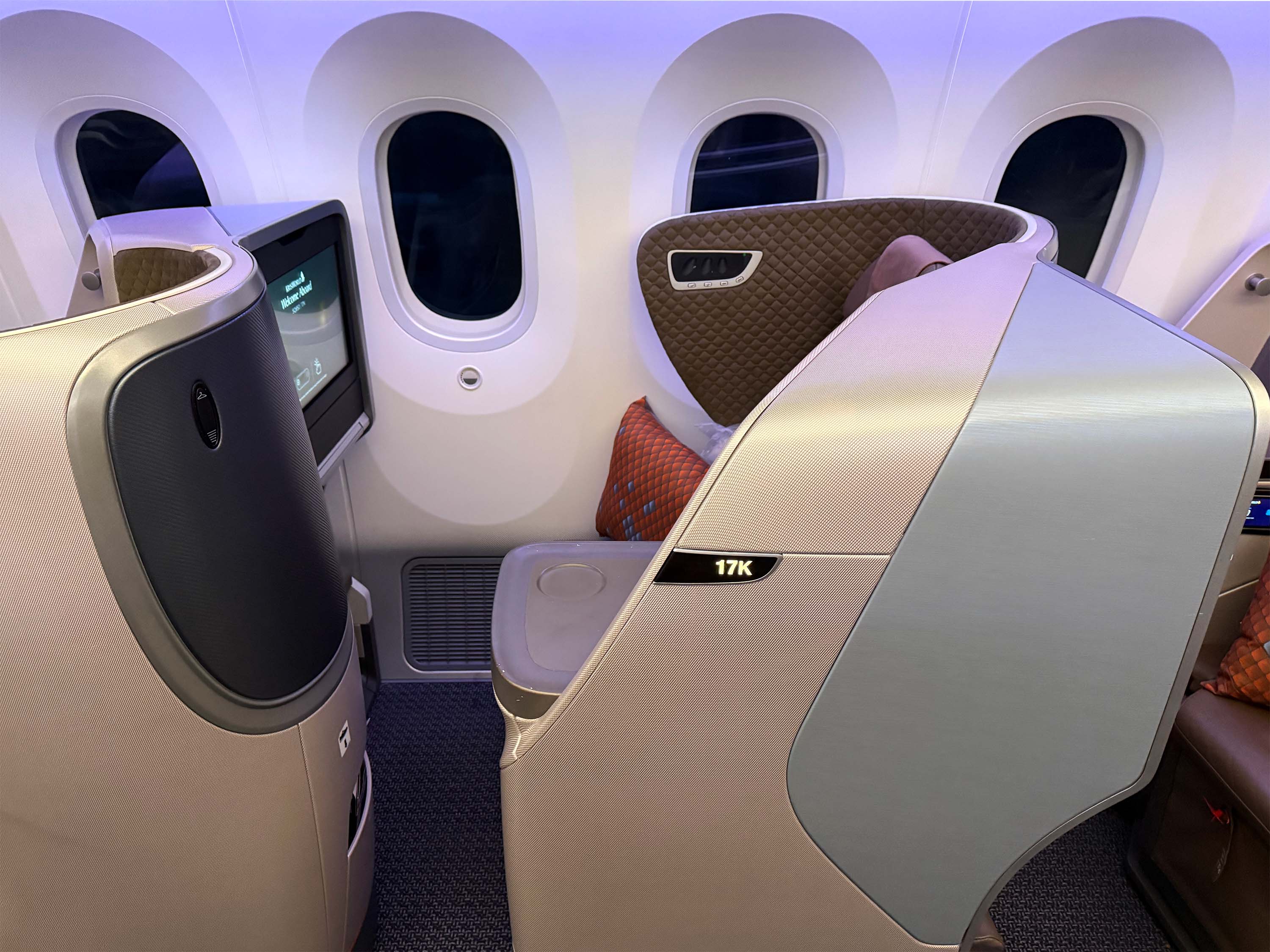
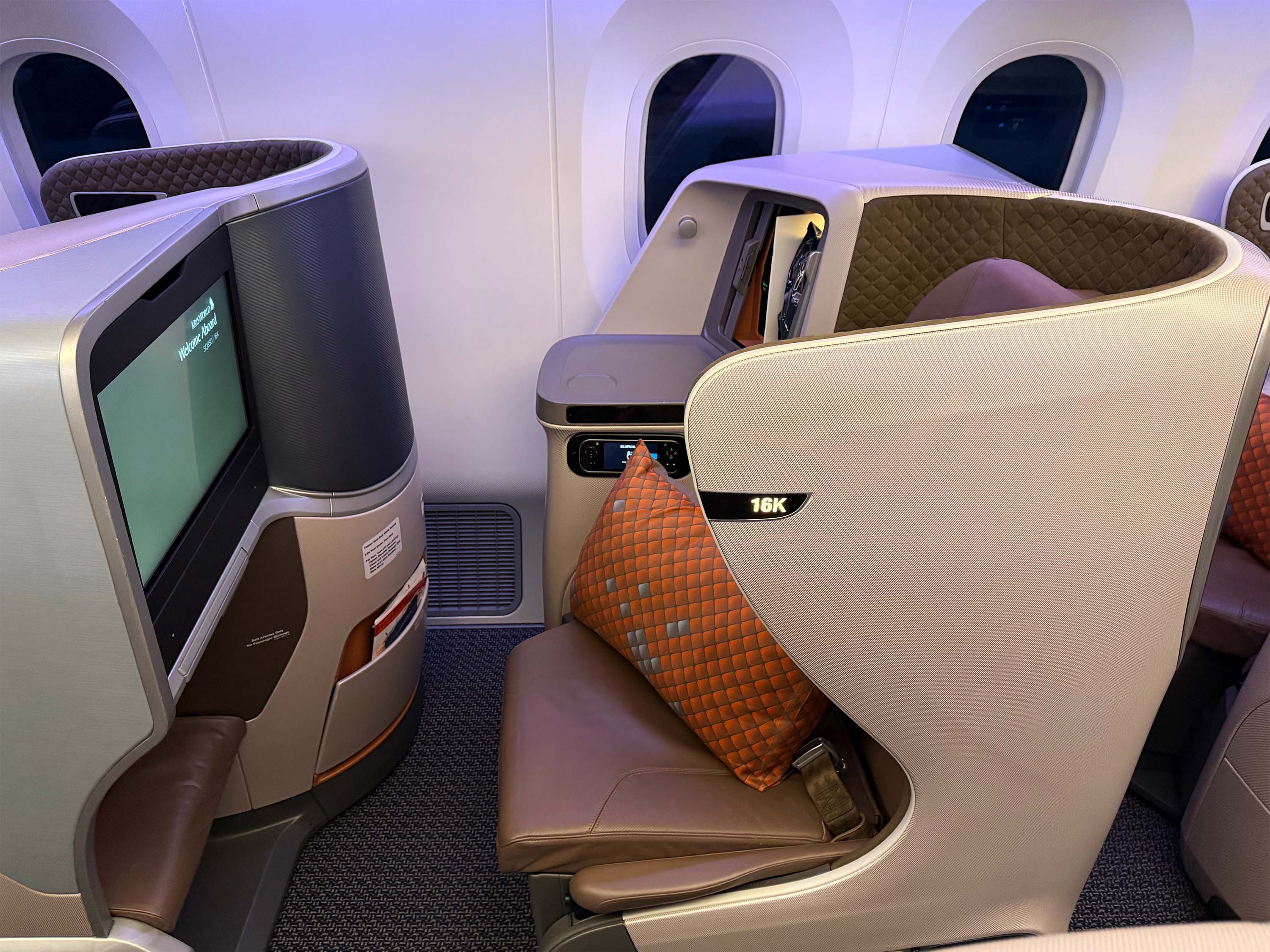
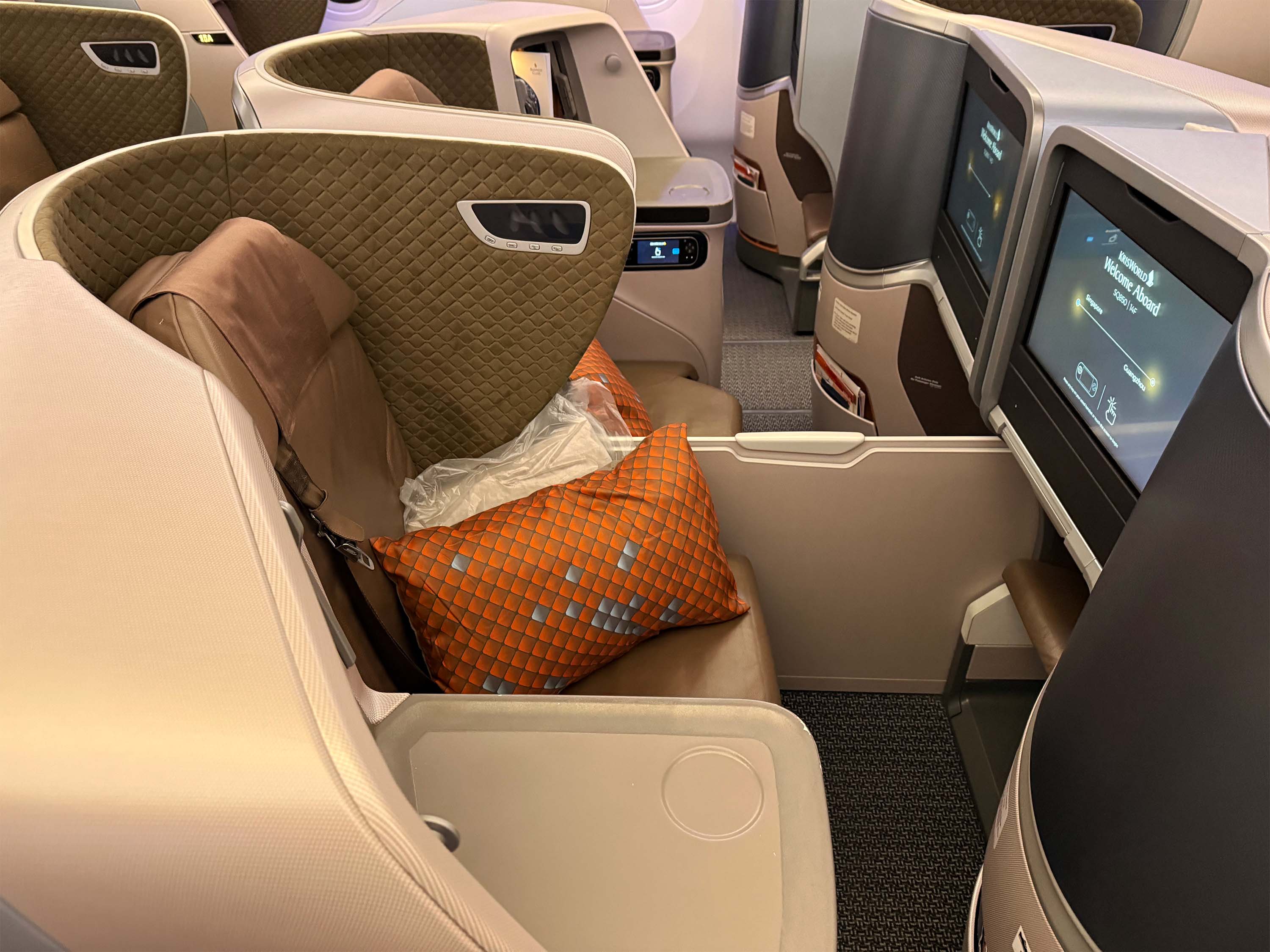
Meanwhile, the centre seats in rows 11, 14, 16, 18, and 20 are configured as the so-called ‘honeymoon seats’, where the pair sits closely together. These are particularly well suited to couples travelling together, as conversation comes naturally without needing to lean across. For those travelling separately, however, the large privacy wings and retractable divider provide a good degree of separation between the two seats.
Seat details
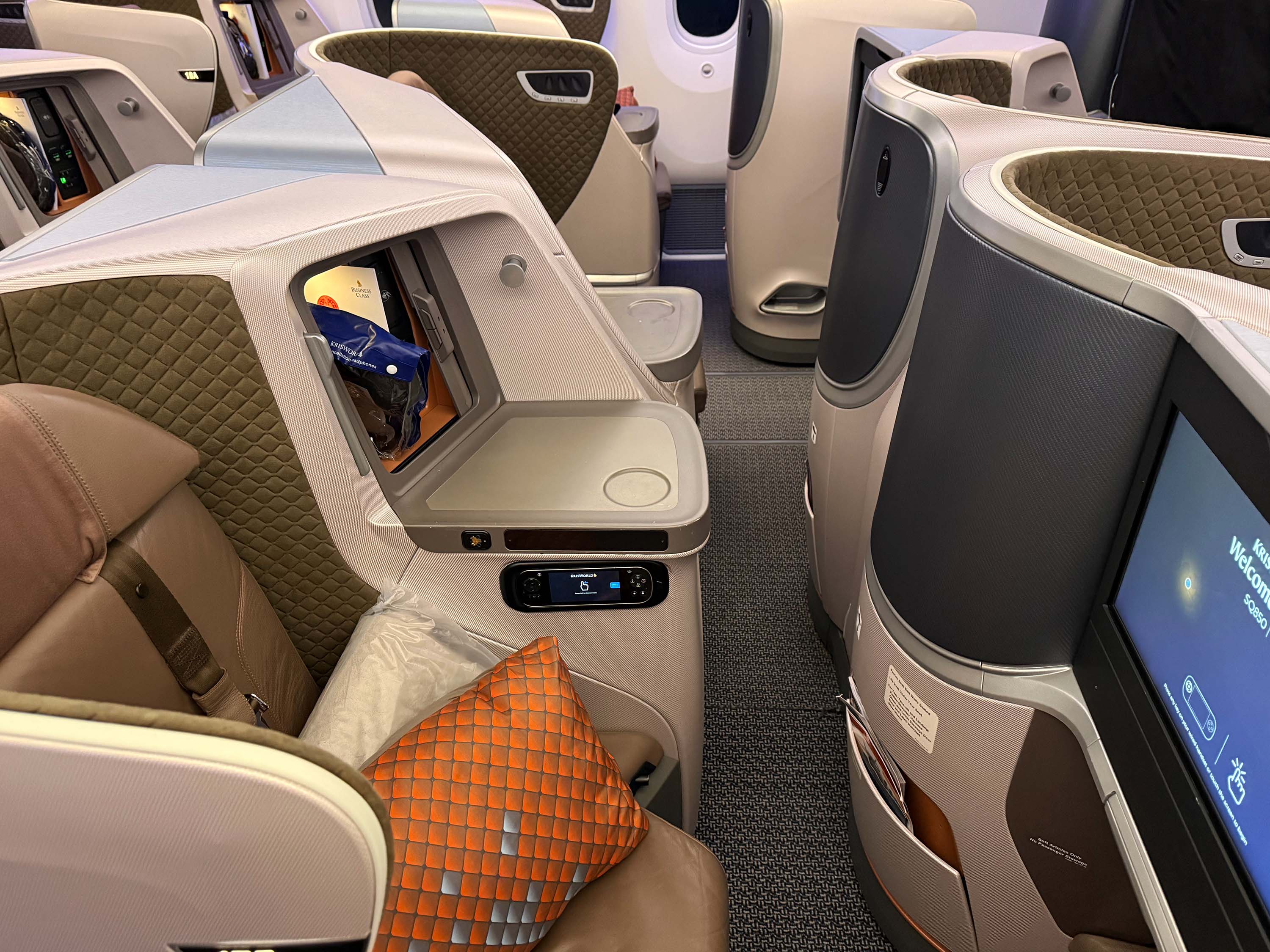
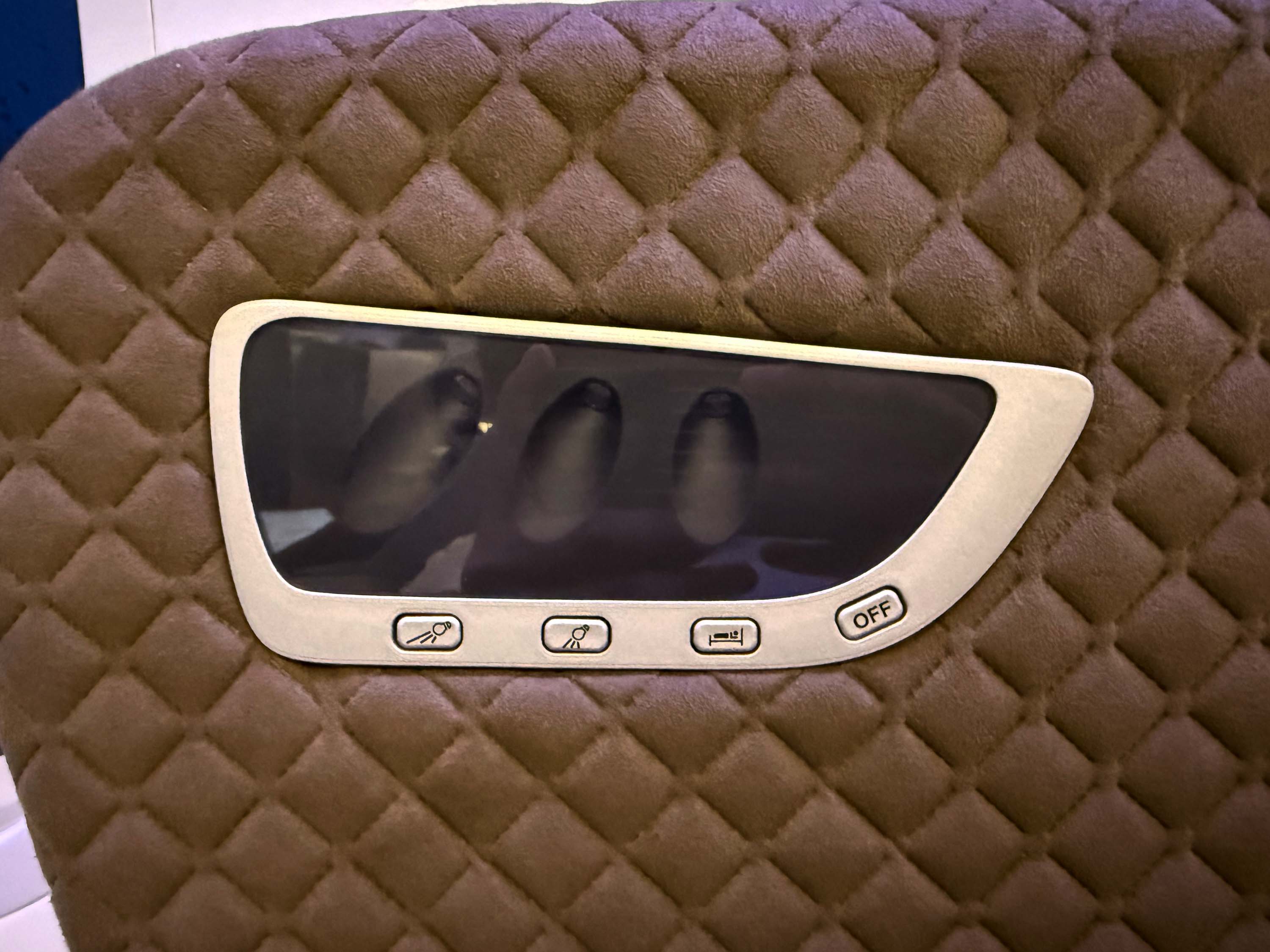
For this flight, I found myself seated in 12K, a window seat on the right-hand side in the second row of the cabin. For one the Stelia Symphony seats are certainly among the better staggered products out there. The combination of strong privacy and intelligently designed storage makes the setup feel far more practical than many older products. That said, the sizeable privacy wings do intrude slightly into the shoulder space, which could prove uncomfortable for broader-shouldered passengers.
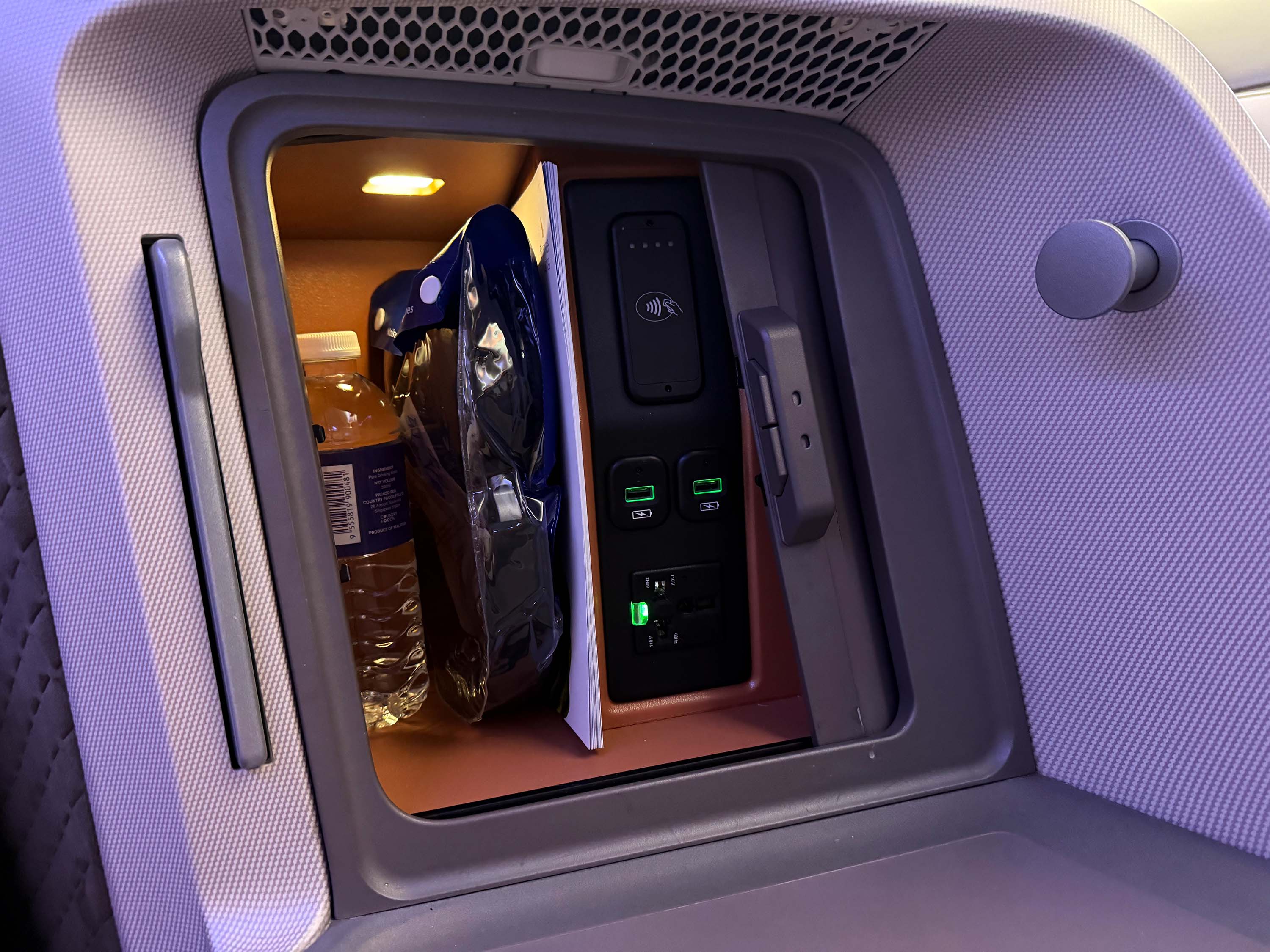
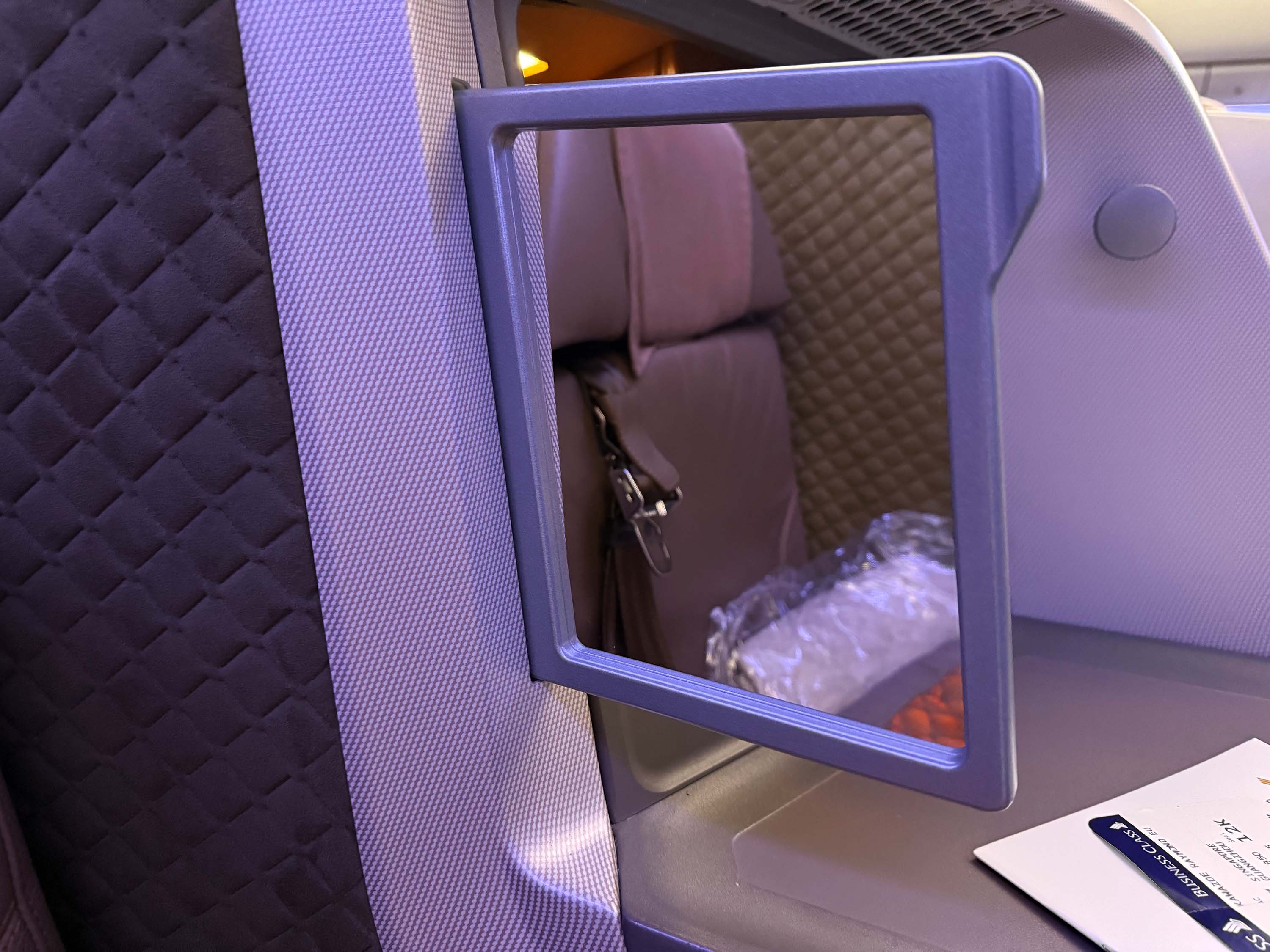
Regardless, I appreciated the small storage compartment built into the side table. It is spacious enough to accommodate phones, passports, and other loose items, making it especially useful on a longer overnight flight. This compartment also contains the two USB-A charging ports and universal power outlet. Beside it also sits a thoughtfully integrated sliding mirror.
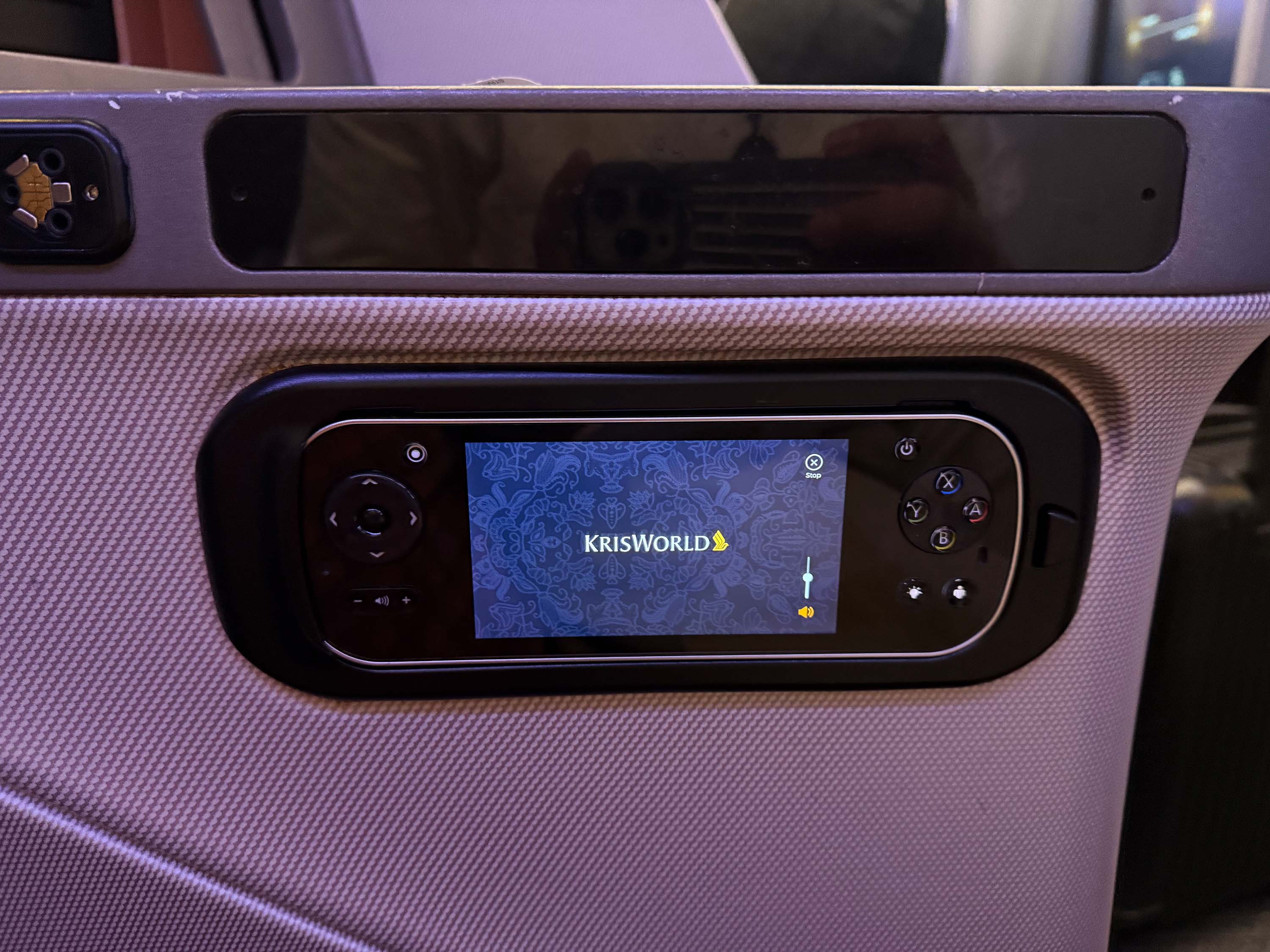
The intuitive seat controls are integrated into the side table and illuminate when touched. As with many newer Business Class products, there is also a dedicated ‘Do Not Disturb’ button for the crew. Beneath the controls sits the touchscreen handheld remote for the KrisWorld system. Meanwhile, on the opposite side of the seat is an adjustable reading light with three brightness settings.
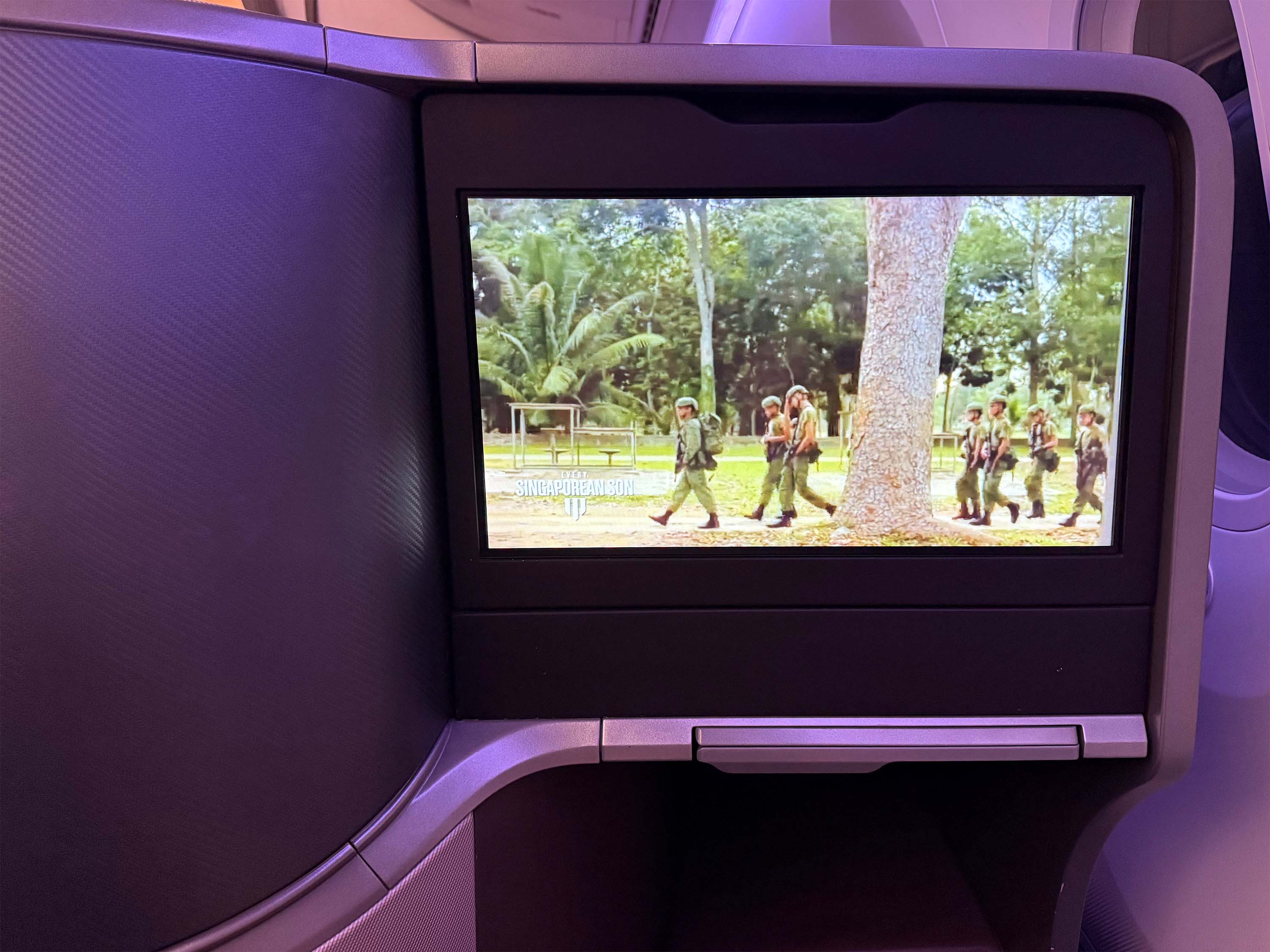
Across the seat is the high-definition 18-inch touchscreen monitor, which is crisp and highly responsive. The screen can tilt downward slightly, making it easier to watch while reclined. Hidden beneath it is a large and sturdy tray table that slides out smoothly when needed.
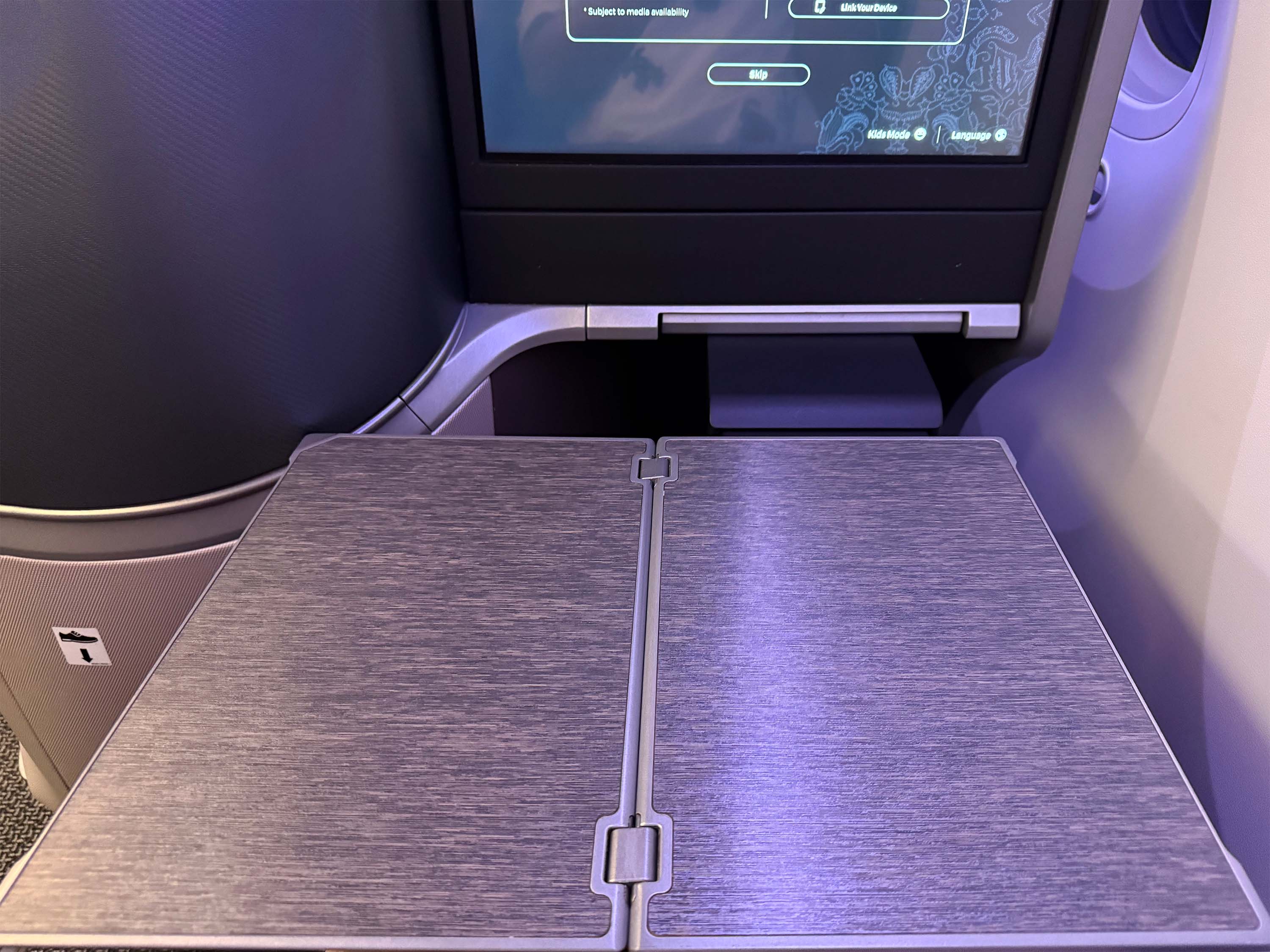
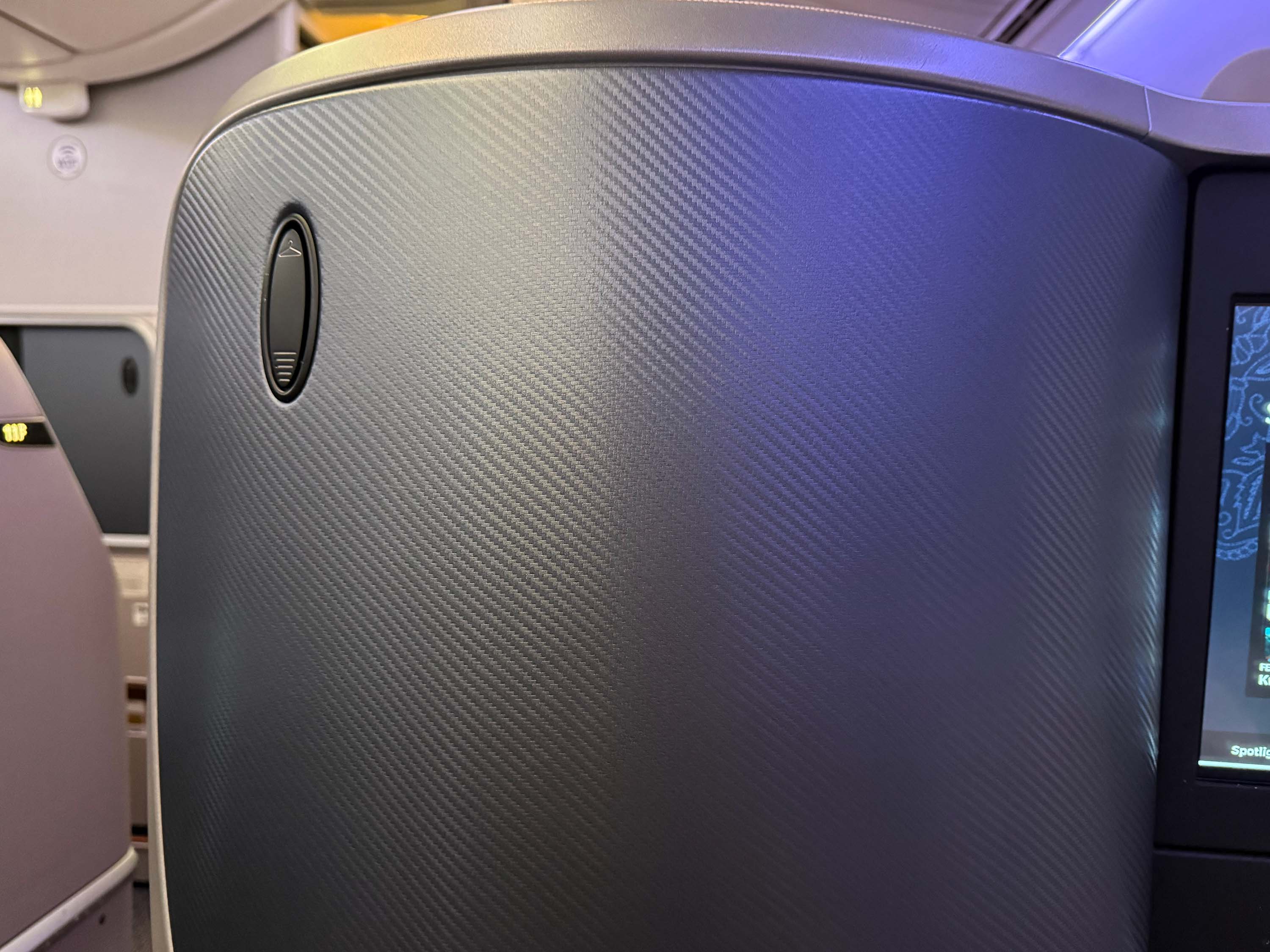
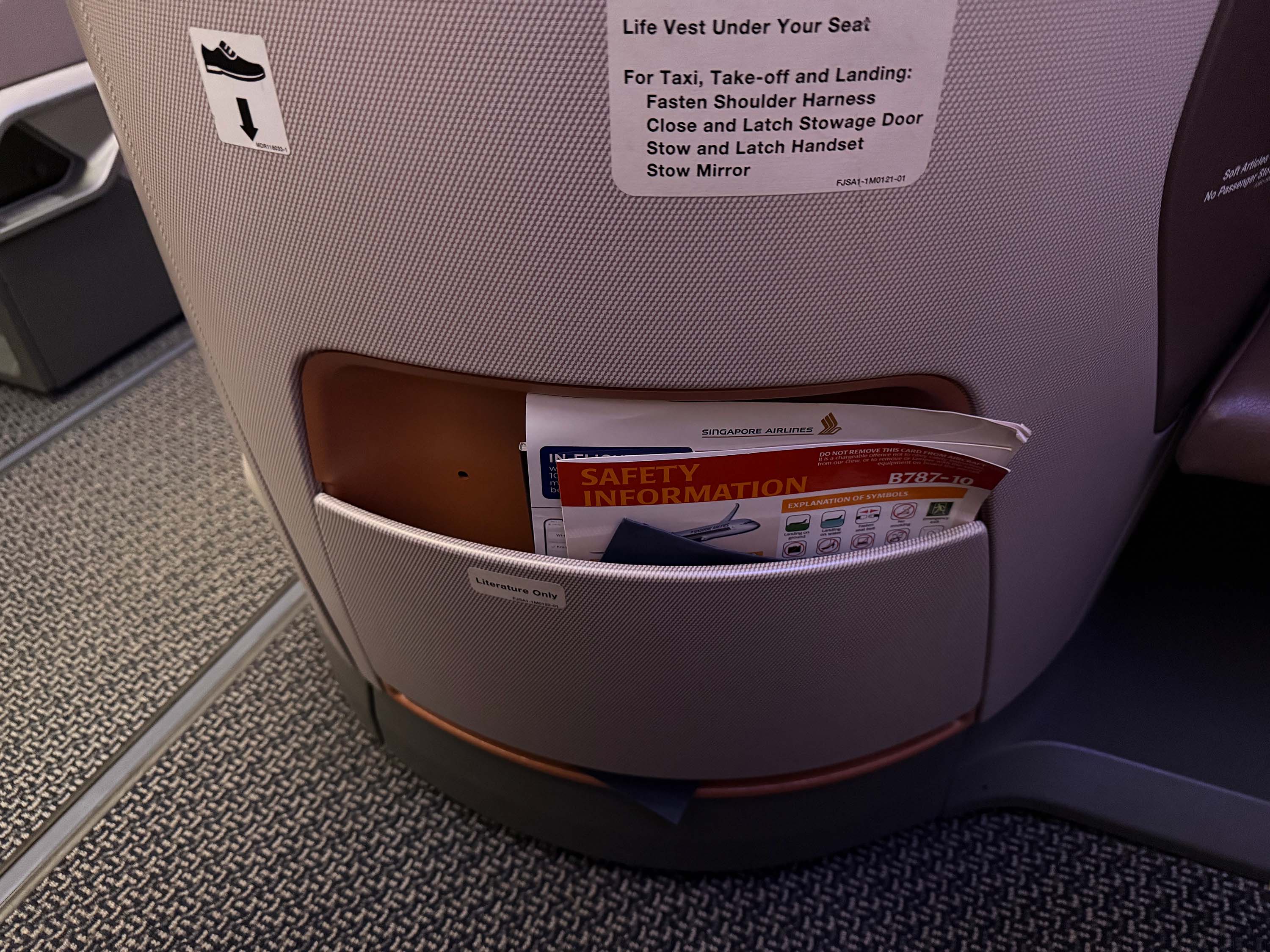
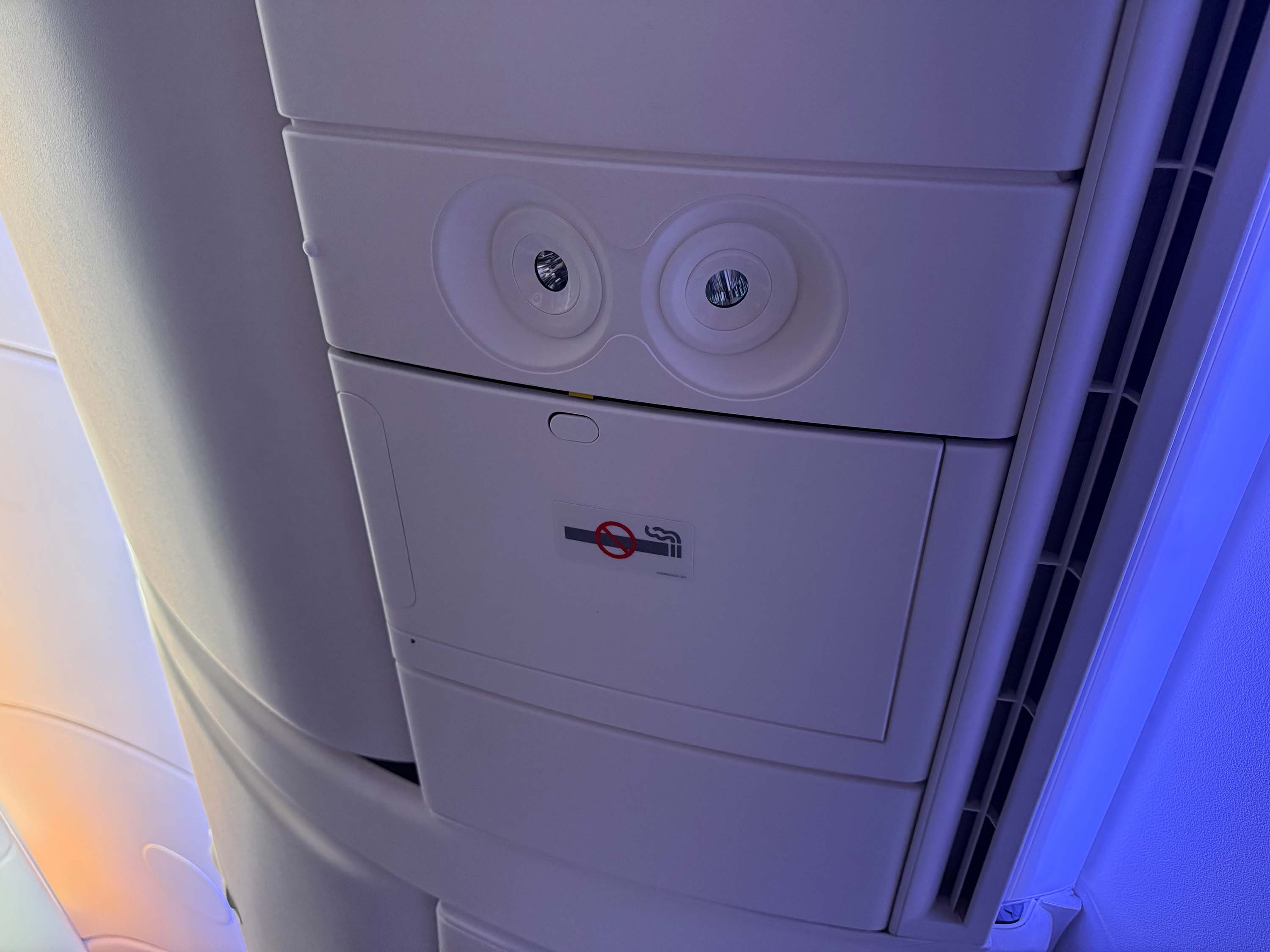
Furthermore, a coat hook is built into the seat pod directly ahead, under which you’ll also find the literature pocket. I’ll also add that unfortunately, the cabin isn’t fitted with overhead air vents.
Departure from Singapore
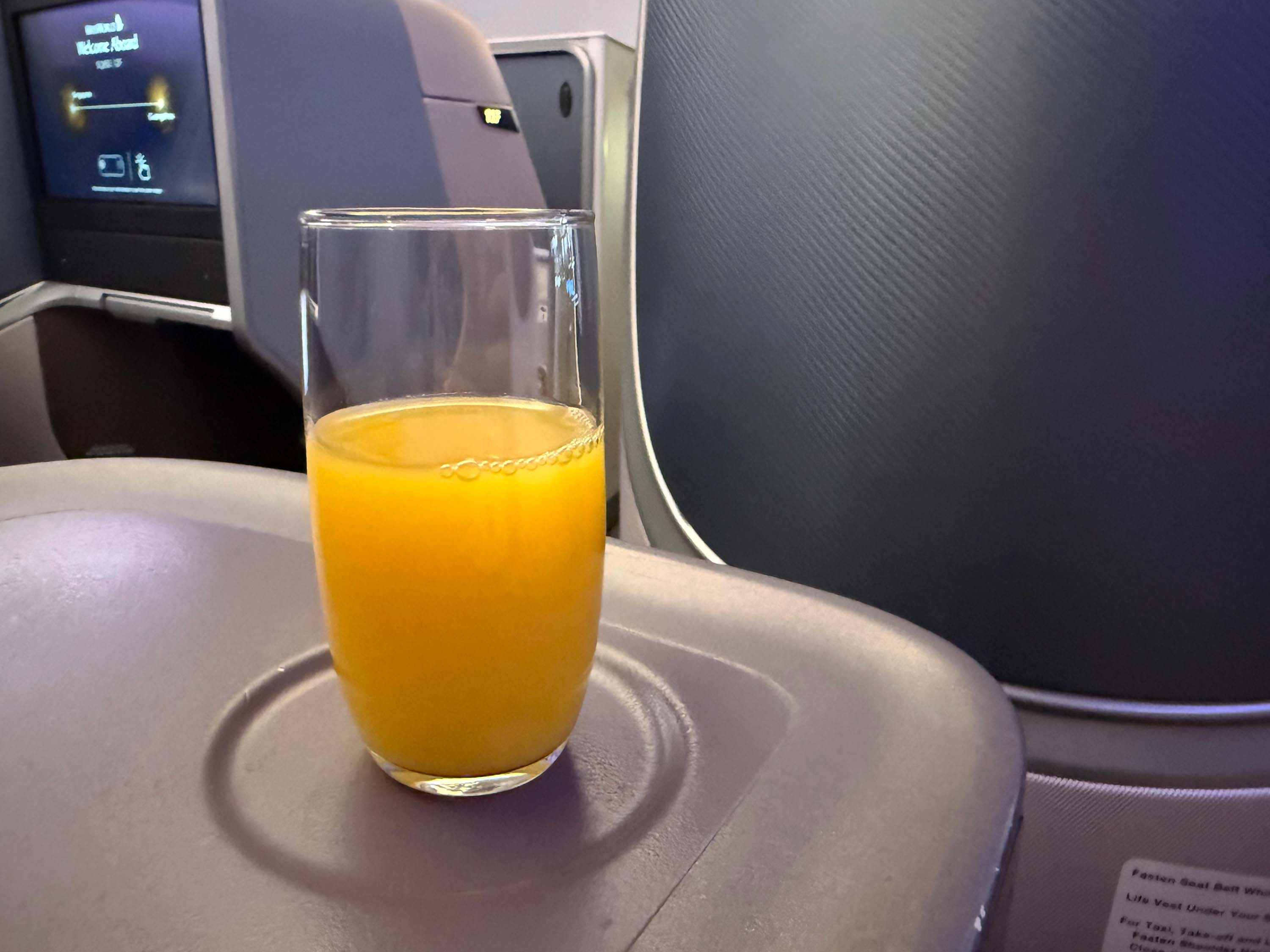
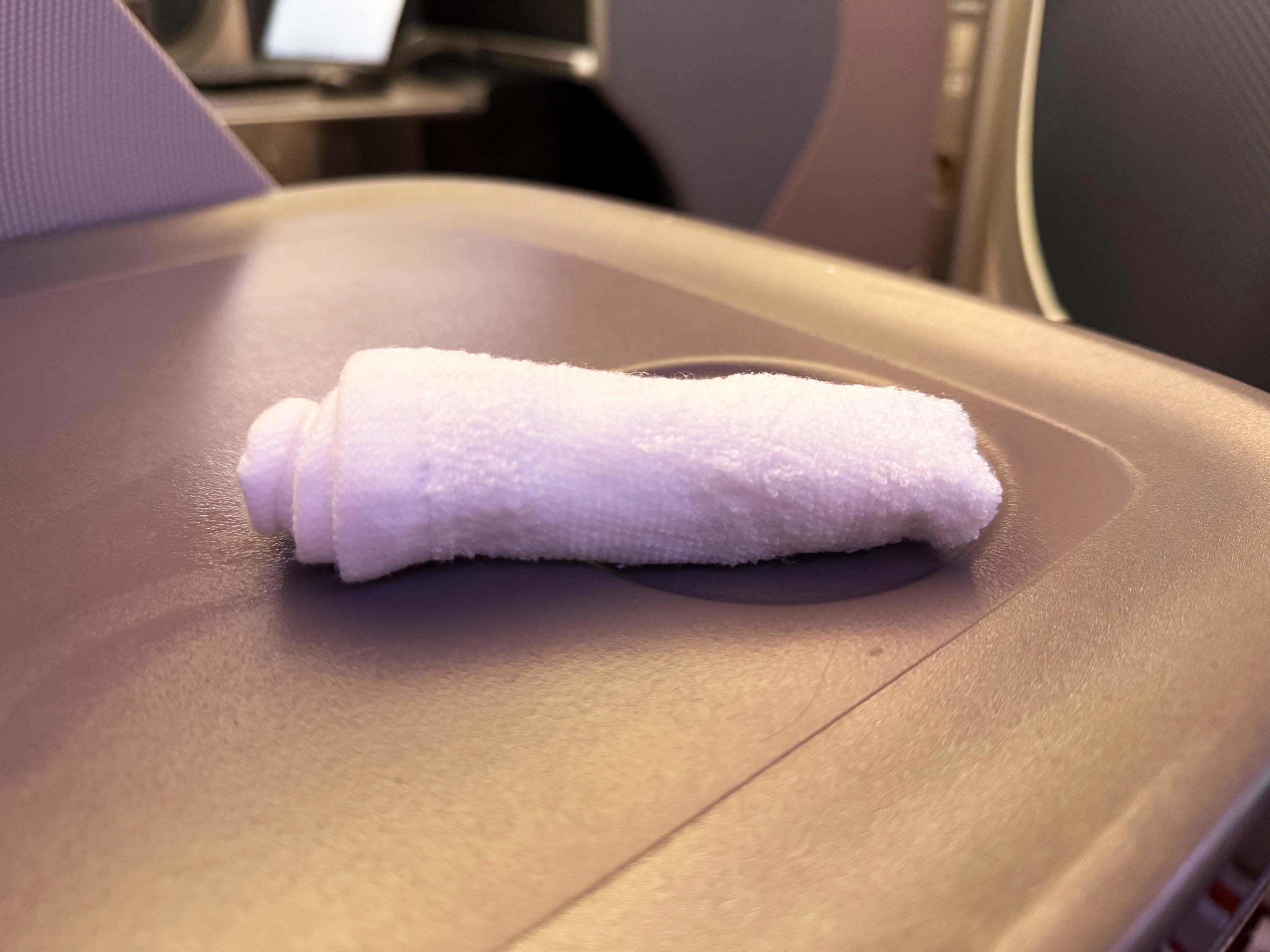
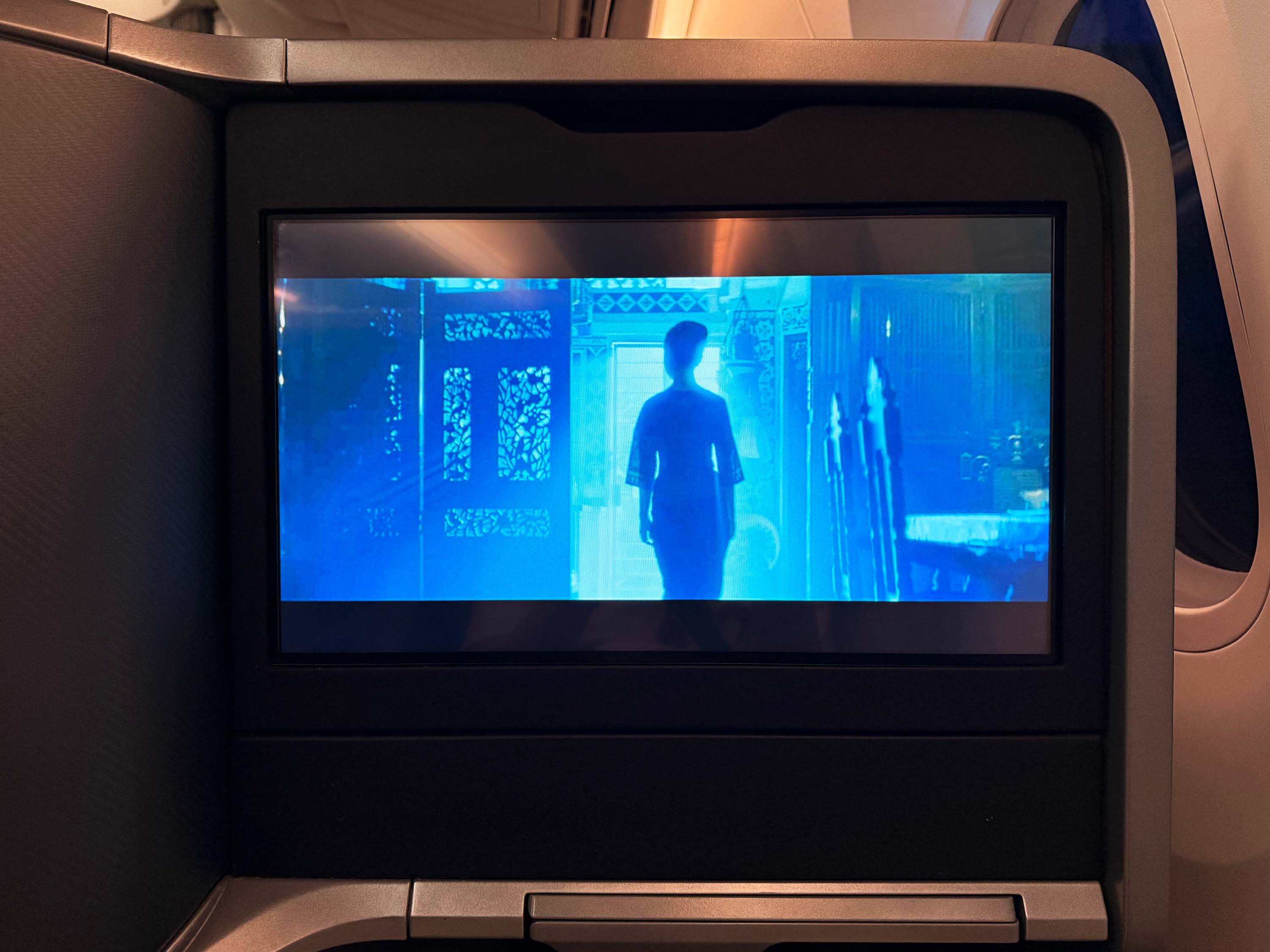
As I settled into my seat, Xi Wei came by to introduce herself and offer a trio of either orange, apple, or tomato juice. Given the morning departure, orange juice felt like the natural choice, and it was pleasant enough despite clearly coming from a carton. Shortly afterwards, the other Business Class flight attendant, Tamilanunathan, passed through with steaming hot towels, joking about how refreshed I looked despite the early hour. Despite my lack of sleep the night before, the airline’s soothing boarding music certainly made this a relaxing start to the morning.
Although boarding finished quickly, we remained at the gate for another hour before the doors finally closed at 08:23. During this time, Mr Tay, the Inflight Service Manager, personally welcomed each Business Class passenger by name while reconfirming meal orders. Once the doors were closed, the first officer welcomed us aboard on behalf of Captain Lee and apologised for the brief maintenance issue behind the delay. He also advised us of our flight time of 3 hours and 30 minutes to Guangzhou. Pushback commenced seven minutes later, accompanied by Singapore Airlines’ excellent safety video.
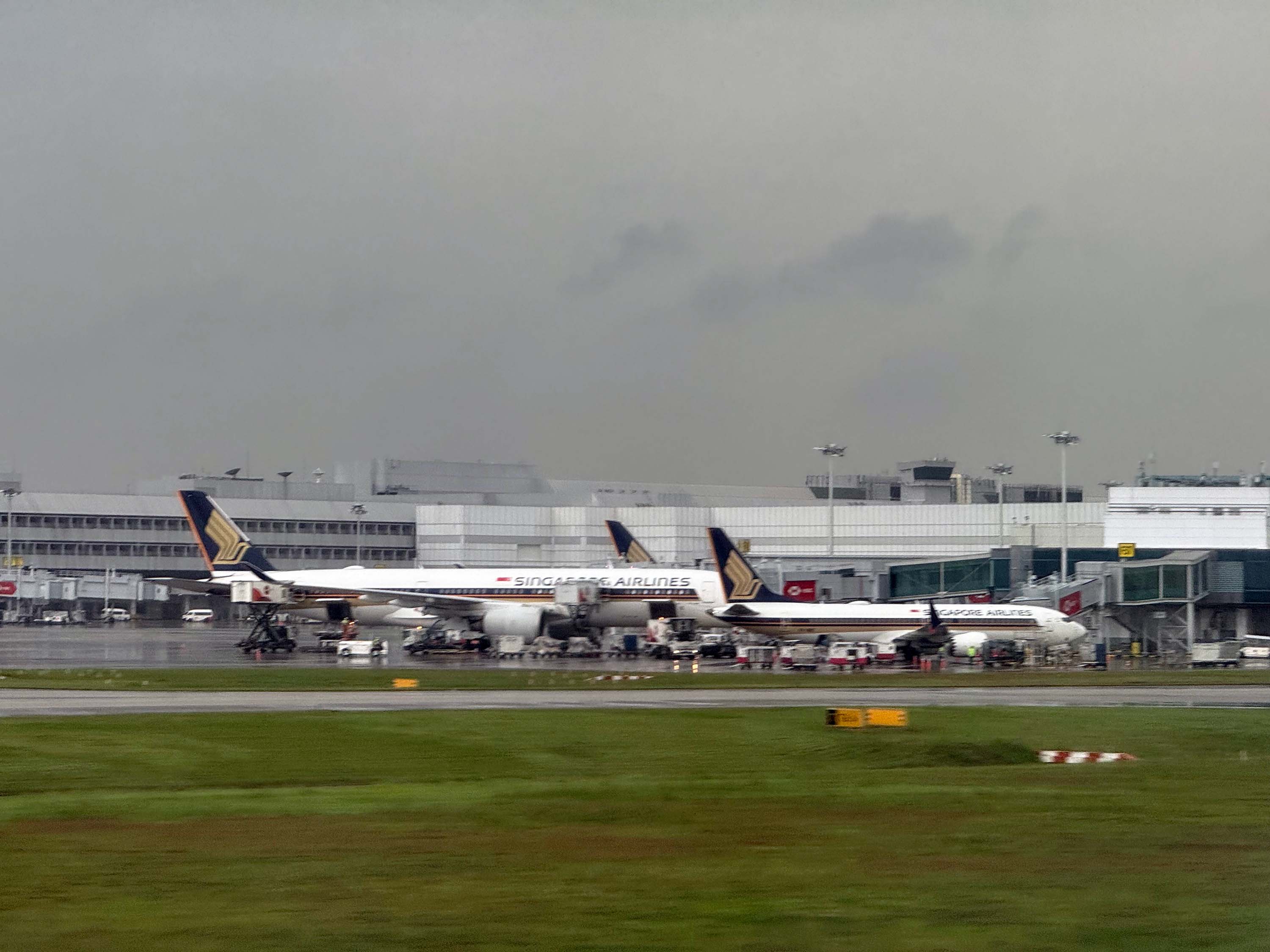
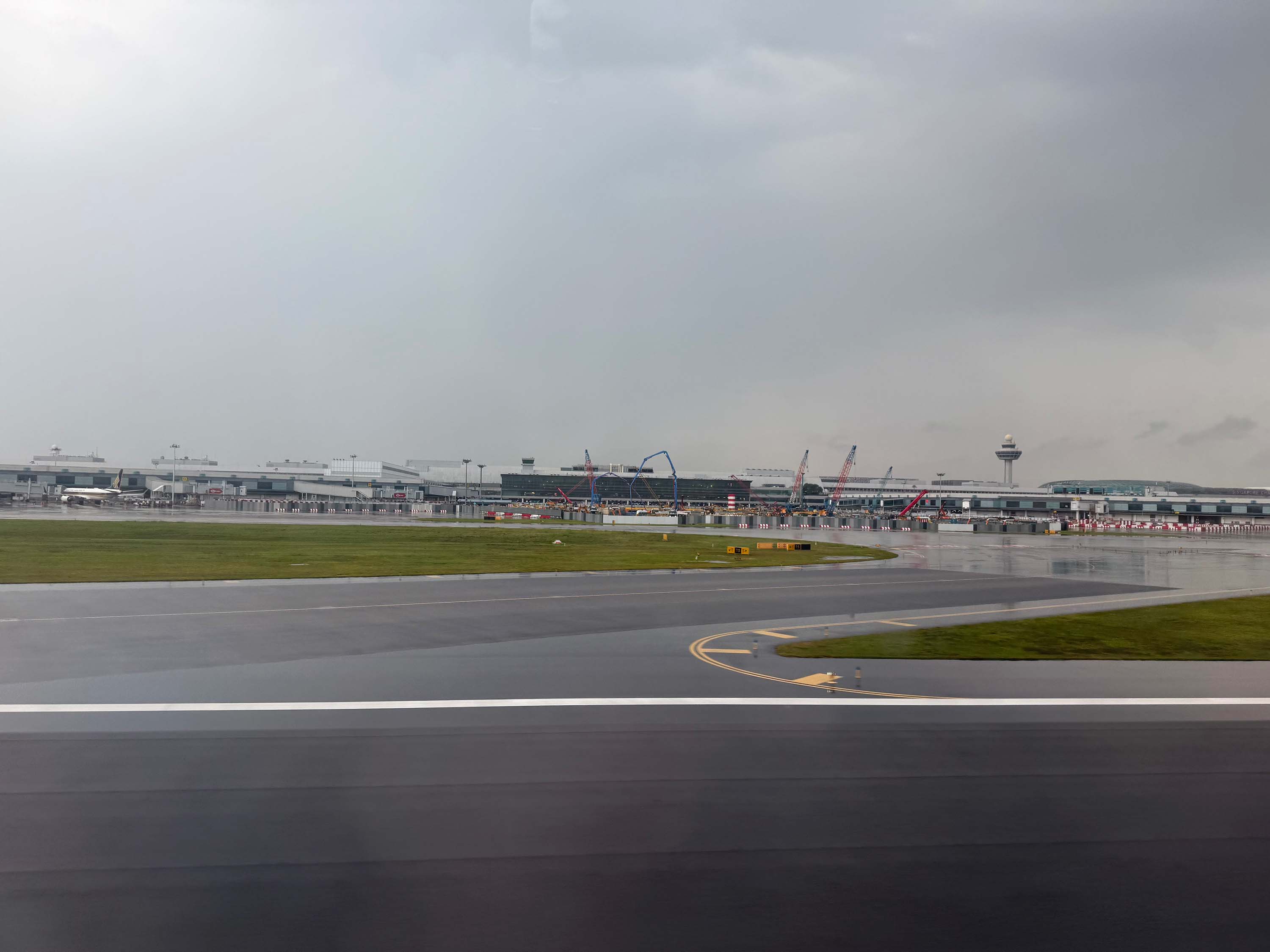
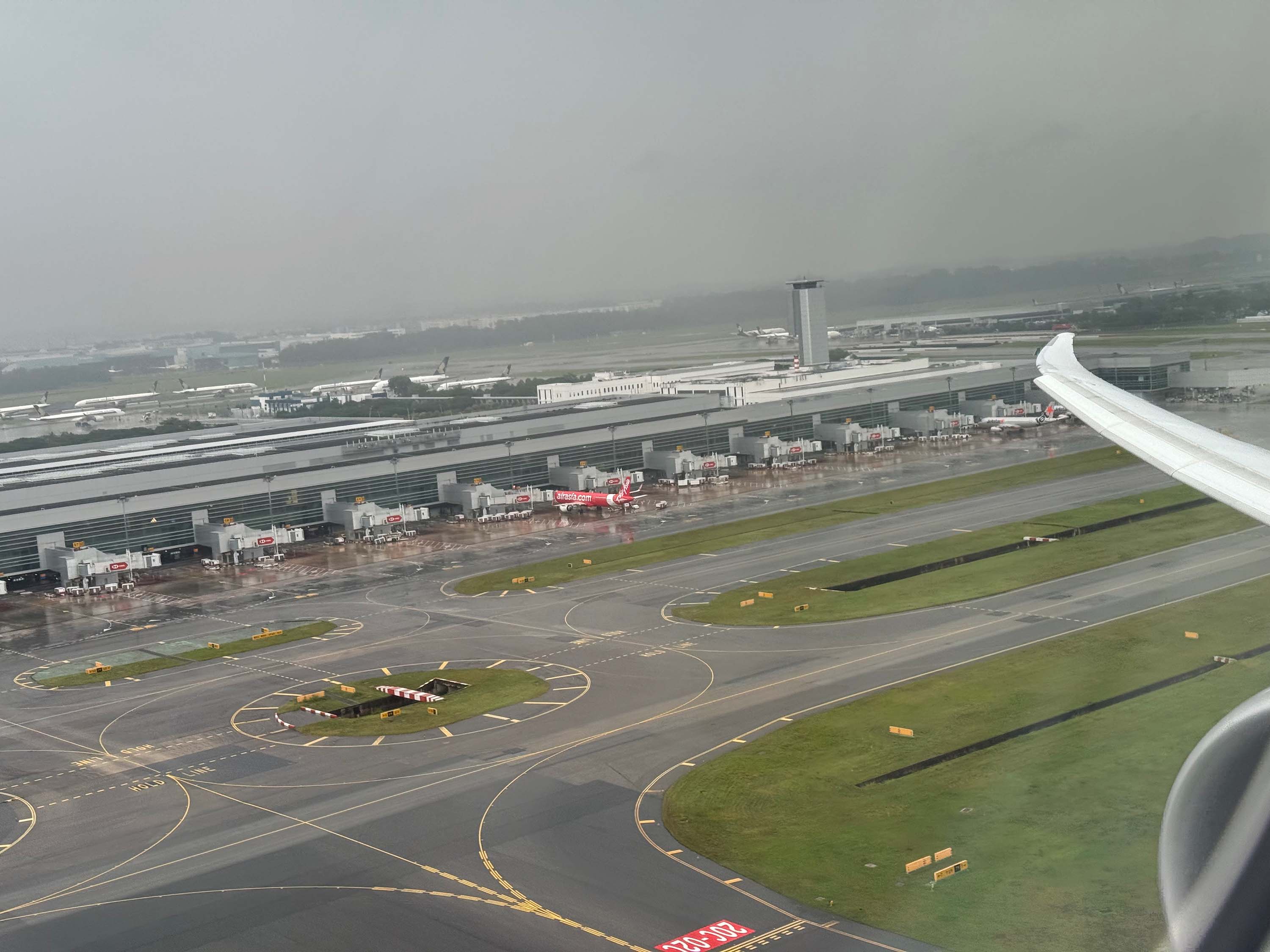
Unfortunately, the rainy weather in Singapore made photography difficult during taxi. After a slow trek across the airport, we eventually reached Runway 20C on the far side of the field. At 08:49, we lifted off into the gloomy skies, departing nearly an hour behind schedule.
Entertainment
The seatbelt signs were turned off 15 minutes after takeoff, prompting the crew to prepare for service. While waiting for the breakfast service to commence, I took the opportunity to browse the KrisWorld entertainment system. Alongside Emirates’ ICE and Cathay Pacific’s StudioCX, it remains one of the most extensive inflight entertainment systems out there. There is an enormous selection of films, both new and old, in addition to countless television shows. Throughout the duration of the flight, I wound up watching several episodes of the second season of The Last of Us.
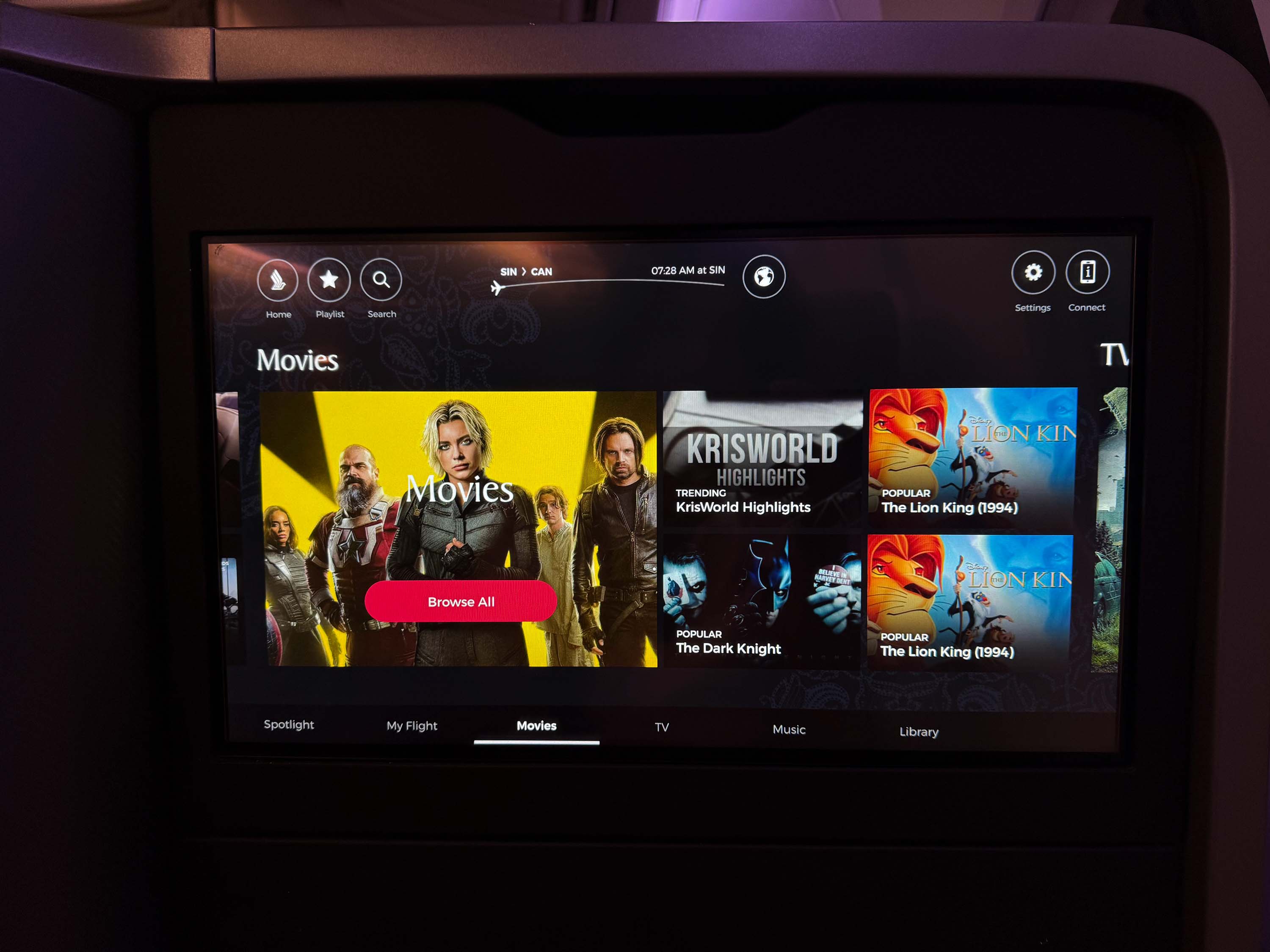
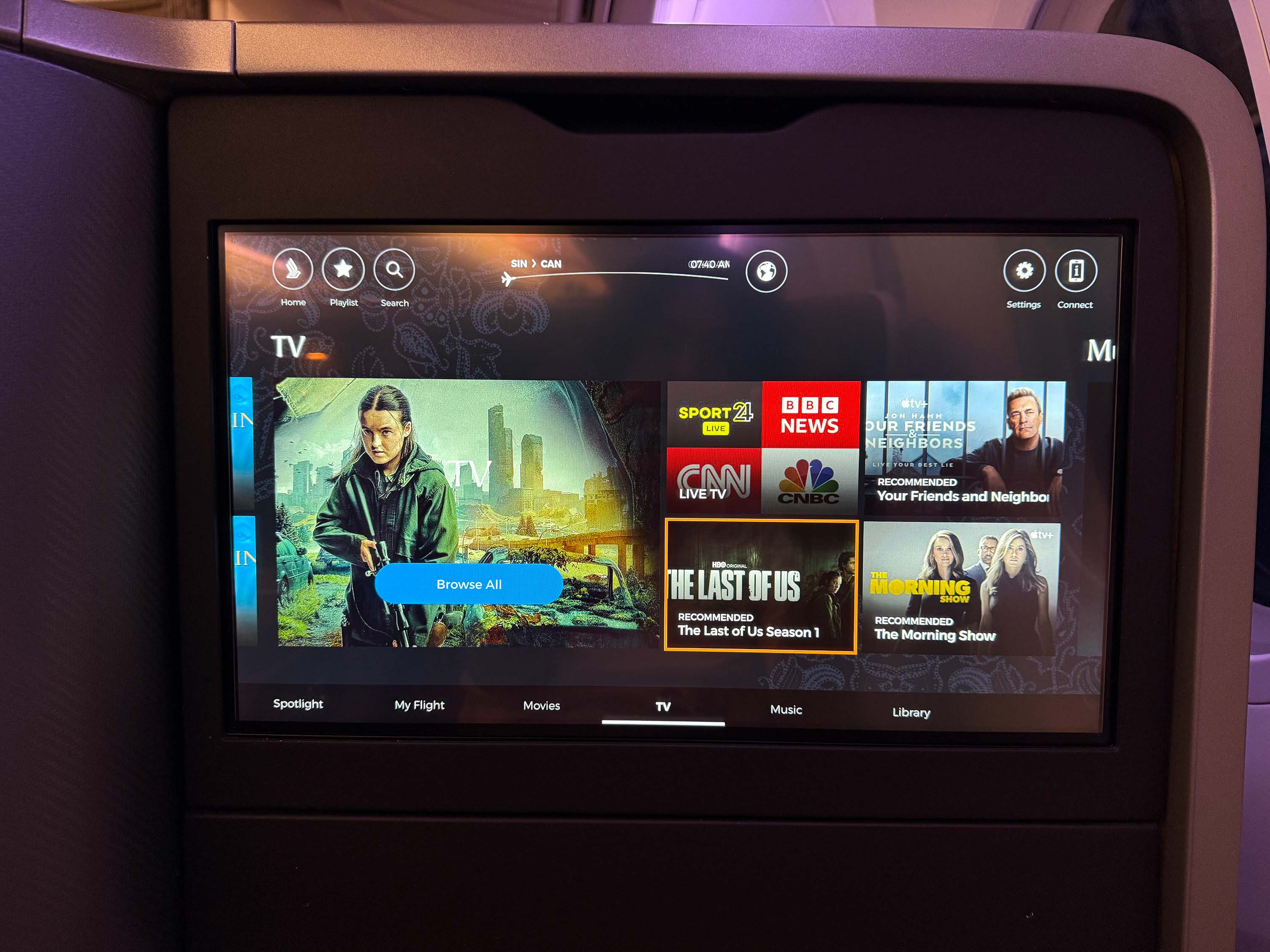
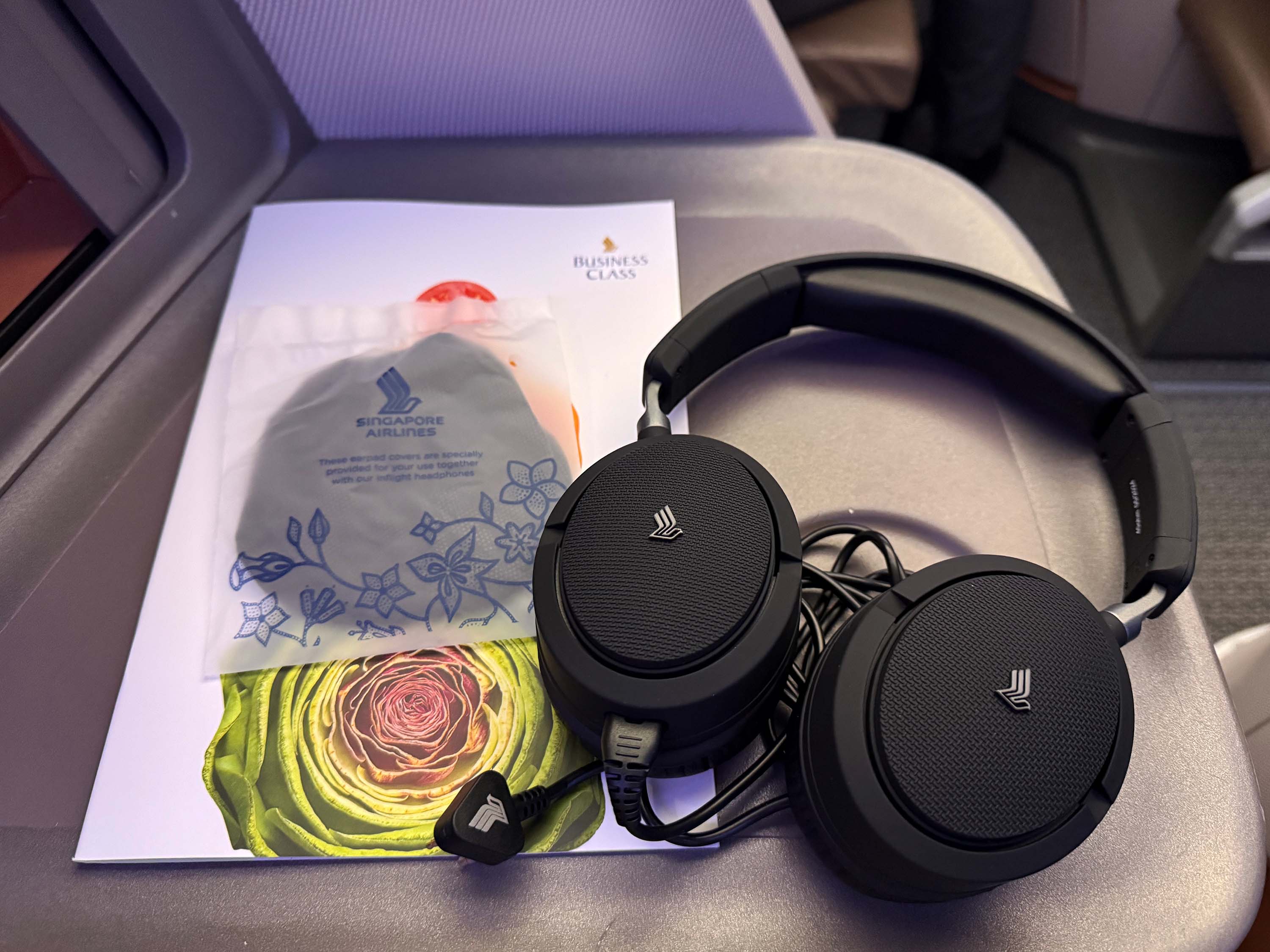
Besides the large 18-inch touchscreen monitor in front of the seat, there is also an intuitive touchscreen handheld controller on the side panel, which can display the inflight map. A pair of decent noise-cancelling headphones is likewise stored in the side compartment. Meanwhile, the seat pocket contains the usual literature, including the shopping catalogue, inflight menu, safety card, and Wi-Fi guide.
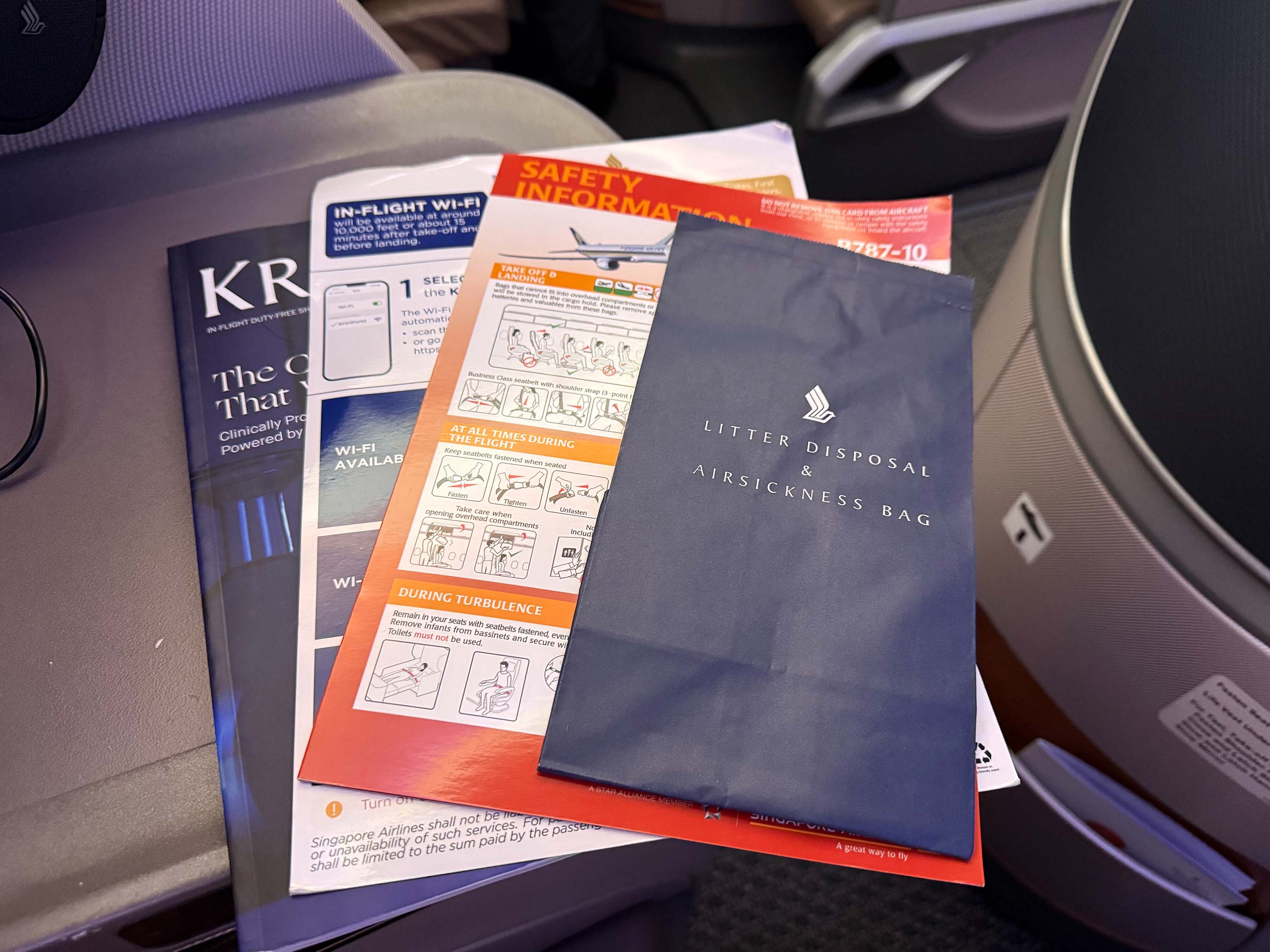
Notably, inflight WiFi was also free for Business Class passengers and KrisFlyer members. As expected from a non-Starlink system the speeds were adequate for the entire duration of the flight.
Breakfast
For breakfast, there was a choice of three dishes: an omelette with Cajun beef sausage, Singapore nasi lemak, or an assorted dim sum platter. The second option was somewhat disappointingly labelled as the special dish commemorating Singapore’s 60th year of independence, despite already being a standard selection through the airline’s excellent Book the Cook programme. As such, I decided to pre-order Singapore Airlines’ signature Lobster Thermidor instead (yep, for breakfast).
For reference, the full menu is embedded below, alongside the airline’s impressively extensive selection of wines and beverages.
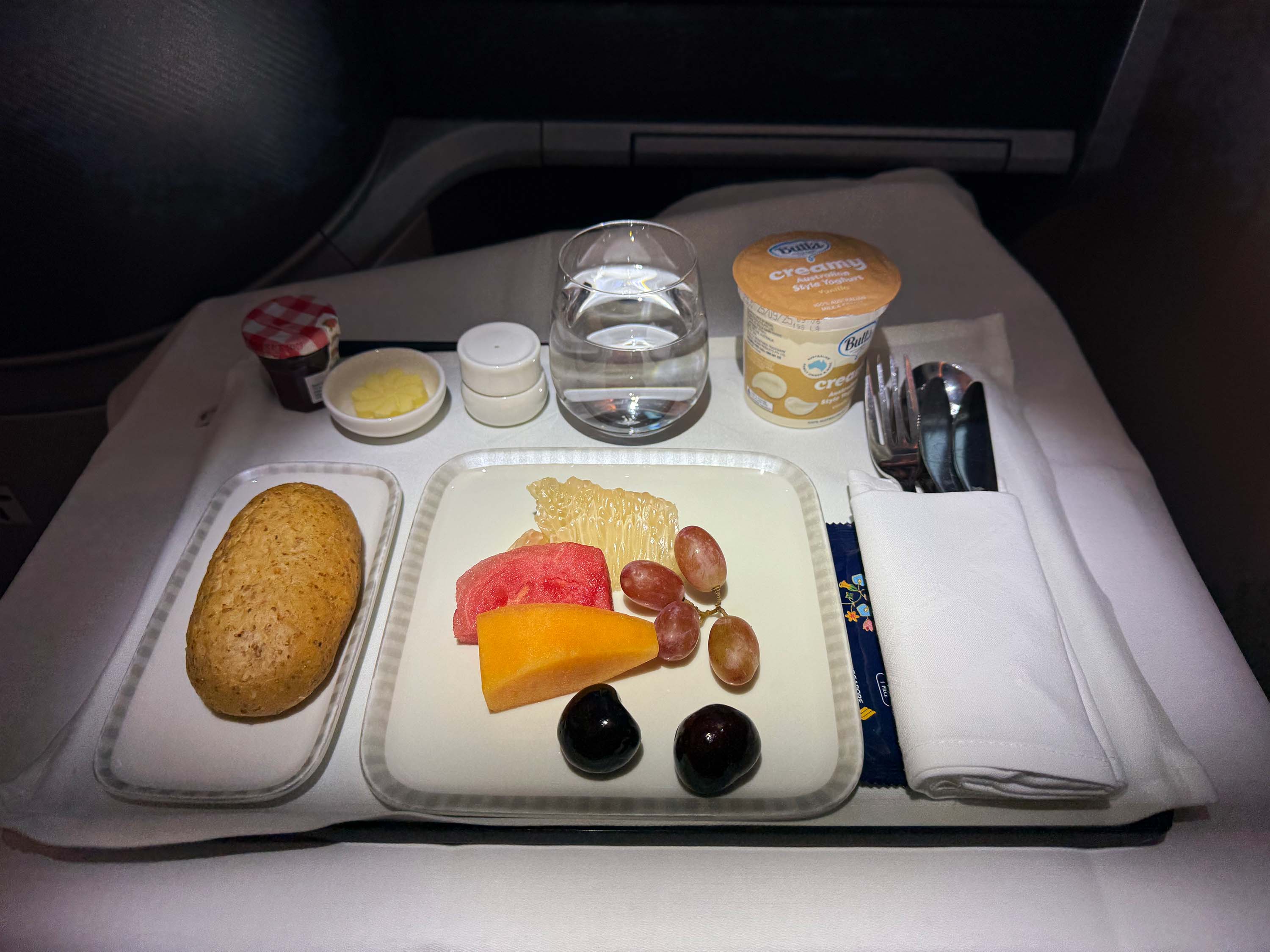
Owing to the daytime departure, breakfast service was conducted at a fairly relaxed pace. After the crew individually dressed each table with tablecloths, a starter tray consisting of fresh fruit, bircher muesli, and yoghurt was distributed around the cabin. This was accompanied by a bread roll, which unfortunately proved exceptionally hard and crusty. I also noticed that the knife in my cutlery set had not been cleaned properly, which was a rather surprising oversight. Thankfully, it was replaced promptly once I pointed it out.
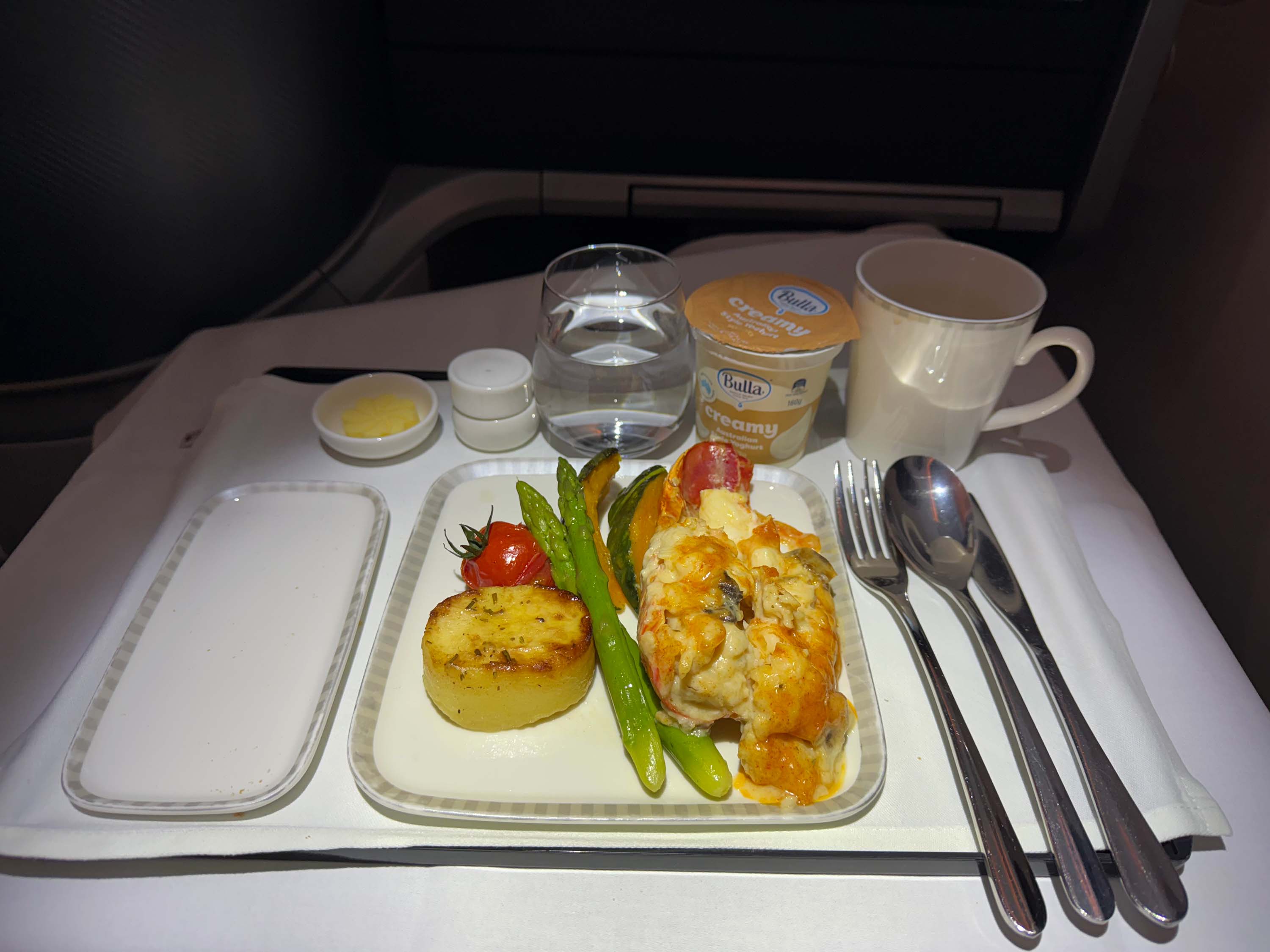
Once I had finished the fruit, Xi Wei returned with my Lobster Thermidor – admittedly an odd breakfast choice. To make matters even stranger, I paired it with a mug of hot Milo :P. Unsurprisingly, the dish itself was excellent, with the lobster tails tasting sweet and succulent. While not quite as elaborate as the version served in Singapore Airlines Suites, it was definitely better than the lobster I had on Malaysia Airlines First Class a few years back.
Lavatory
After finishing my meal, I headed to the lavatory to freshen up. Singapore Airlines’ Boeing 787-10s feature four lavatories reserved for Business Class passengers, with two located at the front of the cabin and another two near the rear galley.
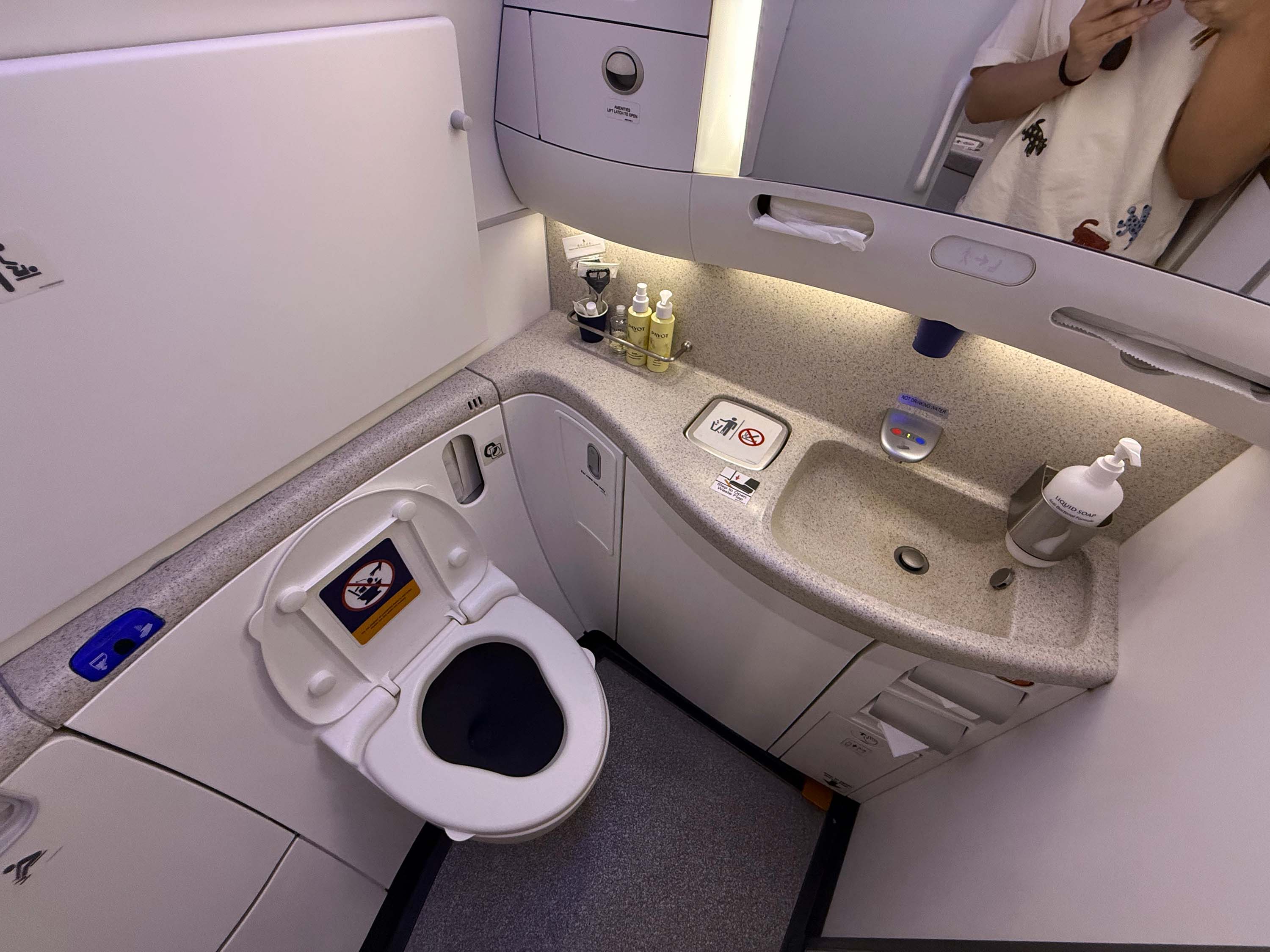
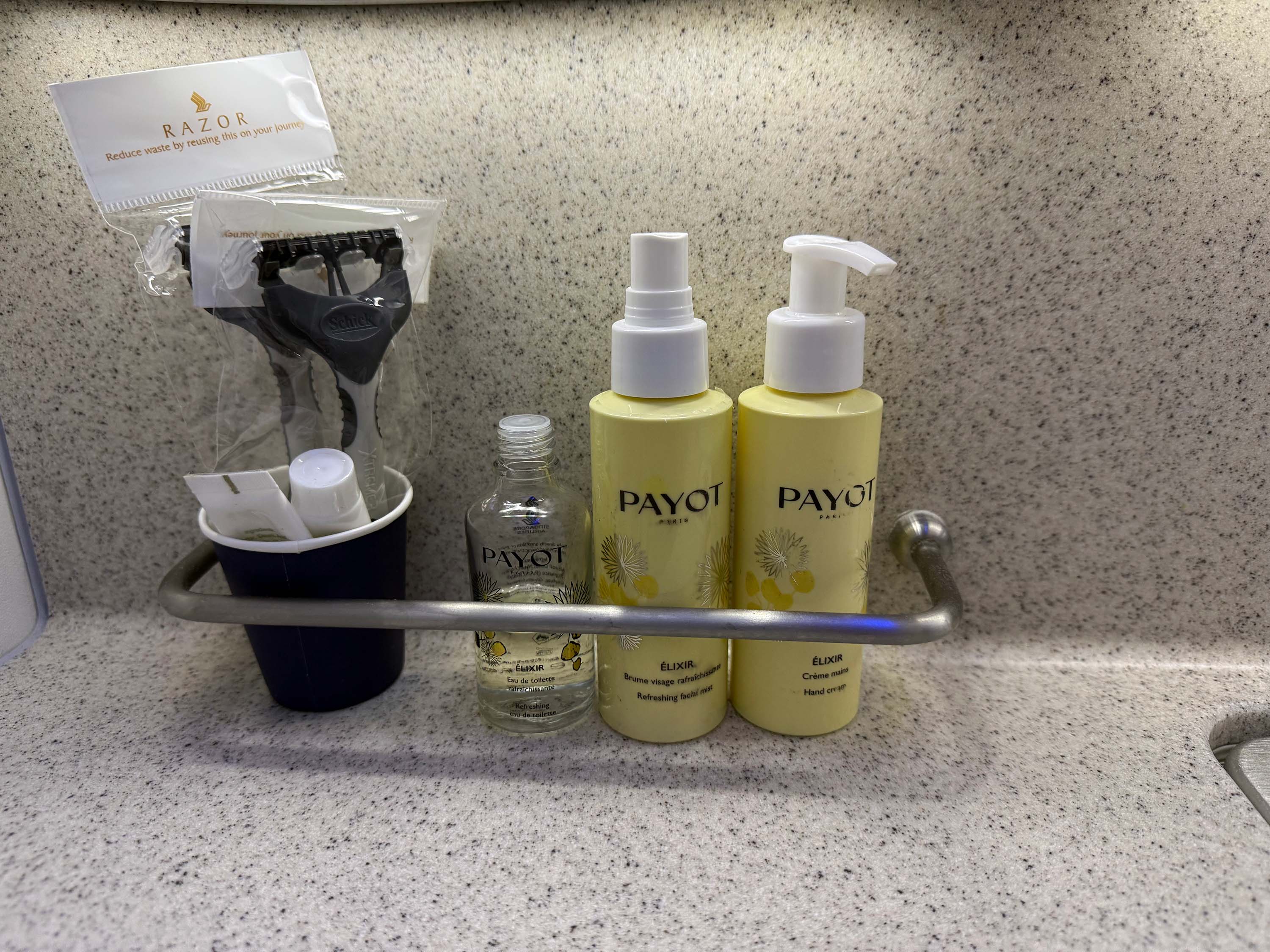
As expected from Singapore Airlines, the lavatory was spotlessly clean. Payot-branded facial mist, body lotion, and cologne were all available, alongside shaving kits with razors and shaving cream. Paper towels and facial tissue were also provided as usual, though I was slightly surprised to find that cloth hand towels were absent this time.
Bedmode
After returning to my seat, I decided to lounge around and drift off to the harrowing soundtrack of The Last of Us – again, an unusual choice for a relaxing nap (but hey I enjoy mixing things up every now and then :P). Historically, Singapore Airlines’ customised Business Class seats have lacked proper recline, instead converting into a bed by flipping the seatback forward. Thankfully, the Stelia Symphony resolves this issue.
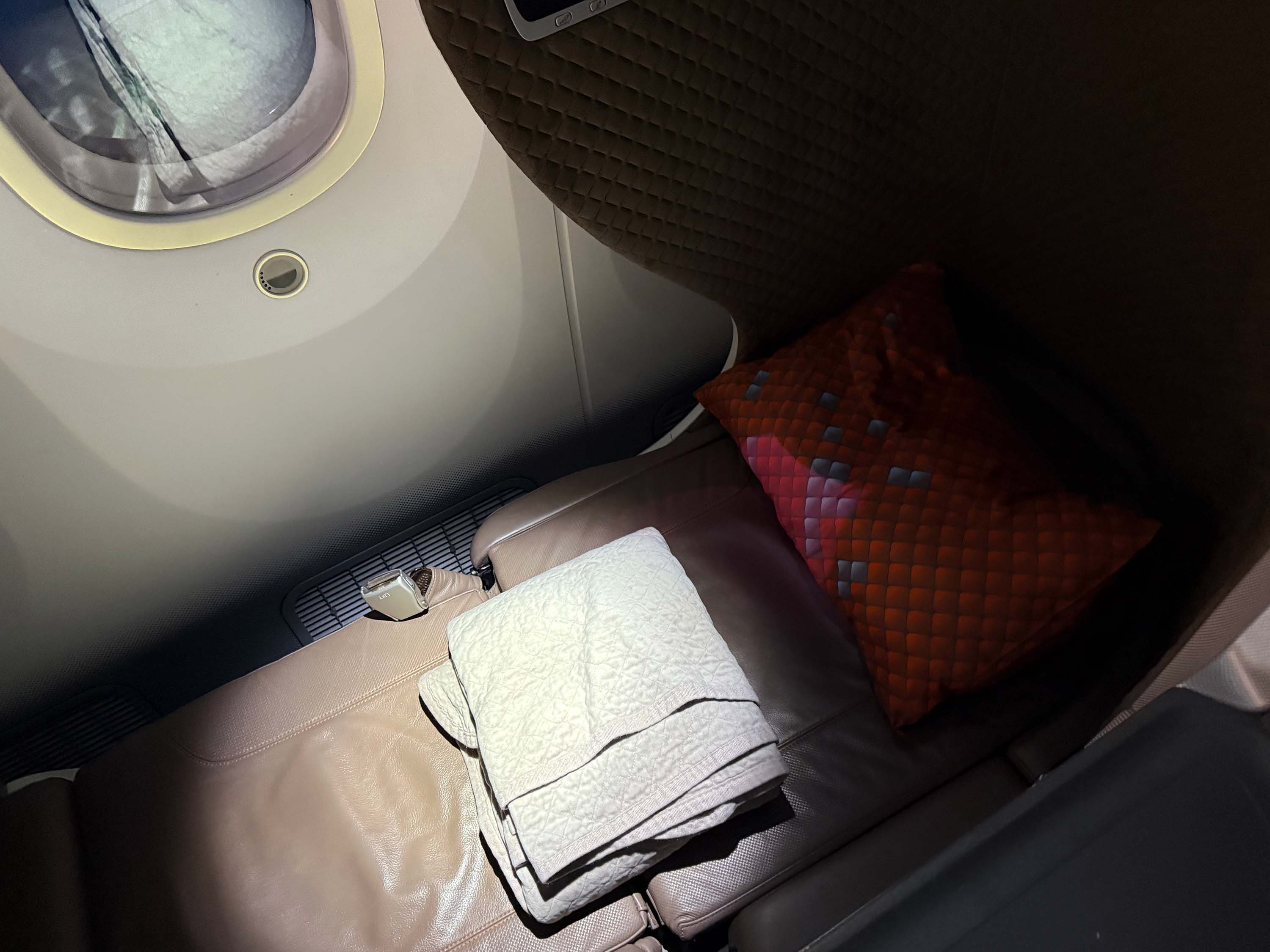
Beneath the entertainment monitor is a generously sized footwell with a padded ottoman that extends the seat in bed mode. The hollow space underneath also provides a convenient place to tuck away your shoes once reclined.
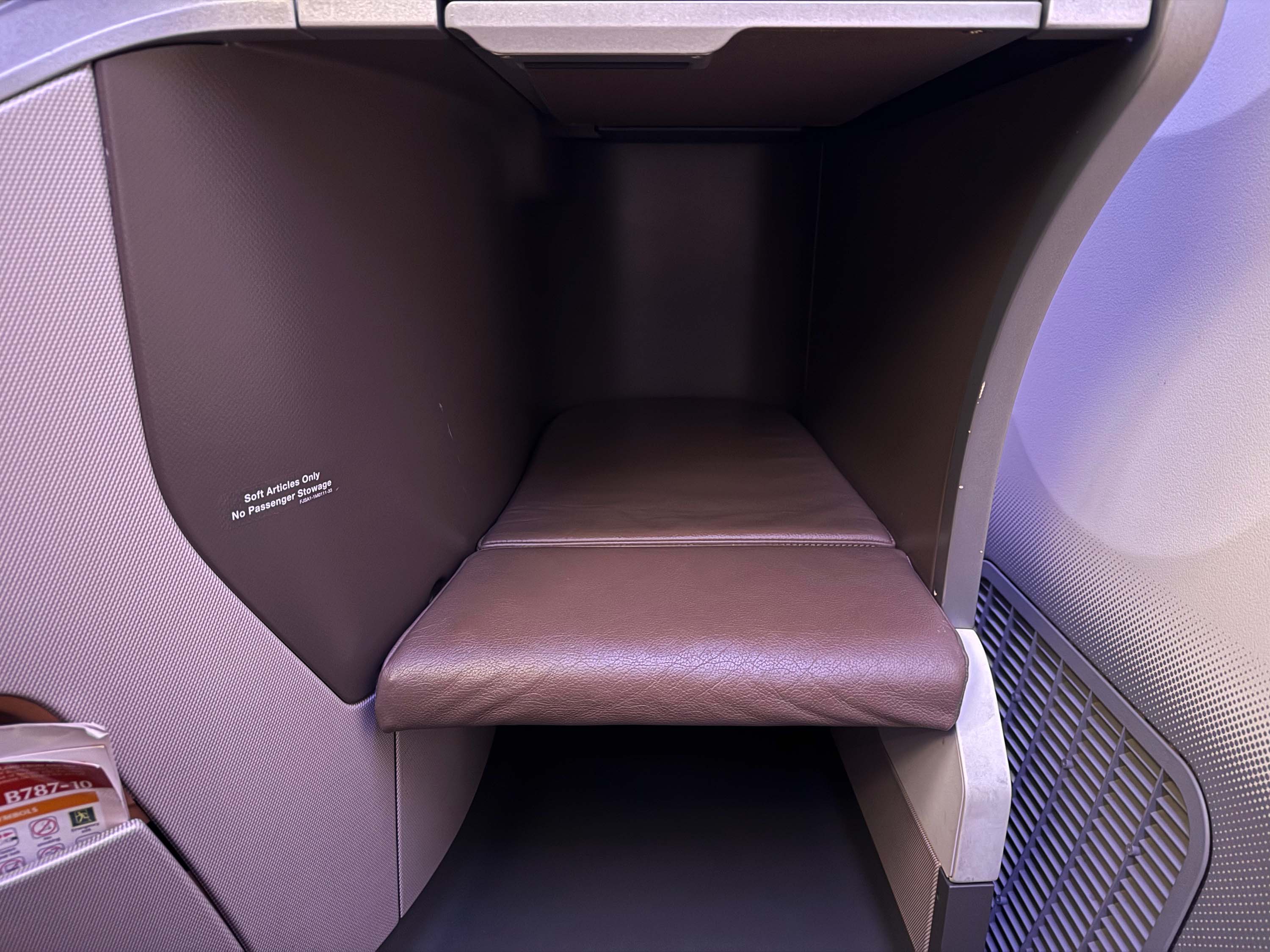
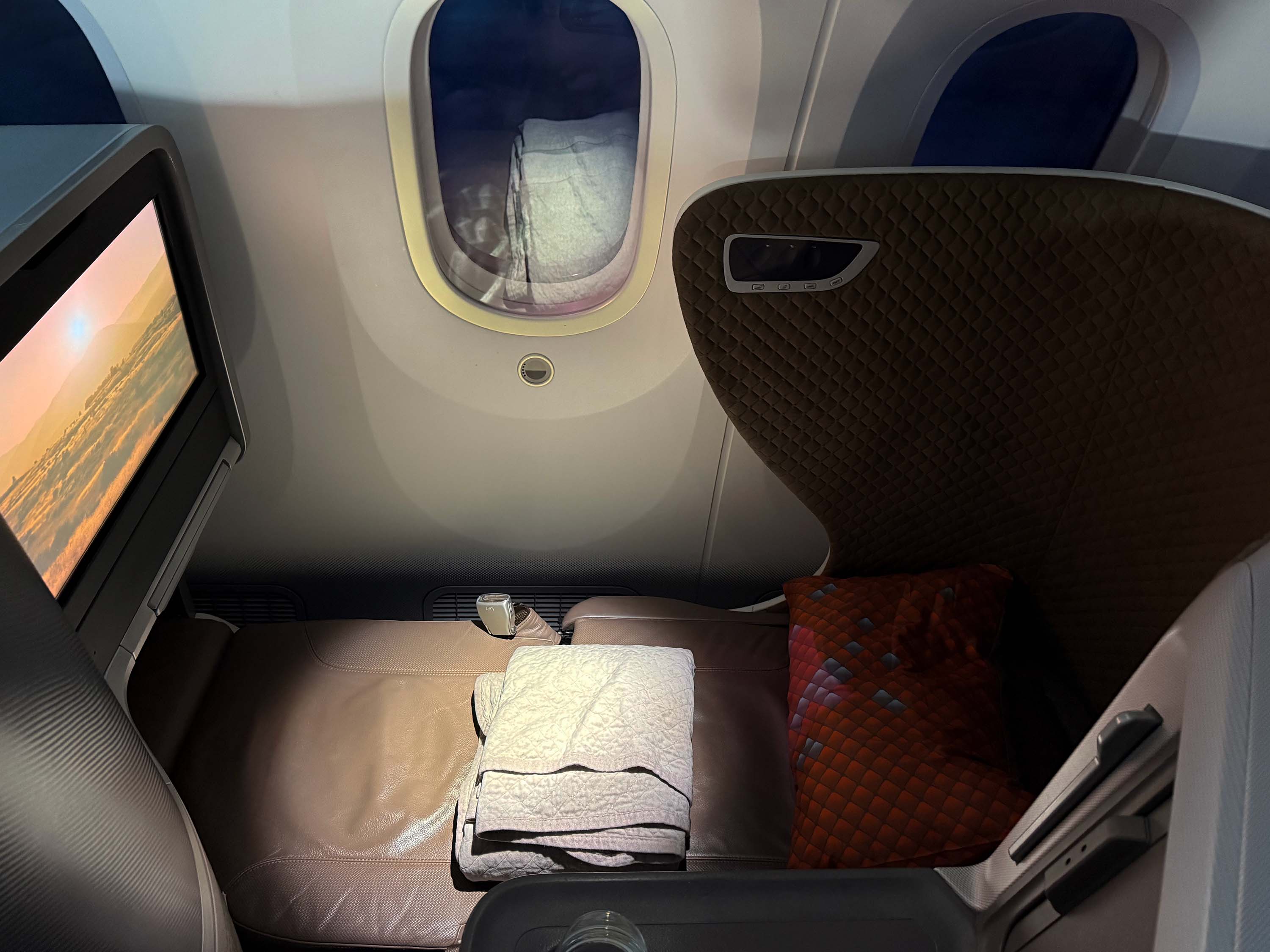
As with most flatbed Business Class seats, there remains a slight incline when fully reclined. While the sleeping space itself felt somewhat narrow, the large footwell helped the seat feel noticeably less claustrophobic. I also appreciated the sizeable, firm pillow, which paired nicely with the thick blanket to create a genuinely comfortable setup for sleeping.
Service
Unsurprisingly for the world’s most awarded airline, the crew on this flight were warm, polished, and hardworking throughout the journey, while still maintaining a personalised touch by addressing each passenger by name. Xi Wei, for instance, remained poised and professional while also engaging passengers in light conversation as she passed through the cabin offering drink top-ups. Meanwhile, Tamilanunathan’s cheerful energy certainly brought some life to what was otherwise quite a sleepy morning departure.
Arrival in Guangzhou
As we cruised past Shenzhen, the 787’s window tints were finally cleared, revealing excellent views of the city’s striking skyline. I even managed to spot the St. Regis Shenzhen, where I would be spending the next two nights! Around this time, roughly 50 minutes before arrival, the captain announced that we had begun our descent into Guangzhou Baiyun International Airport. Despite the relatively early descent, the cabin was soon prepared for landing, as is standard procedure on Singapore Airlines.
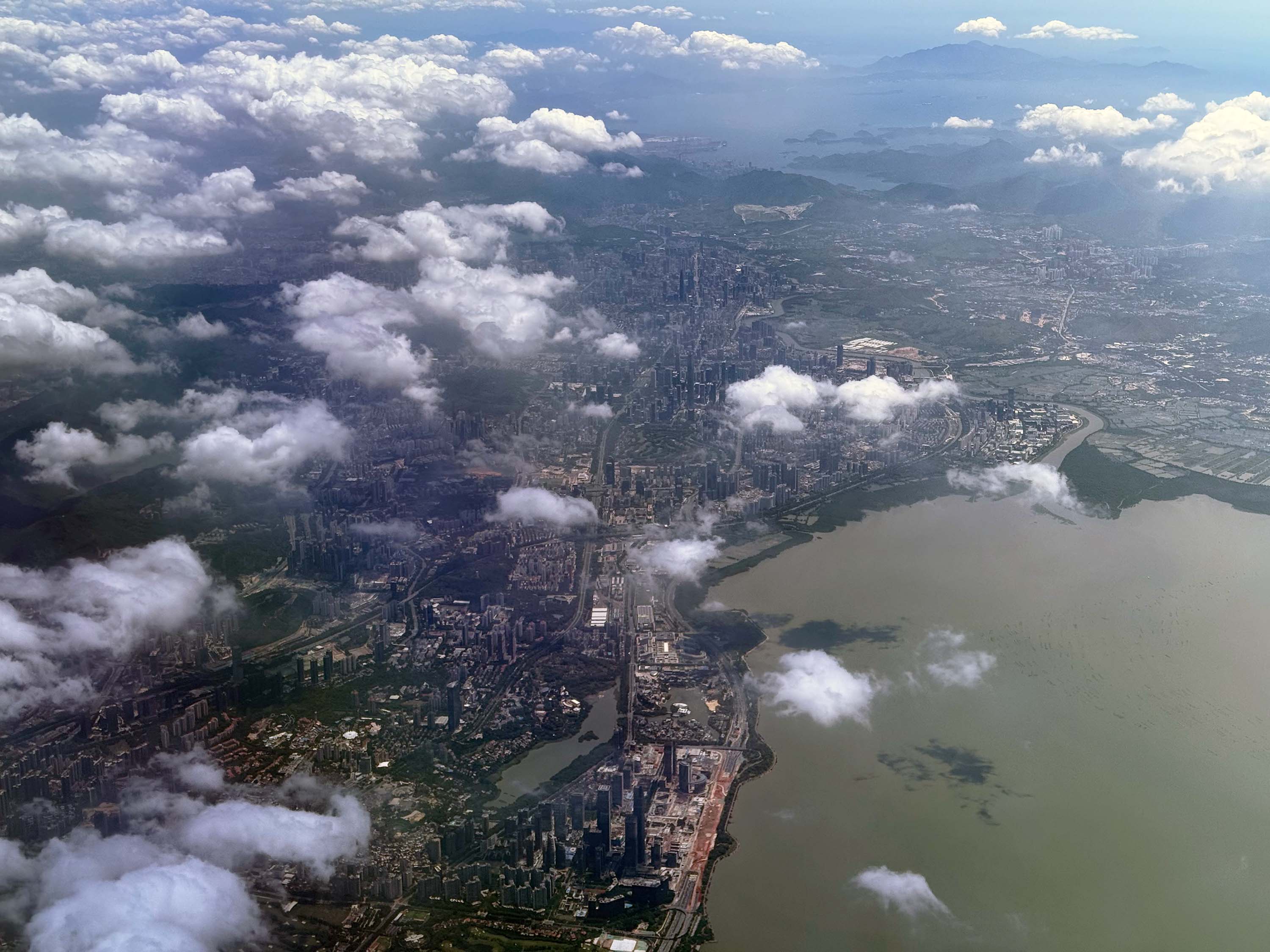
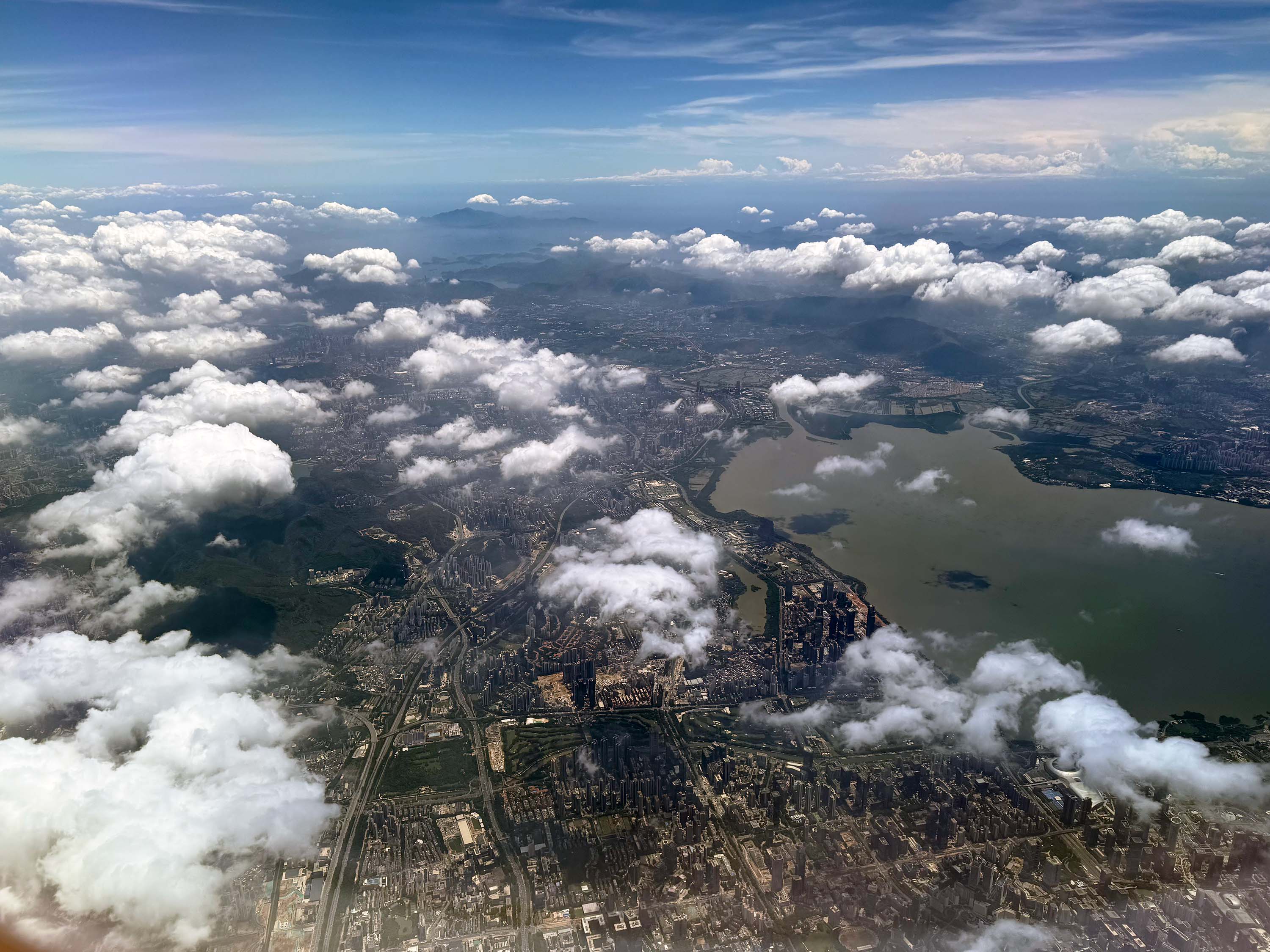
Not long afterwards, the monitors still showed 32 minutes remaining to arrival. Even so, the seatbelt signs were switched on and passengers were asked to return their seats to the upright position. While this was admittedly a bit of a faff, I still enjoyed the views of southern China unfolding beneath us. Singapore Airlines’ soft landing music also played gently in the background, adding to the relaxing atmosphere.
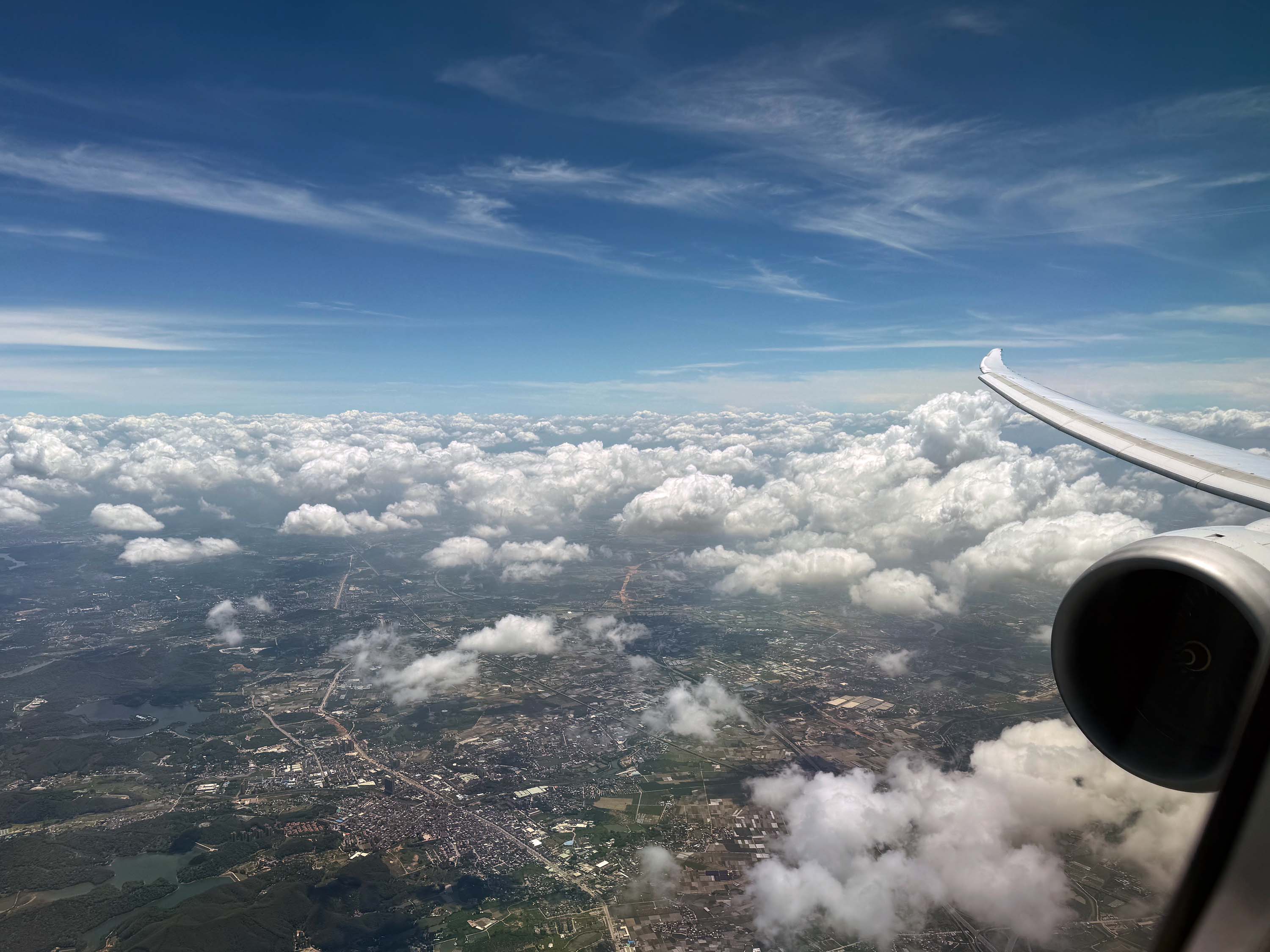
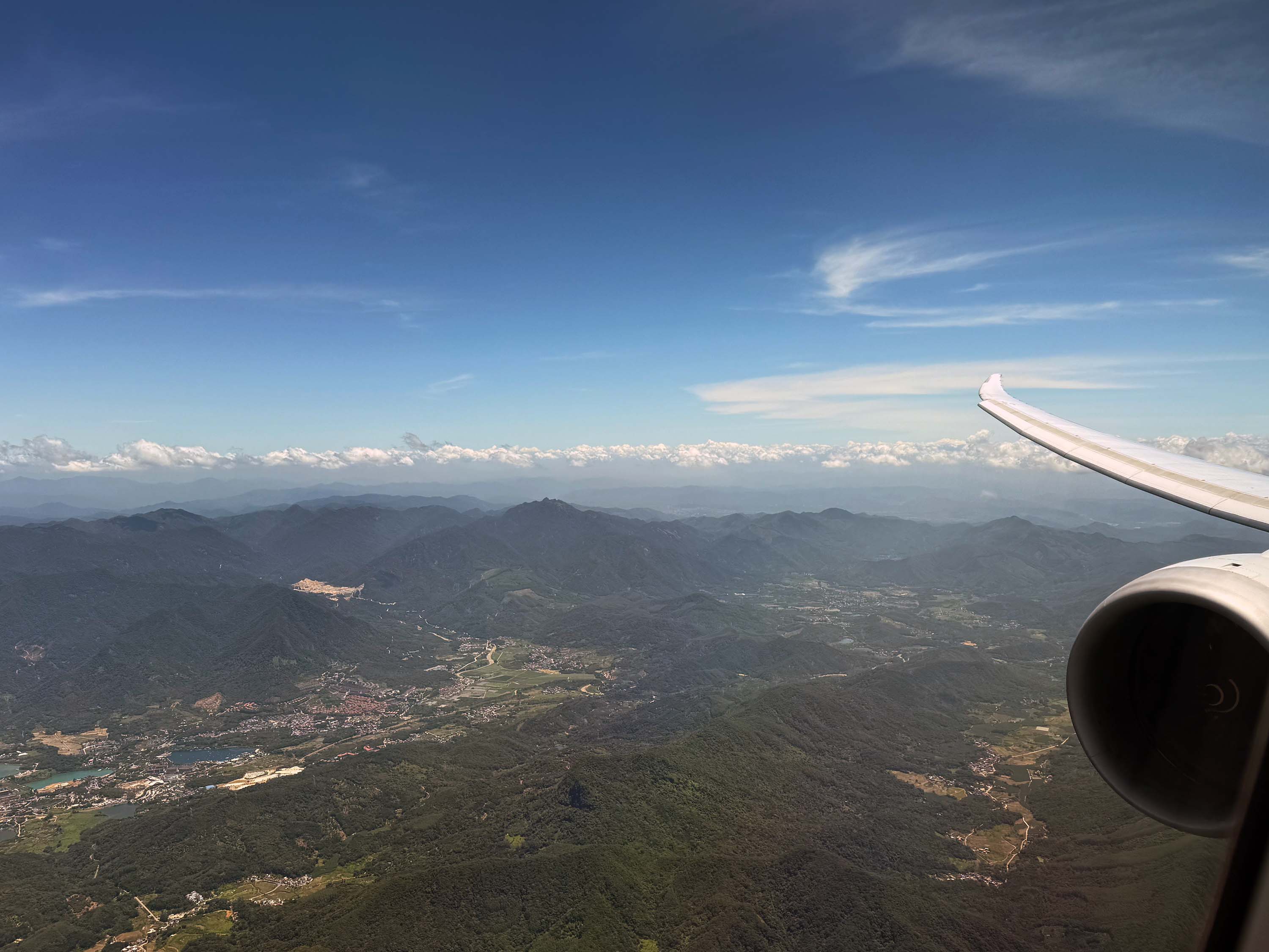
We eventually flew over Guangzhou and the surrounding hills and mountain resorts before approaching Baiyun Airport from the north. Around 30 minutes later, we touched down on Runway 20L at 12:27. The landing initially felt smooth, however, a noticeable jolt followed as the nose gear settled onto the runway.
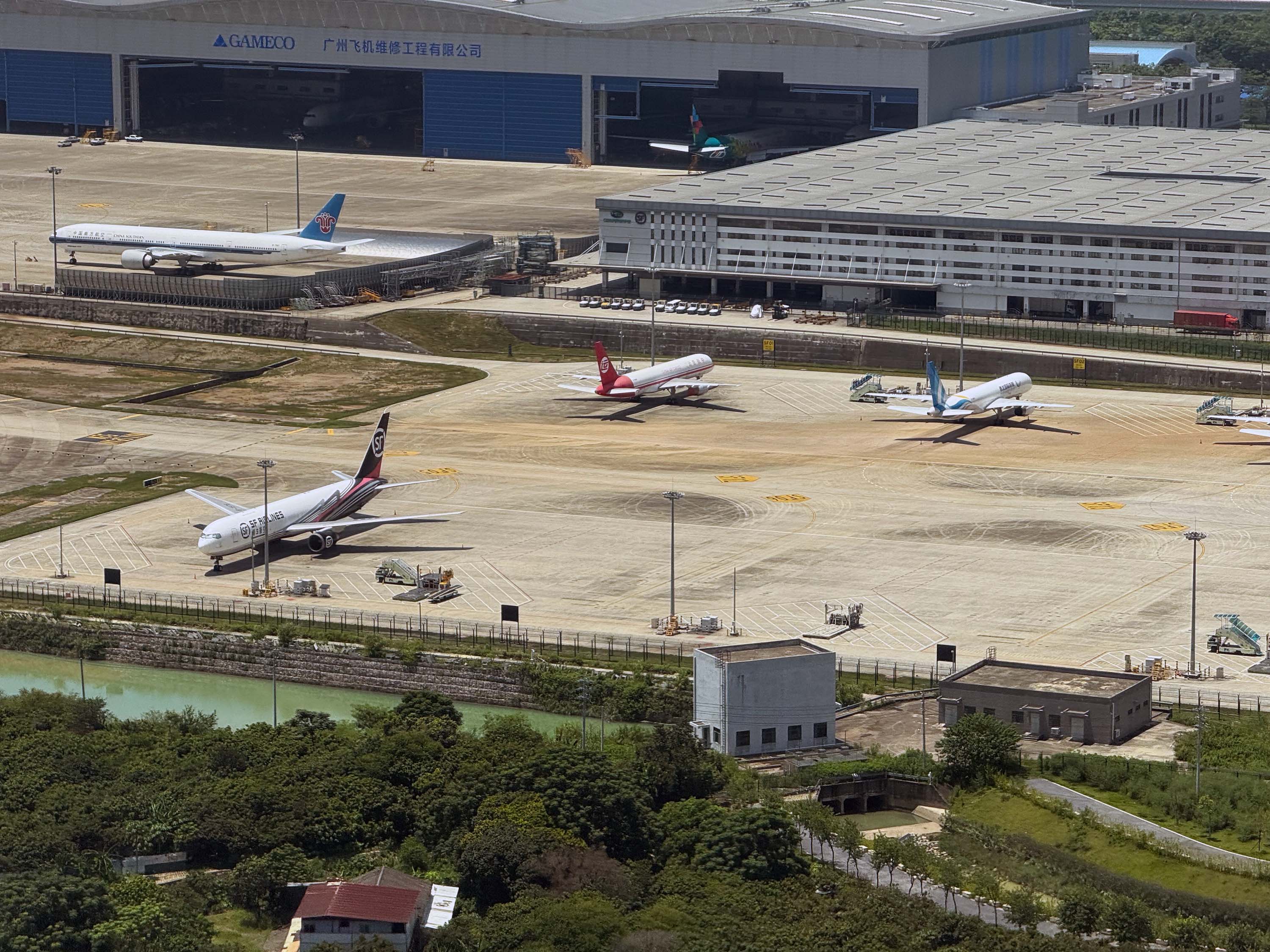
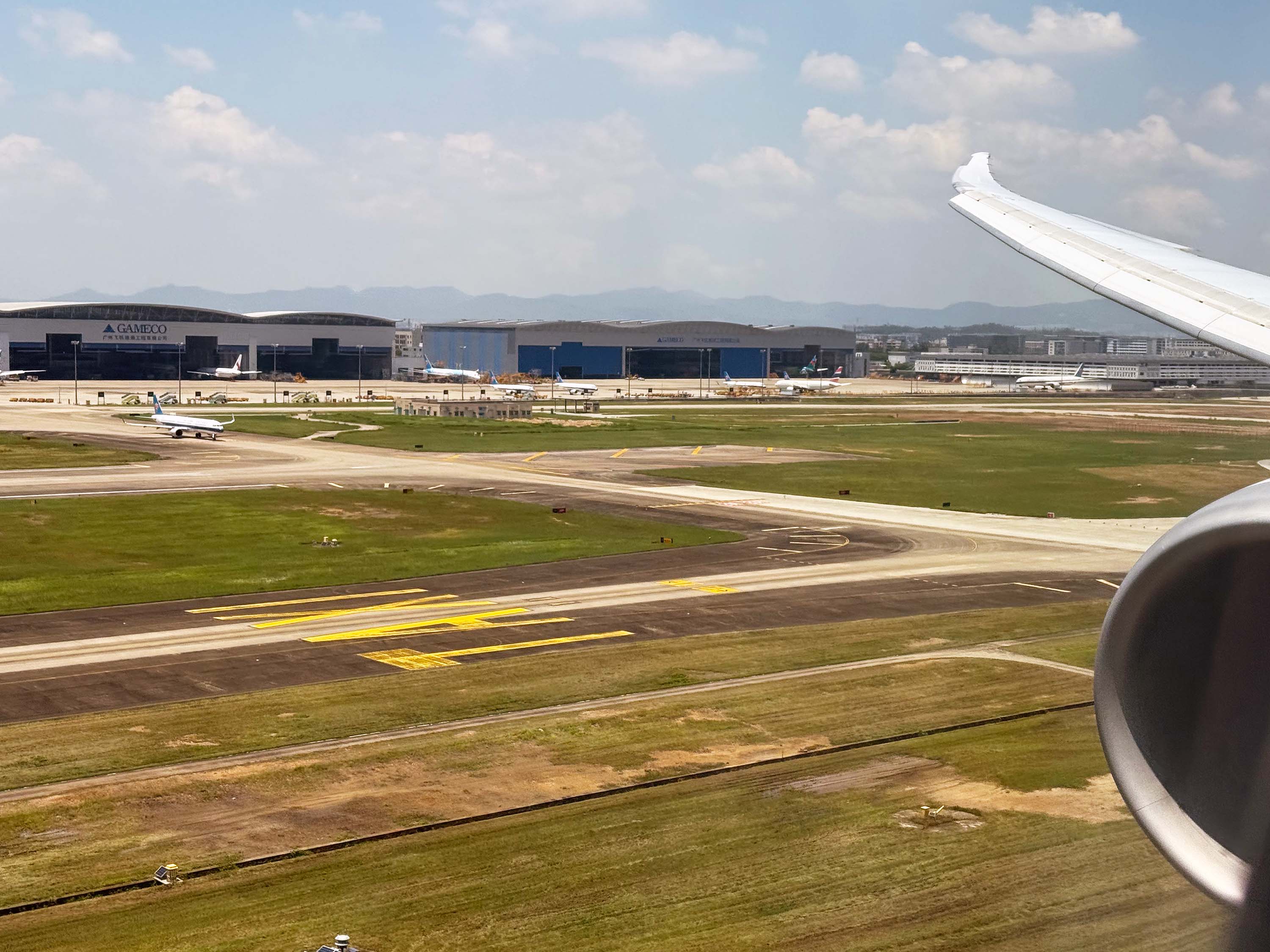
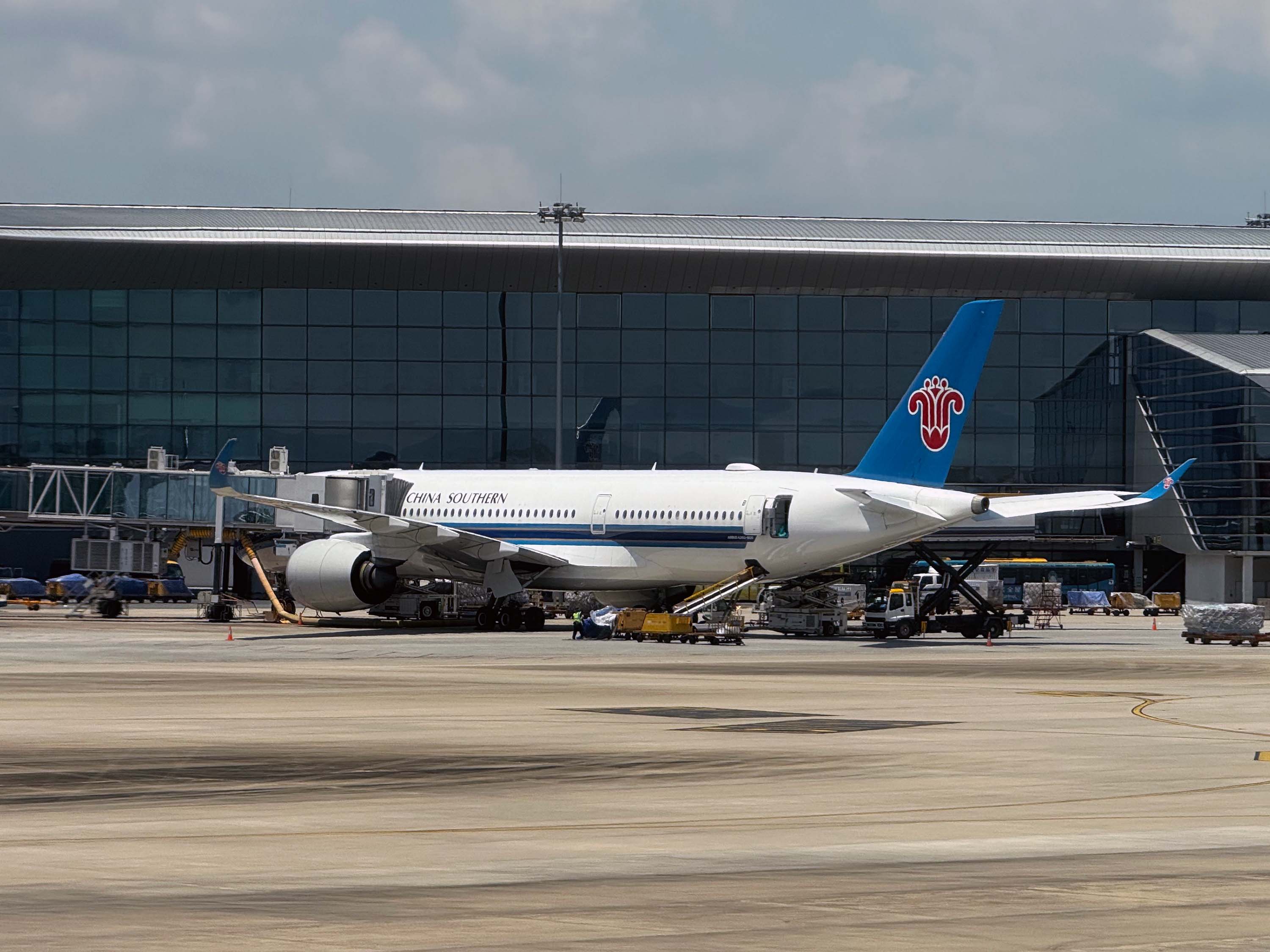
We taxied slowly towards Terminal 2, passing a sea of China Southern aircraft parked around the airport. At this point, Mr Tay came on the intercom to welcome us to Guangzhou and advise us of the local time and temperature.
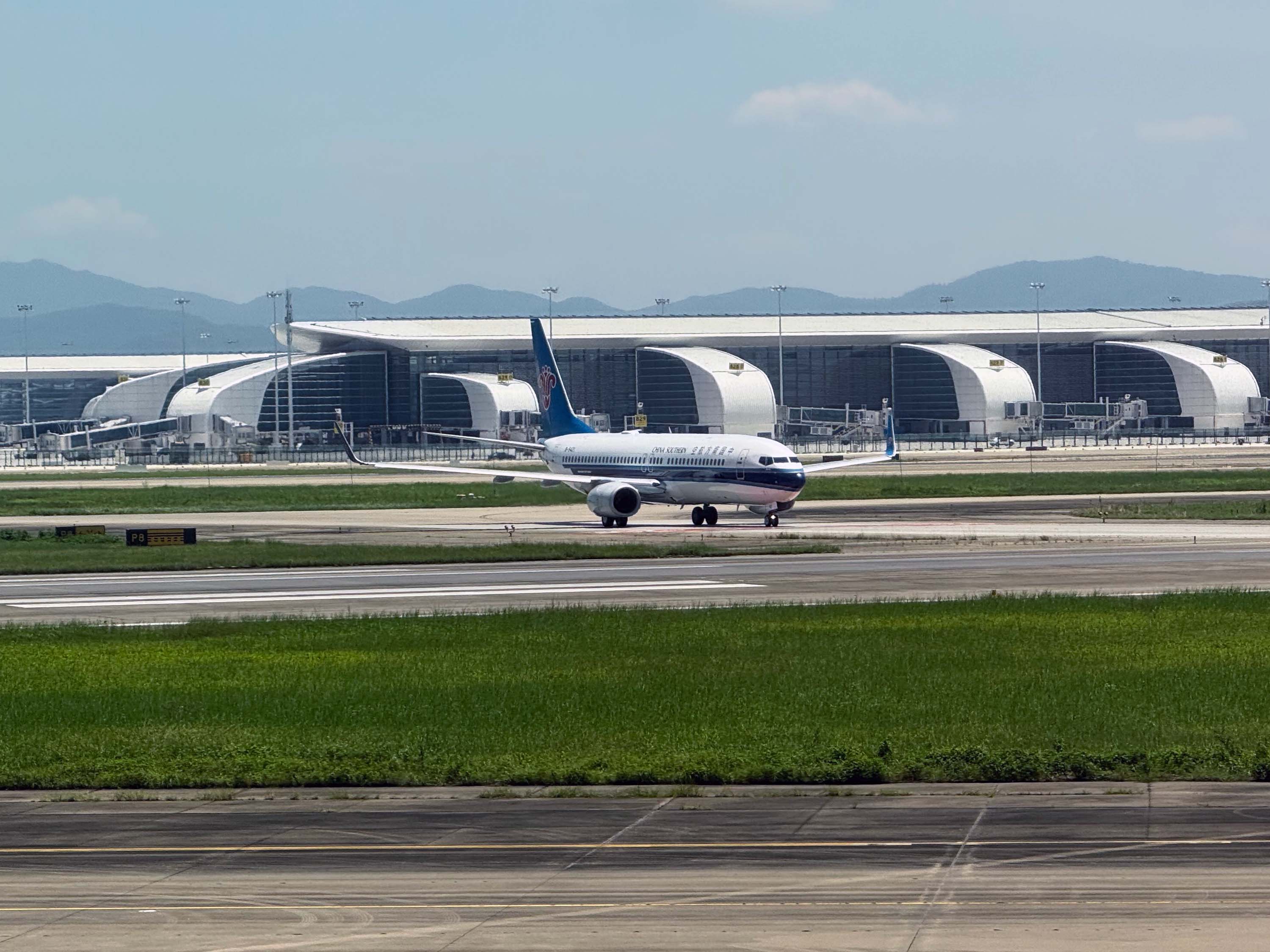
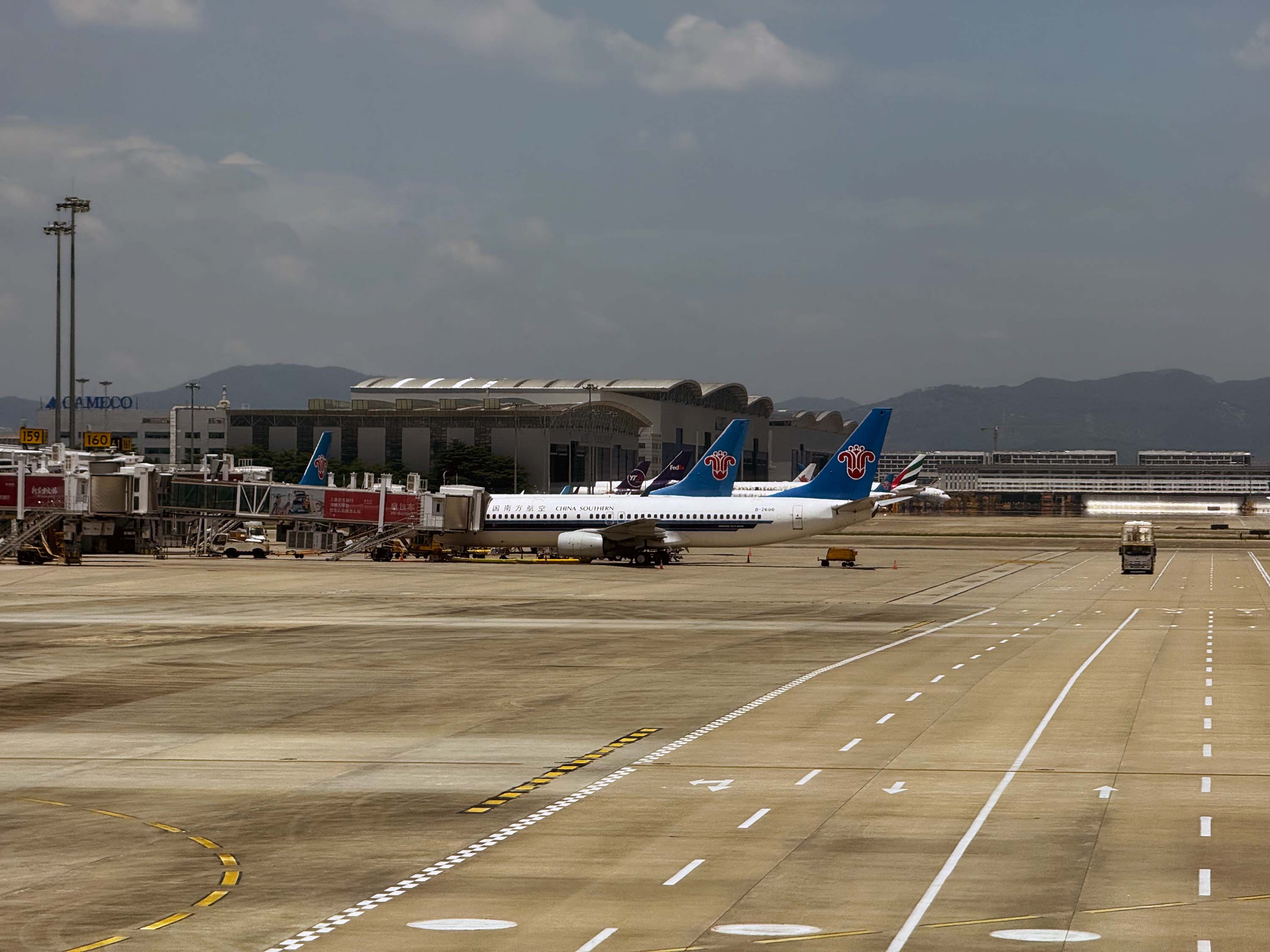
We arrived at our gate at Terminal 2 15 minutes later. Shortly afterwards, I thanked the crew and bid farewell before beginning the long walk towards immigration.
Verdict
Much like my earlier flight from Jakarta, I had a very positive experience on this sector. While I would have preferred the wider long-haul seat, Singapore Airlines’ regional Business Class product still proved more than comfortable for a medium-haul journey. Between the polished service, extensive entertainment options, and the excellent Lobster Thermidor, I was a very happy camper throughout the flight. That said, it was admittedly disappointing to encounter dirty cutlery and the rather awful bread roll, both surprising oversights for an airline of this calibre. Even so, those were ultimately minor nitpicks in an otherwise excellent experience, and I would happily fly Singapore Airlines again anytime.
Leave a Reply