


Pita Maha Resort & Spa
Nearest Airport: DPS (39 km away)
Neigbourhood : Ubud, Bali
Website : pitamaha-bali.com
Address : Jl. Raya Sanggingan, Ubud, Kecamatan Ubud,
Kabupaten Gianyar, Bali 80571
Chain : Tjampuhan Resorts
The Pita Maha Resort is the smallest of the three hotels owned by the Ubud Royal Family, collectively known as the Tjampuhan Resorts. It opened in 1995, commemorating the 60th anniversary of the Pita Maha art movement, from which the resort’s name is derived. The resort is located up on a hill with a valley-viewing setting and is made up of 24 garden and pool villas. With its smaller size, the Pita Maha Resort is marketed as a boutique, more intimate offering compared to its larger sister resort, The Royal Pita Maha.
Location
The Pita Maha Resort is located on Campuhan Hill, a few hundred metres down the street from the excellent COMO Uma resort. From here, it is possible to walk 20 minutes downhill to central Ubud and to the Capmpuhan Ridge Walk. Nearby, there are several art galleries and Bali-based clothing boutiques like Biasa, Pithecanthropus, and Paul Ropp. There are also many eateries nearby, including the famous Indus Restaurant and the acclaimed Mozaic restaurant.
The resort also offers a shuttle to central Ubud’s Museum Puri Lukisan at irregular intervals.
Arrival and Check-in
We arrived at the resort’s small but intricately carved entrance to be greeted by the resort’s exceptionally friendly general manager. After exchanging a few greetings, we were invited to take a seat whilst his colleague brought us a smoothie of tropical fruits for us to sip on. This happened as we were promptly getting checked in, all whilst viewing the beautiful scenery of the valley.


After the smooth check-in process, we were escorted to our villa as a pair of smiling porters took care of our luggage.
Villas at Pita Maha Resort
Garden Villa
The Garden Villas feel a lot like a premium, yet very traditional-looking Balinese village home. The style of the interiors very much reminded me of the villas at Amandari, albeit decidedly less upmarket. I felt that the room itself looked spacious and had a nice old-world charm to it. There were large windows that overlook the courtyard (and a bit of the beautiful Campuhan Valley). Given its much better upkeep, I definitely preferred this room to the one I had at The Royal Pita Maha.


Bedroom
The villa felt to be adequately maintained, and nicely appointed. This had to be one of the most Balinese-looking hotel rooms I’ve seen on the island. With the ornate carvings at the villa entrance and the Kamasan paintings on the bed’s headboard, Pita Maha Resort isn’t shy to show its Balinese roots; Nor does it pretend to be modern or stylish! Like many resorts in Ubud, there is a mosquito net draped over the bed. In addition, there is also a daybed in the room, as well as a pair of chairs and a desk.


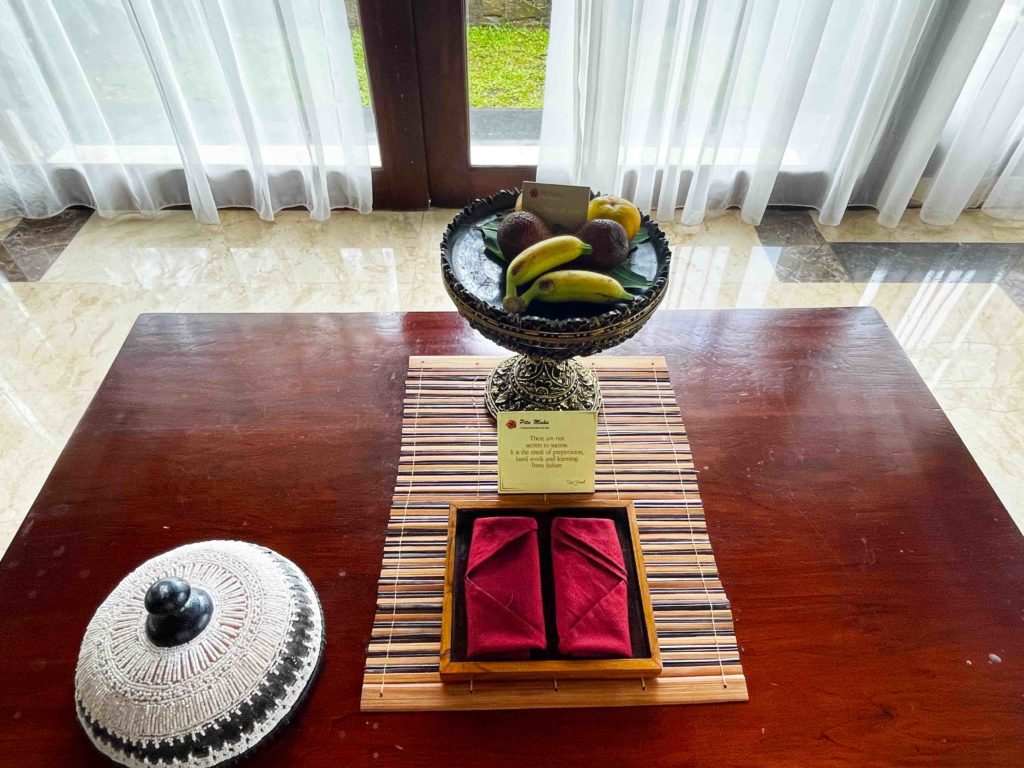
Also waiting for us is a nice fruit plate.
Bathroom
While I liked the bedroom, the shower and bathtub setup was much less pleasant. The open-air setup ensured that the bathtub is always coated in various insect and plant debris, no matter how diligently it is cleaned. What made the least sense was the slightly tilted drain that made it difficult to flush out said debris using the shower hose. The shower was at least usable, although it wasn’t very pleasant to use as water splashed everywhere. The toiletries were in reusable glass containers and were okay. Had the bathroom been encased with glass, it would make all the difference.


Pool Villa
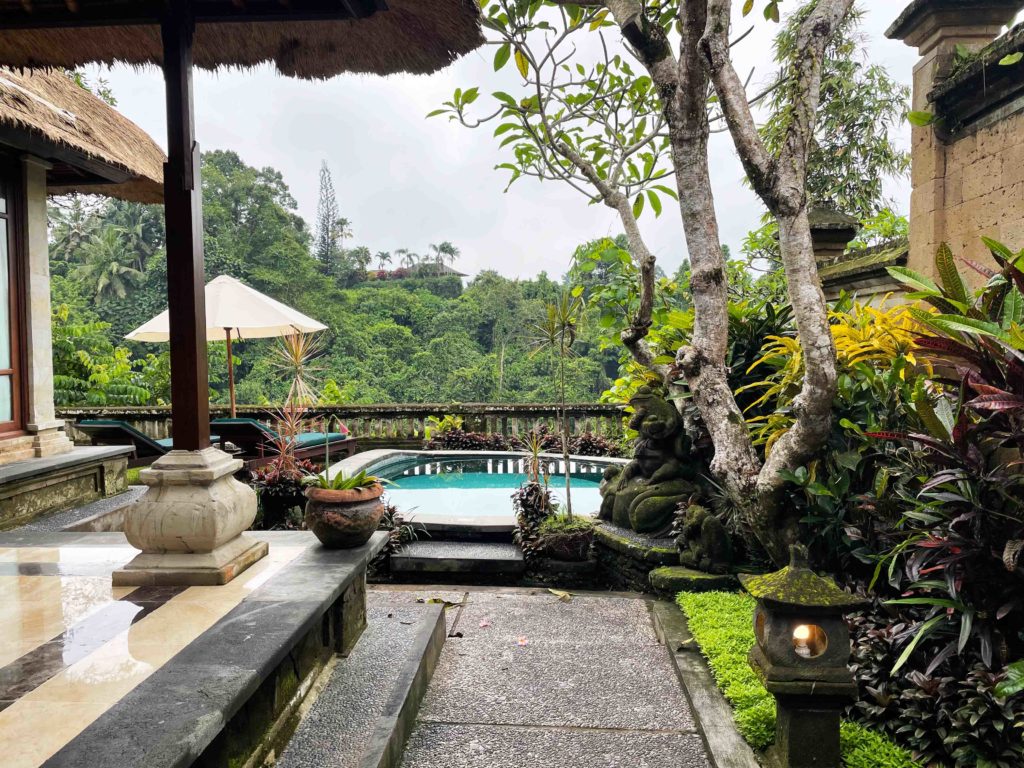
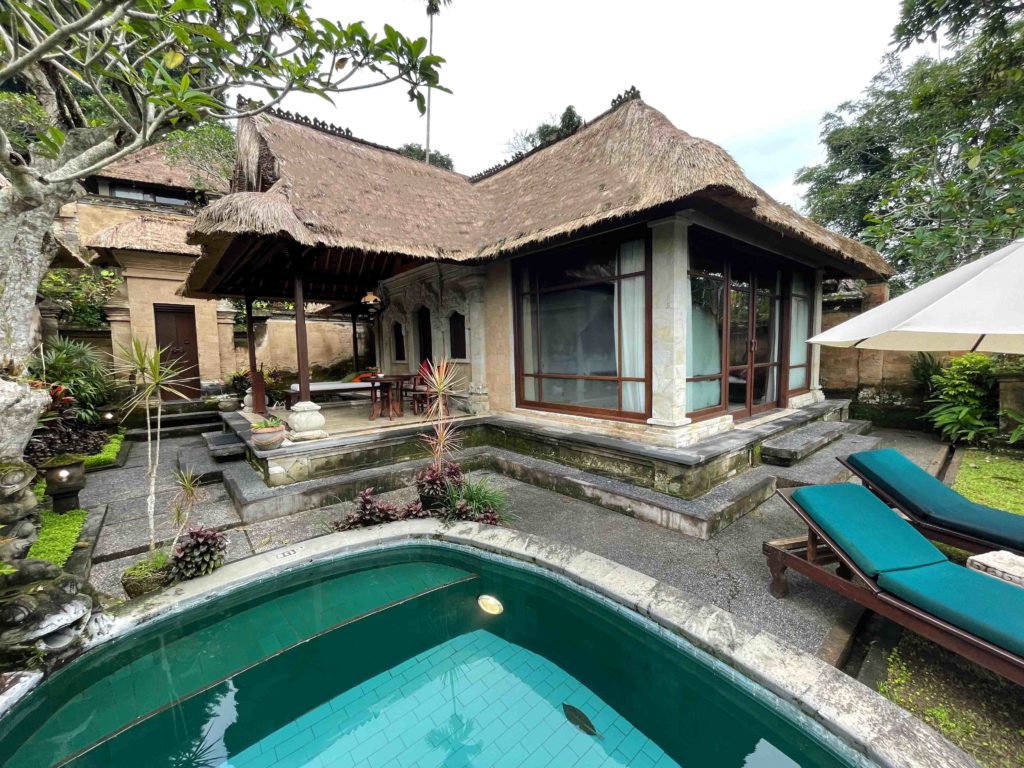
On a subsequent stay, we were generously upgraded to a Pool Villa. The Pool Villas are located in the frontmost row of villas in the resort, and so are afforded the best views of the valley. I won’t cover the villa’s interiors since they are absolutely identical to the Garden Villas. The only remarkable difference between the two room types is the small pool along with two pool loungers next to it.
Dining
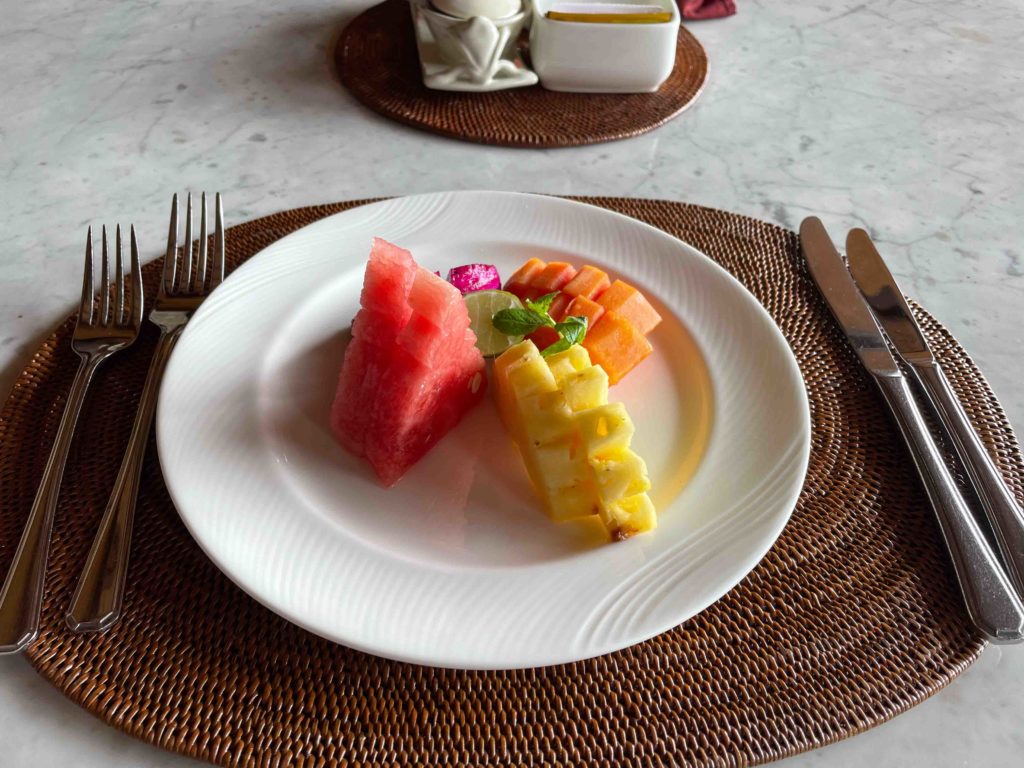
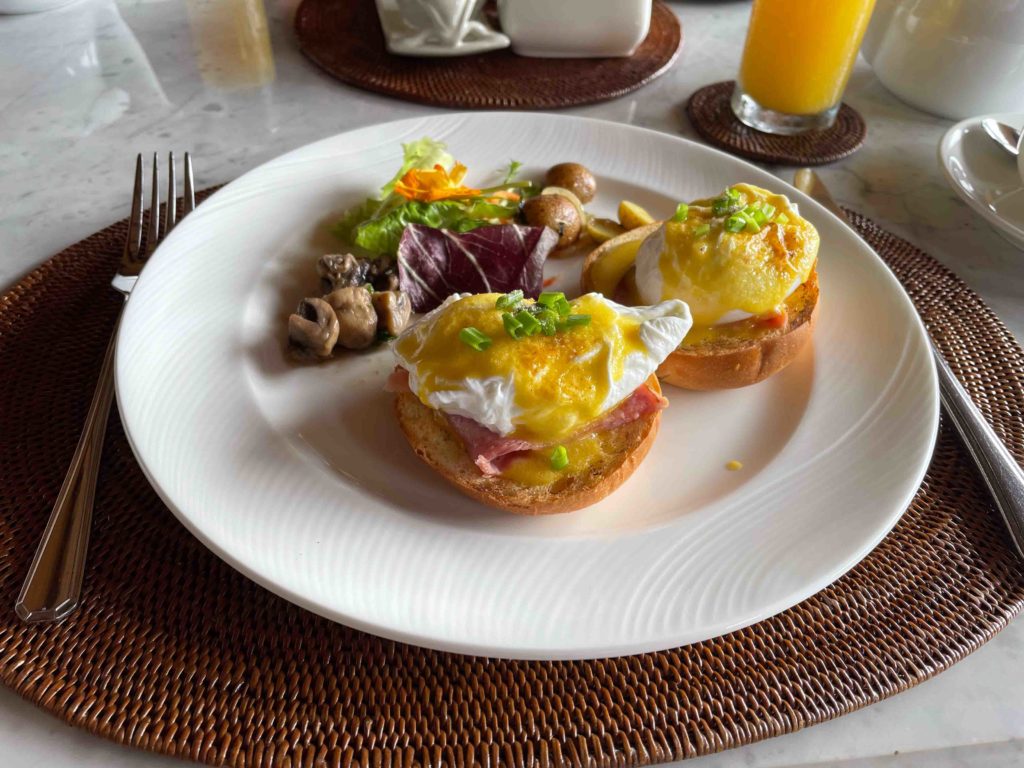
We had breakfast at the resort’s eponymous restaurant, which was included in our rate. Like the rest of the public area, the restaurant had incredible views of the valley. Breakfast is served à la carte, from a varied set menu catering to Western and Asian tastes. For breakfast, I ordered a customary fruit plate and some orange juice, along with a main of Eggs Benedict.
The fruit plate was nice and fresh, even more so with a dash of the lime wedge provided. The orange juice I ordered was fresh, but it unfortunately had sugar added to it. The eggs benedict was frankly quite nice, although I did find the sides to be rather unorthodox for the dish. Overall, I was mostly happy with the breakfast here. Additionally, the service is surprisingly very polished and attentive. For instance, the host would be very careful with placing the cutlery and plates so that everything looked nice. Impressive!
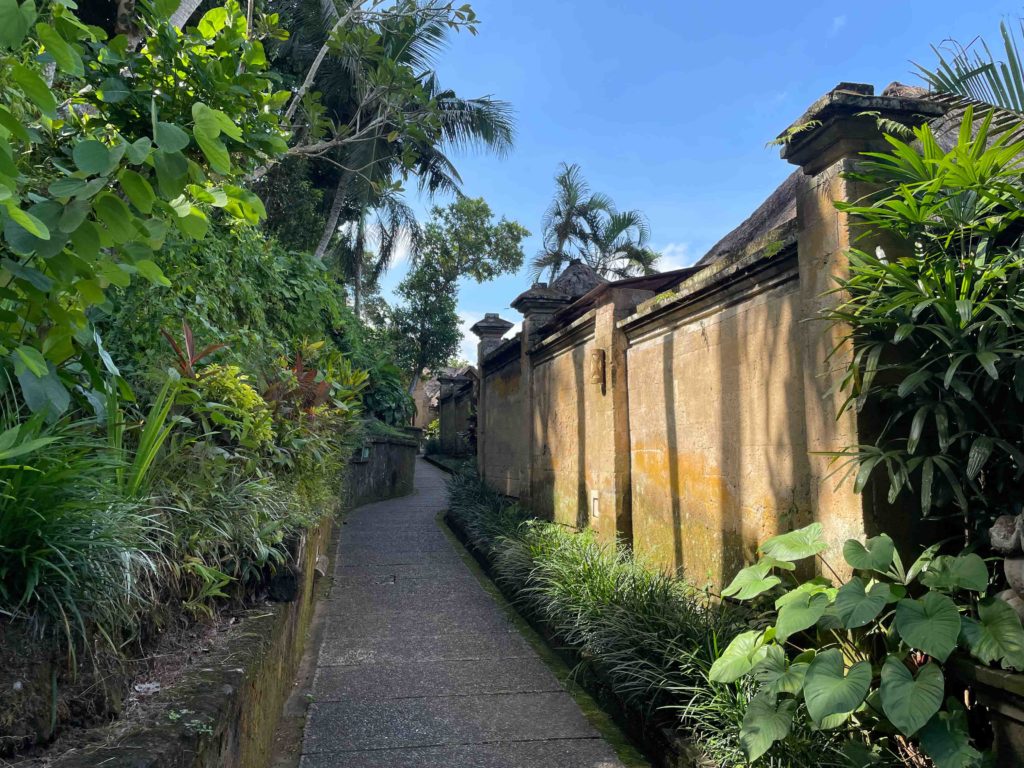
Resort Grounds and Amenities
Much like the villas’ style, the resort’s grounds bear a striking resemblance to Amandari. It only makes sense that the two resorts are completed within 6 years of each other, and probably reflect the styles of their time.
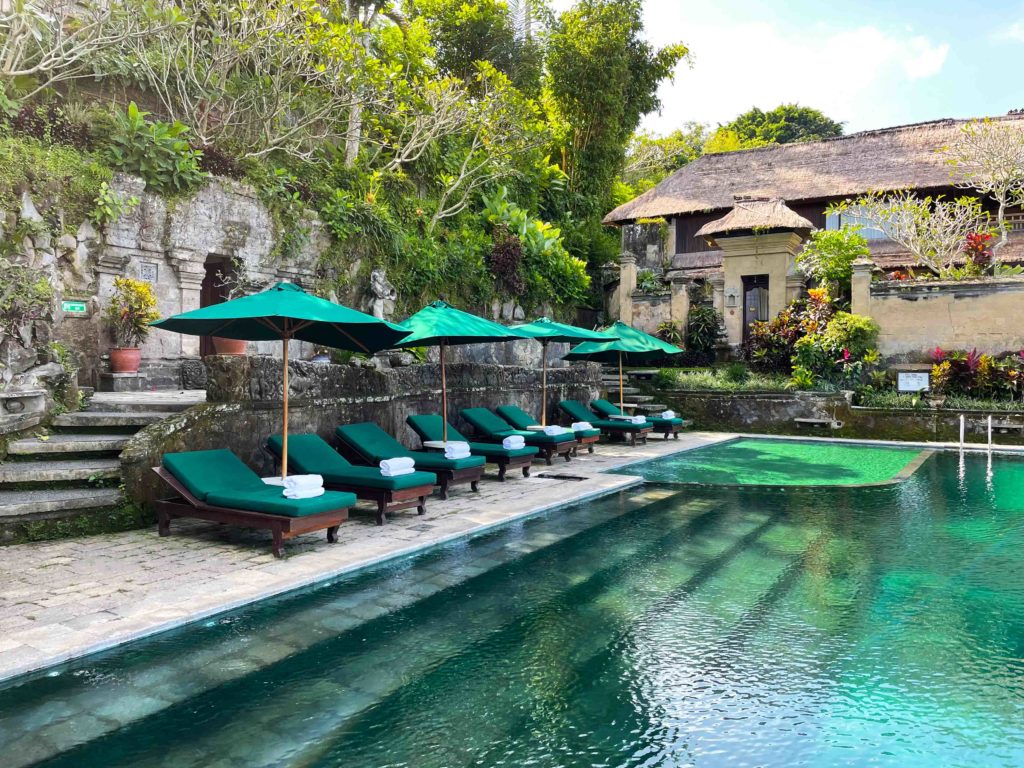
The resort has a single, shared infinity pool, which overlooks the valley. Its setting and design again reminded me of the pool at Amandari, although the latter does look nicer. It was nevertheless still very beautiful. In addition, the resort does not have a gym facility.

Service
The staff at the hotel are friendly, warm, and well-intentioned, although the service did seem inconsistent (in a good way). Service at the restaurant, particularly by the considerably more senior members of staff was unbelievably polished, and I was frankly very impressed by that. Service in other areas instead felt very casual and in which people aren’t shy to chat. The resort’s general manager, Pak Agung Joni, frequently checked on us to ensure that everything was okay; I frankly admired his attention to detail and his care for the guests. If anything, this overall made the place feel like an upmarket, family-run bed and breakfast.
Overall
Pita Maha’s character and background undoubtedly make it one of the most authentically Balinese hotels on the island. The feel of a place is very hard to fake, and the feel of Pita Maha can’t be mistaken for any other place in the world. Whilst the bathroom setup isn’t ideal, this resort is a good choice for those seeking to be immersed in a Balinese sense of place without making the jump to staying at a local homestay.
Leave a Reply